Homeowners decide to sell for all kinds of reasons — and no two stories are exactly the same.
Maybe your house no longer fits your growing family. Or perhaps life has changed, and you suddenly find yourself with more space than you need. Sometimes rising taxes and utility costs make staying put less practical. And other times, it’s simply the right moment to turn the page.
But is this the right time?
Please take a moment to watch the video below. We recently sat down with Patti Lotane, Mortgage Banker at Cape Cod 5; Bryan Reardon, real estate attorney; and Stephanie Viva, Executive Director of the Mashpee Chamber of Commerce, for a candid conversation about what selling your home this fall really looks like — and what you should know before getting started.
If after watching our discussion, you’re feeling ready to take the next step, we’re here to help. Reach out anytime at 508‑388‑1994 (Mari and Hank) or 781‑264‑5517 (Colleen). We can connect you with trusted local professionals like Patti, Bryan, and Stephanie so you have the guidance you need to be confident and prepared to sell your home this fall.
Your premium will depend on things like where you’re buying, the home itself, and the coverage you choose.
If buying a home is on your radar, you’ve probably been keeping an eye on mortgage rates and home prices. But don’t forget about homeowners’ insurance.
Insurance has always been part of owning a home. But over the past few years, it has become a larger expense for many homeowners – something that’s especially frustrating when affordability already feels tight.
Here’s what you should know.
Insurance Costs Have Gone Up
You’ve probably heard stories from friends or family about their premiums increasing.
While no one likes rising costs, knowing what to expect can help you plan ahead. Your first insurance payment is typically included in your closing costs, but after that it’ll become part of your monthly housing expenses.
rate increases are slowing
Most of the headlines focus on how home insurance is getting more expensive. And that’s true. Depending upon where you live, rates may have gone up dramatically due to weather or the type of home you own. (Think Florida where severe storms and the quality of home construction have combined to cause major increases.)
But here’s the part that’s easy to miss.
Insurance premiums are still rising.
But they’re not rising as fast as they were.
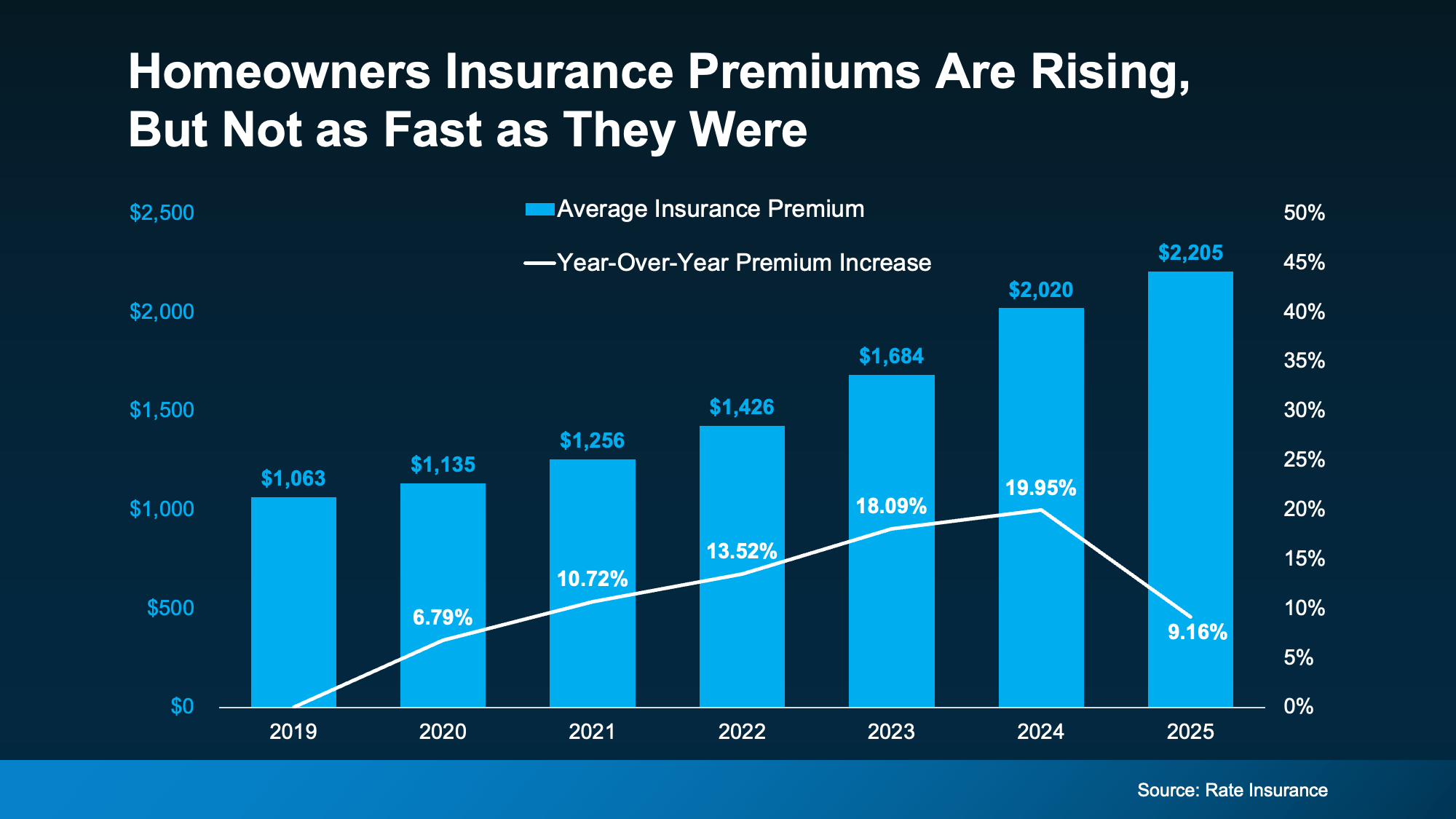
According to the latest report from Rate Insurance, 2025 saw the first slowdown in annual premium increases since 2019 (see graph below):
That doesn’t mean premiums are getting cheaper. It simply means the rapid increases of the past several years may finally be starting to ease – a small but welcome step in the right direction.
But what you’ll pay in one part of the country can look very different from what someone pays somewhere else.
Where You Buy Can Make a Big Difference
Insurance costs vary because some parts of the country experience more claims than others.
Your premium will depend on things like where you’re buying, the home itself, and the coverage you choose. A condo has different insurance requirements than a stand alone house.
On Cape Cod, some locations may require flood insurance, as well. This is information your realtor should have. It’s important not to assume based on the location of the home that this insurance is not required. You’d be surprised at what areas are considered to be in a flood zone!
Ways To Lower Your Costs
While you can’t control everything that comes with buying a home, you can control how prepared you are. If you’re crunching the numbers and trying to find ways to save, Insurify and NerdWallet offer these tips that can help you get the best insurance price possible:
Shop Around – Compare quotes from multiple companies.
Bundle Policies – Combine home and auto to see if a bundle price is cheaper.
Ask If There Are Discounts – Don’t miss out on savings you may qualify for.
Highlight Upgrades – Features like a new roof or storm windows can cut costs.
Improve Your Credit – A stronger credit score can mean better premiums.
One of the smartest things you can do is get an insurance quote before you make an offer. That way, you’ll know what your monthly housing costs are likely to be before you commit.
An insurance professional can walk you through your options and help you find coverage that fits both your needs and your budget.
Bottom Line
Homeowners insurance has become a bigger part of the homebuying conversation. But it doesn’t have to become a bigger source of stress.
The key is knowing what to expect before you buy. Get an insurance quote early, factor it into your budget, and lean on trusted local professionals to help you make the most informed decision possible.
If you wish to speak with an insurance professional, we can connect you with several who we work with. Just contact us at 508-388-1994 (Mari and Hank) or 781-264-5517 (Colleen) and we’ll pass on contact information.
Mari, Hank, and Colleen
PS: Don’t forget to let us know if you’ll be attending our “How You Can Sell Your House This Fall” seminar next week on Wednesday, August 12, from 6:30pm – 7:30pm at the Cape Space/Mashpee Chamber offices in Mashpee Commons.
The information contained, and the opinions expressed, in this article are not intended to be construed as investment advice. You should always conduct your own research and due diligence and obtain professional advice before making any investment decision.

It’s n0 secret: Cape Cod home prices sit well above the national average, and that gap has only widened in recent years. The core takeaway is simple: if you’re feeling squeezed by Cape Cod’s market, there are plenty of appealing, more affordable regions across the country where budgets stretch further without sacrificing quality of life.
Cape Cod’s pricing reality
The Cape’s median single‑family home price now hovers around $800,000–$900,000, driven by limited inventory, strong second‑home demand, and our appealing environment. (Remember: median means the price in the middle. There are as many homes for sale below that price as above.)
Homes that are price correctly still can attract multiple offers, and renovation‑ready properties often command premium prices. For many buyers—especially first‑timers—this creates a sense that homeownership is slipping out of reach.
More affordable regions across the U.S.
If Cape Cod feels too steep, several areas of the country offer significantly lower median prices, often $250,000–$400,000, with strong communities, job markets, and lifestyle perks.
Midwest cities — Places like Columbus, Indianapolis, and Kansas City offer stable economies and median prices often under $350,000. Buyers can find newer construction, larger lots, and vibrant neighborhoods without coastal premiums.
Southern metros — Greenville, Knoxville, and Charleston (pictured above) combine affordability with growing job markets. Median prices frequently fall between $275,000–$375,000, and cost‑of‑living advantages amplify purchasing power.
Mountain West towns — While some areas have surged, places like suburban Boise, Billings, or parts of New Mexico still offer attainable pricing and outdoor‑focused lifestyles.
Rust Belt revivals — Buffalo, Cleveland, and Pittsburgh continue to reinvent themselves, offering historic homes, strong cultural scenes, and median prices well below national averages.
Why exploring other markets makes sense
Cape Cod’s charm is undeniable—beaches, community, and coastal character—but its pricing reflects scarcity. In contrast, many inland or emerging markets offer:
More square footage for the dollar
Lower property taxes
Newer construction options
Stronger affordability for first‑time buyers
For anyone feeling discouraged by the Cape’s price tags, expanding your search radius can transform your buying experience. The U.S. housing landscape is incredibly diverse, and affordability varies widely. Exploring other regions doesn’t mean giving up on Cape Cod forever—it simply opens doors to homeownership that may feel closed here.
If you’re interested in exploring options in other parts of the country, we can help. Because of our long-time association with the Tom Ferry Organization — our industry’s largest and most respected training organization — we know agents from across the country. We can connect you with a qualified real estate professional whether you’re interested in Columbus, Knoxville, or Boise.
Just let us know. You can always find us at (508)-388-1994 [Mari and Hank] or (781) 264-5517 [Colleen].
Mari, Hank, and Colleen
PS: We’re not ones to brag, but we’re excited to tell you that we earned Agents of the Month for June at Today RE. We were involved in nine successful transactions last month. It’s said that the average, active Cape Cod realtor has three successful transactions over a year! Many thanks to our clients who trusted us to help them find where’s next. When you love what you do, it’s not work.
Some buyers, sellers, and commentators are a little uncertain right now about the housing market. And that’s led to some dramatic headlines. If you’re thinking about buying a home, this may be making you feel a little uneasy about your decision.
A recent study by CNBC asked homebuyers what they’re most worried about, and three themes kept coming up again and again:
Mortgage rates
The number of homes for sale
Home prices
You should know that a lot of what you may be hearing is based more on misconceptions than facts. So, let’s break it down and separate fact from fiction.
Misconception #1:“I’ll Just Wait, Because Mortgage Rates Are Going To Fall Dramatically”
One idea going around on social is that mortgage rates are going to drop dramatically soon. So, it’s better to wait to buy.
But is thatreallywhat’s expected?
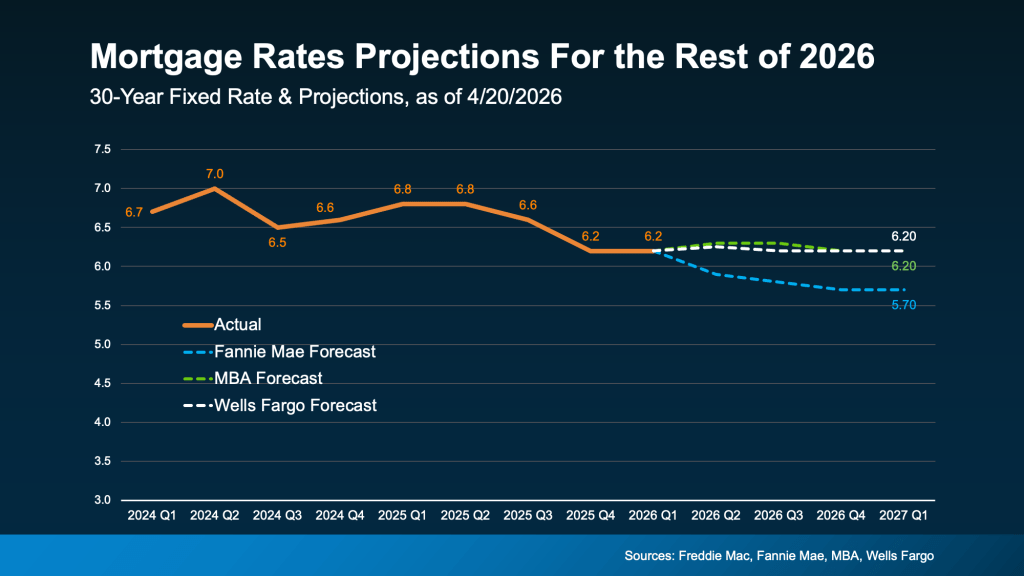
While mortgage rates have come down a bit in the last few weeks, forecasts don’t show a major drop ahead.The most likely scenario is that rates stay somewhere in the low 6% range this year.
And that’s not a big change from where rates are now (see graph below):
Of course, this depends on where inflation and the economy go from here. But, based on what we know today, waiting for a big drop in rates may not work out the way some people hope. AsU.S. Newsexplains:
“Mortgage rates aren’t expected to change much over the next several quarters . . .”
Not to mention, even with rates where they are today, it’s alreadymore affordable than a year ago. So, even if they don’t change much, it’s still better than it was.
Misconception #2:“There Are Too Many Homes for Sale Right Now”
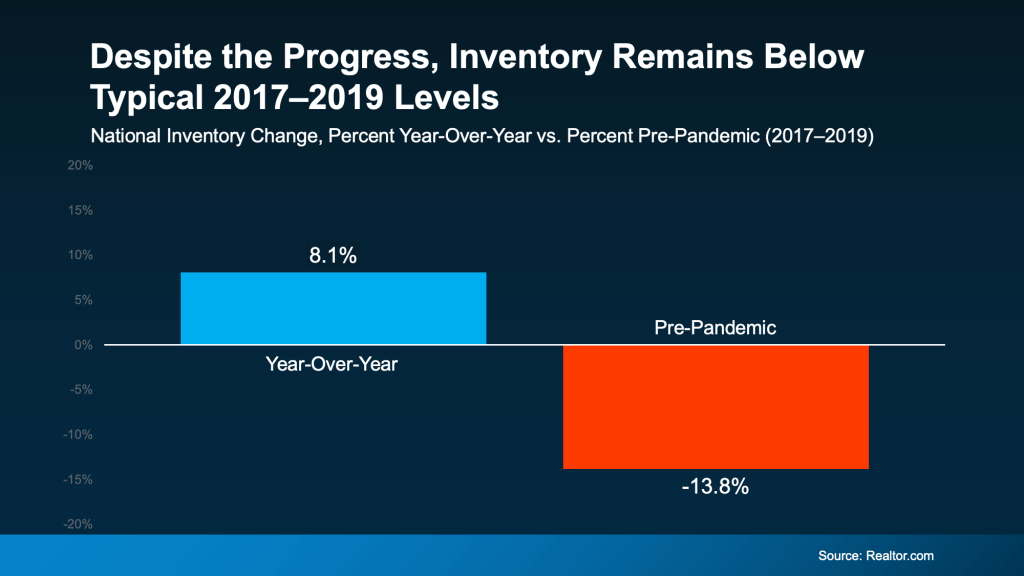
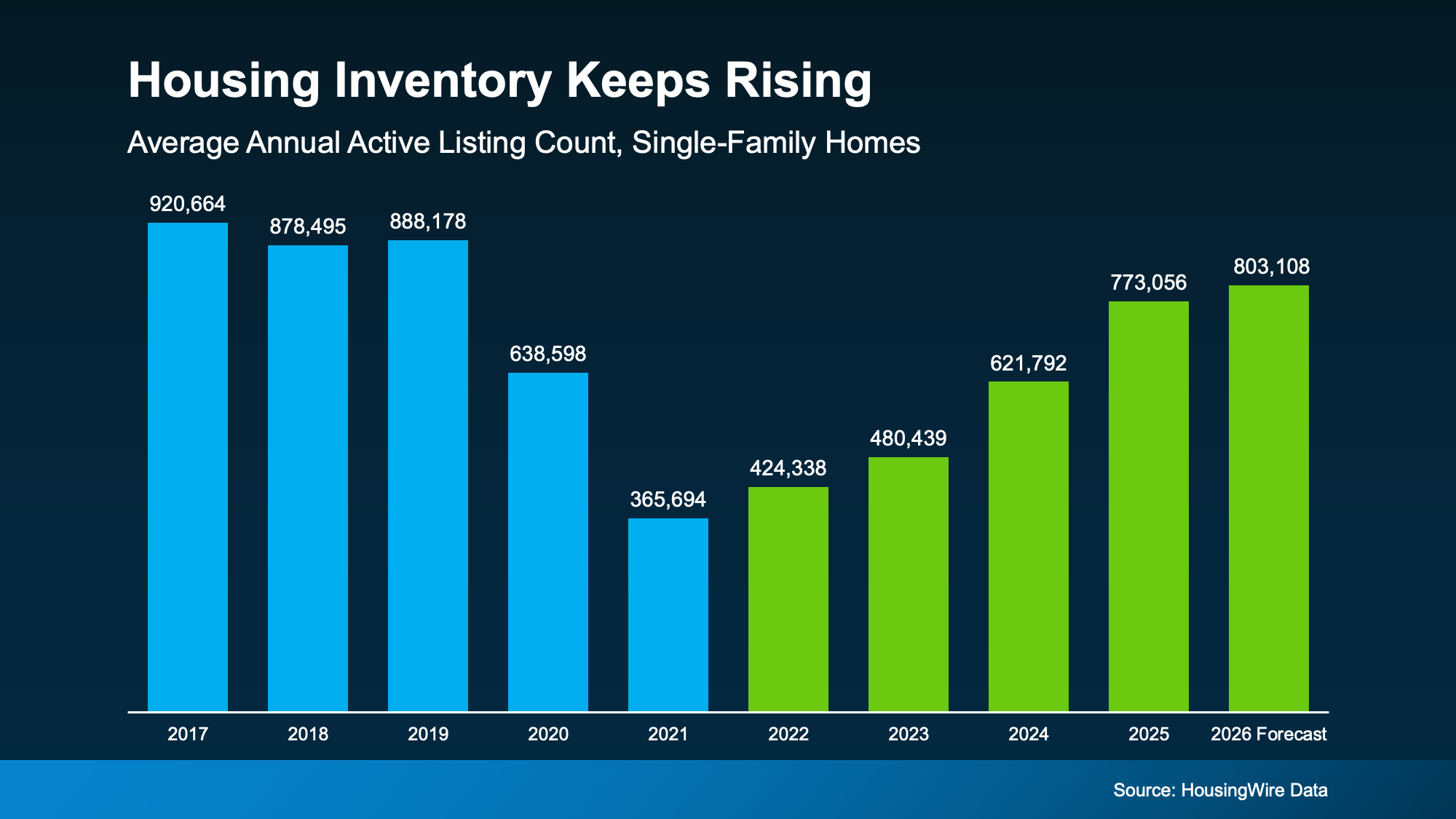
You’ve probably heard inventory is up. And nationally, it is. The number of homes for sale is 8% higher than this time last year. But that’s not a bad thing. In fact, it’s one of the reasons buyers have a bit morebreathing room right now.
The problem is the headlines are making something good, sound bad. They’re focusing on how this is the most inventory we’ve had since 2019 or how many homes builders are building. And that can make it sound like the number of homes for sale is rising too far, too fast.
But that’s not what the bigger picture shows.
DatafromRealtor.comshows that, even though inventory is up compared to last year, it’s still nearly 14% lower than it was during the last normal housing market (2017-2019):
On Cape Cod, inventory is down 21% comparing this March to last.
Misconception #3:“Home Prices Are About to Crash”
You’ve probably seen this one, too. The confusion is coming from the fact that some areas are experiencing price declines. And influencers are running with that and saying prices are crashing. But that’s not the reality.
Most areas are seeing prices rise, not fall. On Cape, the median sales price for a single-family home is up almost 2% YTD comparing the first three months of this year with the same time period in 2025.
Why are prices up?
Many homeowners aren’t selling because they don’t want to give up the low mortgage rate they locked in a few years ago. And that’s keeping a lid on how much inventory can grow.
Since inventory is still below pre-pandemic norms, there aren’t enough homes for sale to cause a price crash.
And even in markets with more inventory, some sellers are choosing to pull their homes off the market instead of cutting prices.
Bottom Line
Online posts are going to make things sound worse than they are. If you want a true, data-bound look at what’s really happening in today’s market, please talk with us. You can always find us at 508-388-1994 (Mari and Hank) or 781-423-8662
We can separate fact from fiction.
Mari, Hank, and Colleen
Nothing herein should be construed as investment advice. You should always conduct your own research and due diligence and obtain professional advice before making any investment decision.

Your Uncle Bob, who “knows a little something about real estate,” is telling you that foreclosures are ticking up. He says that you should wait to buy until you can get a good deal.
Is he right?
Not really.
It is true that foreclosures are rising. But they are nowhere near the crisis level that Bob is suggesting. Here’s why.
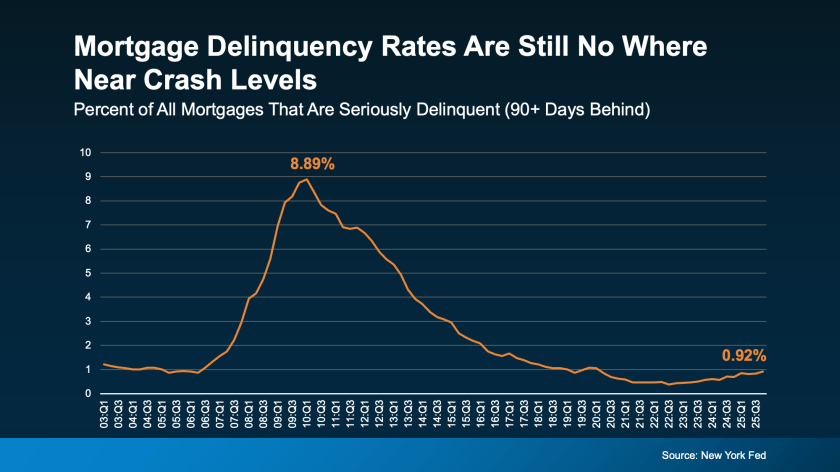
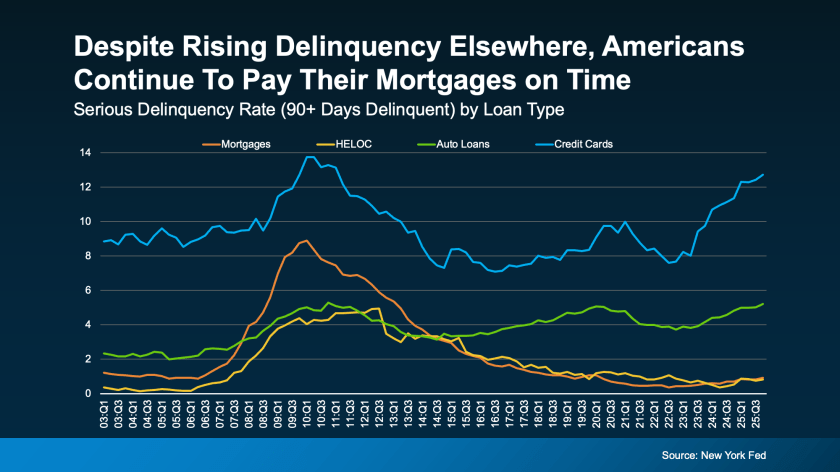
Take a look at serious delinquencies – loans where the homeowner is more than 90 days late on their mortgage payments.
While those have increased slightly, data from the New York Fed shows they still remain low. And they aren’t anywhere close to levels seen when the market crashed (see graph below):
Right now, about 1% of mortgages are seriously delinquent. That’s only 1 in 100.
In the years around the crash, they were up around 9%. That’s 1 in 11.
That’s a big difference.
And it’s important to remember not all delinquencies even become foreclosure filings. Some homeowners who are falling behind will work out repayment plans with their banks and lenders because banks don’t want to see a wave of foreclosures either.
That’s why foreclosure numbers are even lower than delinquencies. ATTOM shows only 0.3% of all homes are currently going through a foreclosure filing. And some of those won’t even all go to a full foreclosure. That’s not a wave. That’s a ripple at most.
If People Are Falling Behind on Payments, Why Aren’t There Even More Foreclosures?
Maybe you’re wondering, if people are struggling financially, why aren’t there more foreclosures? Here’s the easiest way to answer that.
When households feel financial pressure, they tend to prioritize their mortgage payment above almost everything else. Because the last thing they want to lose is their home.
More data from the New York Fed shows serious delinquencies have risen more for credit cards and auto loans (the blue and green lines). But mortgage delinquencies and home equity lines of credit (borrowing against the value of your home) aren’t seeing the same big uptick (the yellow and orange lines). They’re a lot more stable overall.
In other words, people may fall behind on other debts, but they fight hard to keep their homes. And, in today’s housing market, they’re also in a strong equity position to do so.
Home Equity Changes Everything
Many people have built significant equity over the past several years. And that creates options. As Daren Blomquist, VP of Market Economics at Auction.com, explains:
“Distressed homeowners… many times they still have equity in their homes. There’s an opportunity for them to sell that home, avoid foreclosure, and walk away with equity.”
That’s a major difference from 2008. Back then, many homeowners owed more than their homes were worth. And selling wasn’t an easy solution. Today, for many people, it is. And even in situations where equity isn’t enough, homeowners are encouraged to contact their loan servicer early to explore alternatives to foreclosure.
Bottom Line
Are foreclosure filings rising slightly? Yes. Are they anywhere near crash territory? No. And homeowners today have far more equity and flexibility than they did during the crash.
If you’re concerned about what you’re seeing in the headlines, the best move isn’t panic, it’s perspective. And the data right now says this isn’t 2008 all over again.
If you’re not sure that this is the right time for you to make a change, you can always find us at 508-388-1994 (Mari and Hank) or 781-423-8662 (Colleen). We can walk you through your options.
Mari, Hank, and Colleen
Nothing herein should be construed as investment advice. You should always conduct your own research and due diligence and obtain professional advice before making any investment decision.
Do you want to sell your home for the most money and in the least amount of time?
There’s one decision you’re going to make when you sell your home that determines whether your house sells quickly, or it sits. Whether buyers make an offer, or scroll past it. Whether you walk away with the maximum return, or you end up cutting the price later.
And that’s your asking price.
The #1 Mistake Sellers Make Today: Trusting the Wrong Number
If you’re thinking about moving and trying to figure out what your house may sell for, it’s tempting to start with an online home value tool. They’re fast, free, and easy. And you don’t have to talk to anyone. But here’s the problem: they don’t know your house.
And that can be a bigger drawback than you realize.
Where Online Estimates Fall Short
Online tools often lag behind the market. They look in the rearview mirror, relying on closed sales and delayed information. And in that sense, they’re using incomplete data.
Why?
Some important information just isn’t available online. Bankrate explains:
“While these tools can be a useful starting point, keep in mind that they typically do not provide the most accurate pricing. Algorithms can only rely on the information available; they can’t account for things like a home’s condition or renovations made since the last public information was updated.”
They can’t see:
The unique features that make your house special,
All the work you’ve put in to keep it in good condition,
Or, how in-demand your specific neighborhood isright now.
So, while they may do a good job in some cases, they can’t be as accurate as we are.
In a market where buyers have more options, a seemingly small margin of error can cost you thousands if you price too low, or weeks of lost momentum and time if you price too high.
If you want to sell for the most money and in the least amount of time, you don’t want the fast answer on how to price your house. You want the right one.
That’s why the savviest homeowners today don’t rely on algorithms when it actually matters. They rely on people, specifically trusted local agents.
What an Expert Agent Brings to the Table
According to1000Watt, sellers overwhelmingly believe real estate agents have the best sense of a home’s true value, far more than any automated tools.
That confidence isn’t accidental. As Bankrate puts it:
“A professional appraiser or real estate agent can visit the home in person, assess the neighborhood as a whole as well as the individual property, perform more thorough market research, and consider subjective details.”
And those details matter. We don’t just pull reports. We know what’s happening right now:
What buyers are paying this month, not last month, or even last year,
How your home compares to the current competition in your neighborhood,
Which features add value based on what buyers are willing to pay for today,
How to price your house to create urgency in this market.
And once we visit your home, we may even find your online estimate undershot your value. So, if you used the estimate you got online, you’d actually be leaving money on the table. And no one wants that.
Bottom Line
While online tools can give you a rough starting point, only local experts like us can give you a price that actually works.
If you want to know the right number for your house, not just the easiest one to find, let’s connect. You can always find us at 508-388-1994 (Mari and Hank) or 781-423-8662 (Colleen).
Talk soon…
Mari, Hank, and Colleen
Nothing herein should be construed as investment advice. You should always conduct your own research and due diligence and obtain professional advice before making any investment decision.

A mortgage rate affects more than just the interest you pay on your home loan.
If you’re one of the thousands of homebuyers waiting for rates to fall, you should know it’s already happening. Rates recently crossed an important milestone when they officially dipped their toes into the 5s – something that hasn’t happened in about three years.
This moment marked a critical threshold. Now, rates are sitting in the low 6% territory. And forecasts by the experts project they’ll hover near this range throughout the year.
Here’s why that’s so good for you.
Why It’s Such a Big Deal
A mortgage rate impacts more than just the interest you pay on your home loan. It shapes your entire buying experience.
When rates were up around 7% just one year ago, a lot of buyers felt priced out. Payments were higher. Budgets felt tighter. Affordability was a bigger challenge. That’s especially true for first-time homebuyers, who felt the biggest pinch.
But according to industry experts, that’s starting to change now that rates are slowly inching down. Let’s break down why.
Right now, borrowing costs are in their lowest range in almost three years. And that can change the type of home you can afford.
At 6% or below, you’ll see:
Lower monthly payments. The payment on a $400k home loan is down over $300 compared to when rates were around 7%.
More buying power, thanks to the extra breathing room in your budget.
So, you can now make a stronger offer, purchase in a different location, or buy a home that checks more of your boxes. And that feels like a big shift compared to when rates were at 7%.
This Opens the Door for Millions of Buyers
To drive home just how much this helps potential homebuyers, consider research from the National Association of Realtors (NAR). It shows that when mortgage rates are at this level, millions more households can afford a home. When rates are at 6% or below:
5.5 million more households can afford the median-priced home
And roughly 550,000 of those people will likely buy a home within 12 to 18 months
This isn’t speculation. That’s pent-up demand finally getting a green light. You have the chance right now to get ahead and buy before more people notice the game has changed.
Because whether rates stay in the low 6s or dip back down into the upper 5s, the math is already working in your favor. And the difference from a low 6% to a high 5% isn’t as big as you may think. But the difference from 7% to 6%? That is a very big deal, and it’s a number that’s already working in your favor.
Mortgage rates don’t operate in a vacuum. Home prices, local inventory, property taxes, home insurance, and your personal finances still matter.
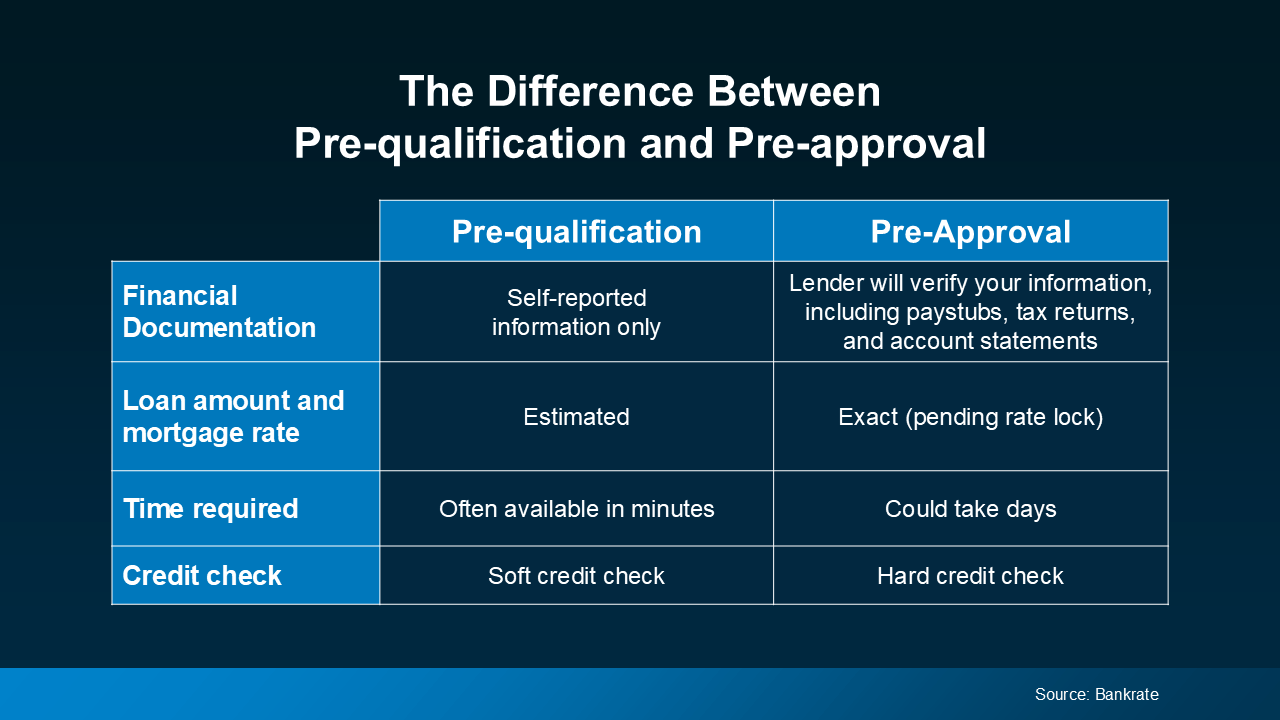
Remember a rate in this territory doesn’t mean every home suddenly works for every buyer. That’s why getting pre-approved and running your numbers with a trusted lender is key. If you do not have a lender, please let us know. We can recommend several.
Bottom Line
Mortgage rates dropping to a 3-year low isn’t just a headline.
For many buyers, where rates are now could be the difference between watching from the sidelines and finally getting the keys to their next home.
If you’ve been waiting for a sign to re-run your numbers and see what’s possible now, this is it.
Let’s connect and take a look at what today’s rates mean for your budget and your options.
Mari, Hank, and Colleen
508-388-1884 (Mari and Hank)
781-423-8662 (Colleen)
The information contained, and the opinions expressed, in this article are not intended to be construed as investment advice. You should always conduct your own research and due diligence and obtain professional advice before making any investment decision.
This could be the difference between “not yet” and “let’s go!”
If you paused your plans to move because of high rates or prices, it may finally be time to take a second look at your numbers. Affordability is improving, according to First American. And that’s the fifth straight month where buying a home has started to get a little bit easier.
Let’s break this down into real dollars, so you can see the difference this could make for you (and your move).
Monthly Payments Are Coming Down
One of the clearest signs of this shift is in monthly payments. The latest data from Redfin shows mortgage payments on a median-priced home are now $283 lower than they were just a few months ago (see graph below):
This kind of monthly savings adds up fast, and totals nearly $3,400 over the course of a year.
Please remember thatthe median price is the price in the middle. There are just as many homes available below that price as above. So, don’t be put off by that figure.There are homes in your price range!
While this drop isn’t enough to totally change the affordability game overnight, think about it this way. When you’re putting together a home buying budget, a few hundred dollars may be the difference between being comfortable buying a home and feeling like money is still a bit tight.
And from a home-search perspective, it may even be enough to change the price point you can look at.
And that’s a big deal if you haven’t found a home you love in your price range yet. It gives you a little more flexibility to find the one that’s right for you.
Either way, that’s a big win.
What’s Behind the Shift?
Three key factors are working in your favor right now:
Mortgage rates have eased from their high earlier this year
Home price growth is slowing in many markets
Inventory is increasing
All these help your bottom line and give you some breathing room if you’re buying a home. As Andy Walden, Head of Mortgage and Housing Market Researchat ICE Mortgage Technology, says:
“The recent pullback in rates has created a tailwind for both homebuyers and existing borrowers. We’re seeing affordability at a 2.5-year high . . .”
Whether you’re a first-time homebuyer or someone looking to move up into a bigger house, the shifts happening this year could make your move possible.
For you, the savings could be the difference between “not yet” and “let’s go.”
Bottom Line
If you’ve been sitting on the sidelines, this is your cue to start looking again. So, contact your lender to see how much you can afford today and then connect with us to see what’s currently available that might suit your needs. You can find us at 508-388-1994 or msennott@todayrealestate.com.
We’re here to help…
Mari and Hank
Nothing herein should be construed as investment advice. You should always conduct your own research and due diligence and obtain professional advice before making any investment decision.

After a couple of years where the housing market felt stuck in neutral, 2026 may be the year things shift back into gear.Expert forecasts show more people are expected to move – and that could open the door for you to do the same.
More Homes Will Sell
With all of the affordability challenges at play over the past few years, many would-be movers pressed pause. But that can’t last forever. There are always people who need to move. And experts think more of them will start to act in 2026 (see graph below):
What’s behind the change? Two key factors: mortgage rates and home prices. Let’s dive into the latest expert forecasts for both, so you can see why more people are expected to move next year.
Mortgage Rates Could Continue To Ease
The #1 thing just about every buyer has been looking for is lower mortgage rates. And after peaking near 7% earlier this year, rates have started to ease.
The latest forecasts show that could continue throughout 2026, but it won’t be a straight line down (see graph below):
There’s a saying: when rates go up, they take the escalator. But when they come down, they take the stairs. And that’s an important thing to remember. It’ll be a slow and bumpy process.
Expect modest improvement in mortgage rates over the next year but be ready for some volatility. This can happen as new economic data comes out. Just don’t let it distract you from the bigger picture: the overall trend will be a slight decline. Forecasts say we could hit the low 6s, or maybe even the high 5s. Your rate could be even lower depending on your individual situation.
And remember, there doesn’t have to be a big drop for you to feel a change. Even a smaller dip helps your bottom line.
If you compare where rates are now to when they were at 7% earlier this year, you’re already saving hundreds on your future mortgage payment. And that’s a really good thing. It’s enough to make a real difference in affordability for some.
Home Price Growth Will Be Moderate
What about prices? On a national scale, forecasts say they’re still going to rise, just not by a lot. With rates down from their peak earlier this year, more buyers will re-enter the market. And that increased demand will keep some upward pressure on prices nationally – and prevent prices from tumbling down.
So, even though some markets are already seeing slight price declines, you can rest easy that a big crash just isn’t in the cards. Thanks to how much prices rose over the last 5 years, even the markets seeing declines right now are still up compared to just a few years ago.
Of course, price trends will depend on local markets. Inventory is a big driver in why some places are going to see varying levels of appreciation going forward. But experts agree we’ll see prices grow at the national level (see graph below):
This is yet another good sign for buyers and overall affordability. While prices will still go up nationally, it’ll be at a much more sustainable pace. And that predictability makes it easier to plan your budget. It also gives you peace of mind that prices won’t suddenly skyrocket overnight.
On Cape Cod we continue to deal with over pricing which gives the impression with each “improvement” that prices are falling. That’s not the case. Asking prices are just being brought down to where they should be. (And not at the level a neighbor got three years ago.)
Remember, prices in one market may not be the same in another. If the cost of a home on Cape Cod, for example, is too steep for you, there are other parts of the Massachusetts or nearby Rhode Island, for example, that may better fit your budget. In fact, you may be able to afford more house elsewhere.
If you’re interested in expanding your search, Today Real Estate now reaches other parts of Massachusetts and the rest of New England. Mari will also be getting her Rhode Island real estate license soon. Please let us know how we can help.
Bottom Line
After a quieter couple of years, 2026 is expected to bring more movement – and more opportunity. With sales projected to rise, mortgage rates trending lower, and price growth slowing down, the stage is set for a healthier, more active market.
So, the big question: will you be one of the movers who makes 2026 your year?
Let’s connect if you want to get ready. It’s mid-October. 2026 is a little more than two months away.
You can find us at 508-388-1994 or msennott@todayrealestate.com. We’re happy to help.
Mari and Hank
PS: The latest edition of our Mashpee TV program “How’s the Market?” features Patti Lotane from Cape Cod Five, who will be talking about mortgage rates. We’ll be posting it soon on our social media platforms. Please watch for it.
The information contained, and the opinions expressed, in this article are not intended to be construed as investment advice. Nothing herein should be construed as investment advice. You should always conduct your own research and due diligence and obtain professional advice before making any investment decision.

Homebuyers are in the best position in more than five years to find the right home and negotiate for a better price.
If you’ve been watching from the sidelines, now’s the time to lean in. It’s officially the best time to buy this year. According to Realtor.com, this October will have the most buyer-friendly conditions of any month in 2025:
“By mid-October, buyers may finally find the combination of inventory, pricing, and negotiating power they’ve been waiting for—a rare opportunity in a market that has been tight for most of the past decade.”
So, if you’re ready and able to buy this month this means you should see:
More homes to choose from
Less competition from other buyers
More time to browse
Better home prices
Sellers who are more willing to negotiate
While October 12-18 is the national “best week,” conditions are in place now for buyers who have been waiting to upsize, downsize or right size to find the properties they’ve been looking for at prices that they’re willing to pay.
Here on Cape Cod, inventory is increasing as are days on market for listed properties. This means sellers should be interested in negotiating prices and terms so they can move on with their lives. Mortgage interest rates are also the lowest that they have been in a year helping buyers afford what are still high prices.
And remember home prices are lower elsewhere in other parts of Massachusetts, as well as New England and the country as a whole. So, you don’t have to limit your search to just on Cape. Through the various connections we have with realtors off Cape and elsewhere, we can refer you to a very qualified Realtor who can help you with your search.
What the Experts Are Saying
Realtor.com isn’t the only one saying you’ve got an opportunity if you move now. Lawrence Yun, Chief Economist at the National Association of Realtors (NAR), explains:
“Homebuyers are in the best position in more than five years to find the right home and negotiate for a better price. Current inventory is at its highest since May 2020, during the COVID lockdown.”
Daryl Fairweather, Chief Economist at Redfin, puts it like this:
“Nationally, now is a good time to buy, if you can afford it . . . with falling mortgage rates and significantly more inventory, buyers have an upper hand in negotiations.”
And NerdWallet says:
“This fall just might be the best window for home buyers in the past five years.”
How To Get Ready
To make sure you’re ready to jump, talk to us now. We can give you the information you need to decide if this is the time for you to buy. We can discuss timing, strategy, and how you may be able to buy your new home before selling your current one.
You can find us at 508-388-1994 or msennott@todayrealestate.com. We’re here to help…
BTW…Hank’s new book of short stories will be available soon. Please watch for it. Copies “signed by the author” can be purchased via Venmo. Contact Mari for details. Thanks.
Nothing herein should be construed as investment advice. You should always conduct your own research and due diligence and obtain professional advice before making any investment decision.