Homeowners decide to sell for all kinds of reasons — and no two stories are exactly the same.
Maybe your house no longer fits your growing family. Or perhaps life has changed, and you suddenly find yourself with more space than you need. Sometimes rising taxes and utility costs make staying put less practical. And other times, it’s simply the right moment to turn the page.
But is this the right time?
Please take a moment to watch the video below. We recently sat down with Patti Lotane, Mortgage Banker at Cape Cod 5; Bryan Reardon, real estate attorney; and Stephanie Viva, Executive Director of the Mashpee Chamber of Commerce, for a candid conversation about what selling your home this fall really looks like — and what you should know before getting started.
If after watching our discussion, you’re feeling ready to take the next step, we’re here to help. Reach out anytime at 508‑388‑1994 (Mari and Hank) or 781‑264‑5517 (Colleen). We can connect you with trusted local professionals like Patti, Bryan, and Stephanie so you have the guidance you need to be confident and prepared to sell your home this fall.
If you’re waiting for mortgage rates to fall significantly before you buy, you may be waiting a while.
But before you get discouraged, there’s a number working behind the scenes that’s actually good for you right now. It’s called the spread, and once you understand it, you may see today’s rates in a whole new light.
The Pattern That’s Held for 50+ Years
For starters, mortgage rates don’t move on their own. They tend to follow the 10-year treasury yield, a number tied to how investors feel about the economy.
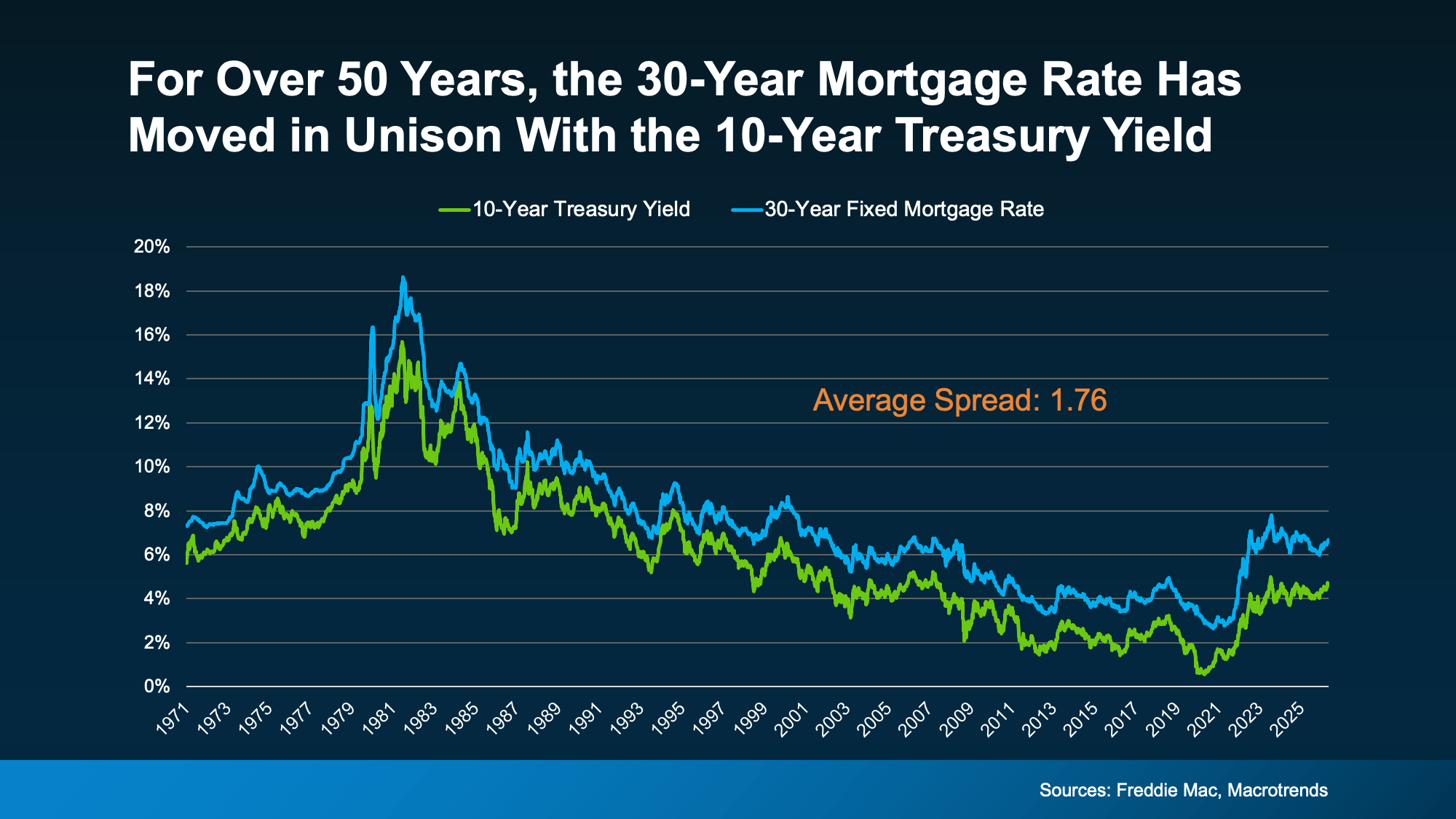
It’s not an exact science, since plenty of other factors can move it day to day. But broadly speaking, when the economy looks strong, that yield tends to climb over time. When the outlook gets shaky, it tends to ease. For over 50 years, the 10-year treasury yield and mortgage rates have moved almost in lockstep (see graph below):
The gap between them is called the “spread.” On average, that gap runs about 1.76 percentage points. And that spread impacts your mortgage rate. A wider spread tends to push mortgage rates higher than the treasury yield alone would suggest, while a narrower spread keeps rates closer to the treasury yield.
One of the Big Reasons Rates Likely Won’t Drop Dramatically Anytime Soon
If you’re hoping mortgage rates will drop a lot, here’s the reality – they probably won’t. At least not anytime soon. One of the big reasons comes down to that spread between the 10-year treasury yield and mortgage rates.
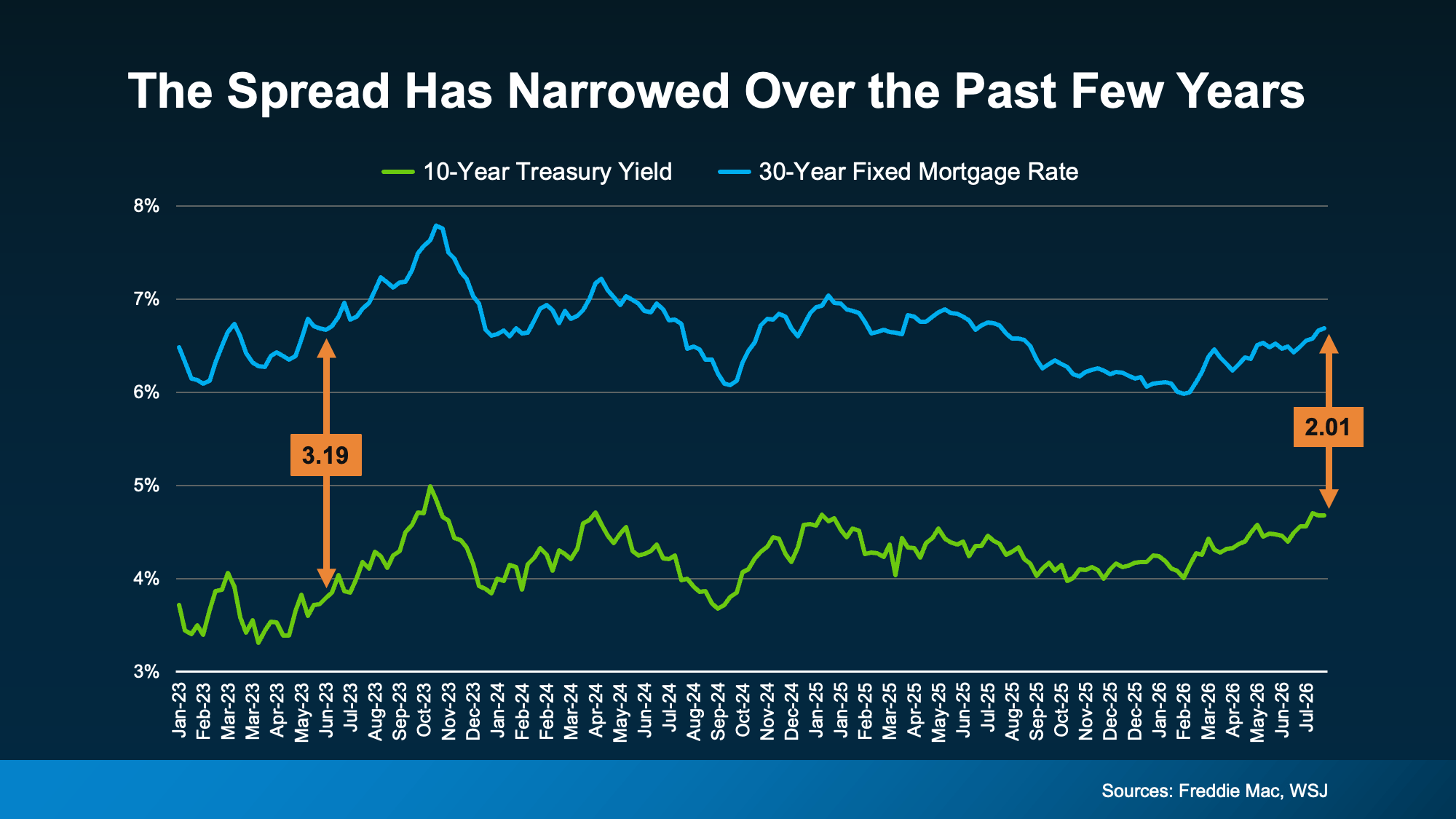
A few years ago, that gap got a lot wider as uncertainty in the economy pushed it as high as 3.19 points in 2023.
Now here’s the part worth noting – that gap has been narrowing lately. It’s down to about 2.01, just above the long-term average of 1.76 (see graph below):
When the gap is wide, there’s more room for rates to fall. But when it’s relatively normal, like it is now, there’s less wiggle room for rates to fall.
Why Mortgage Rates Aren’t Higher Right Now
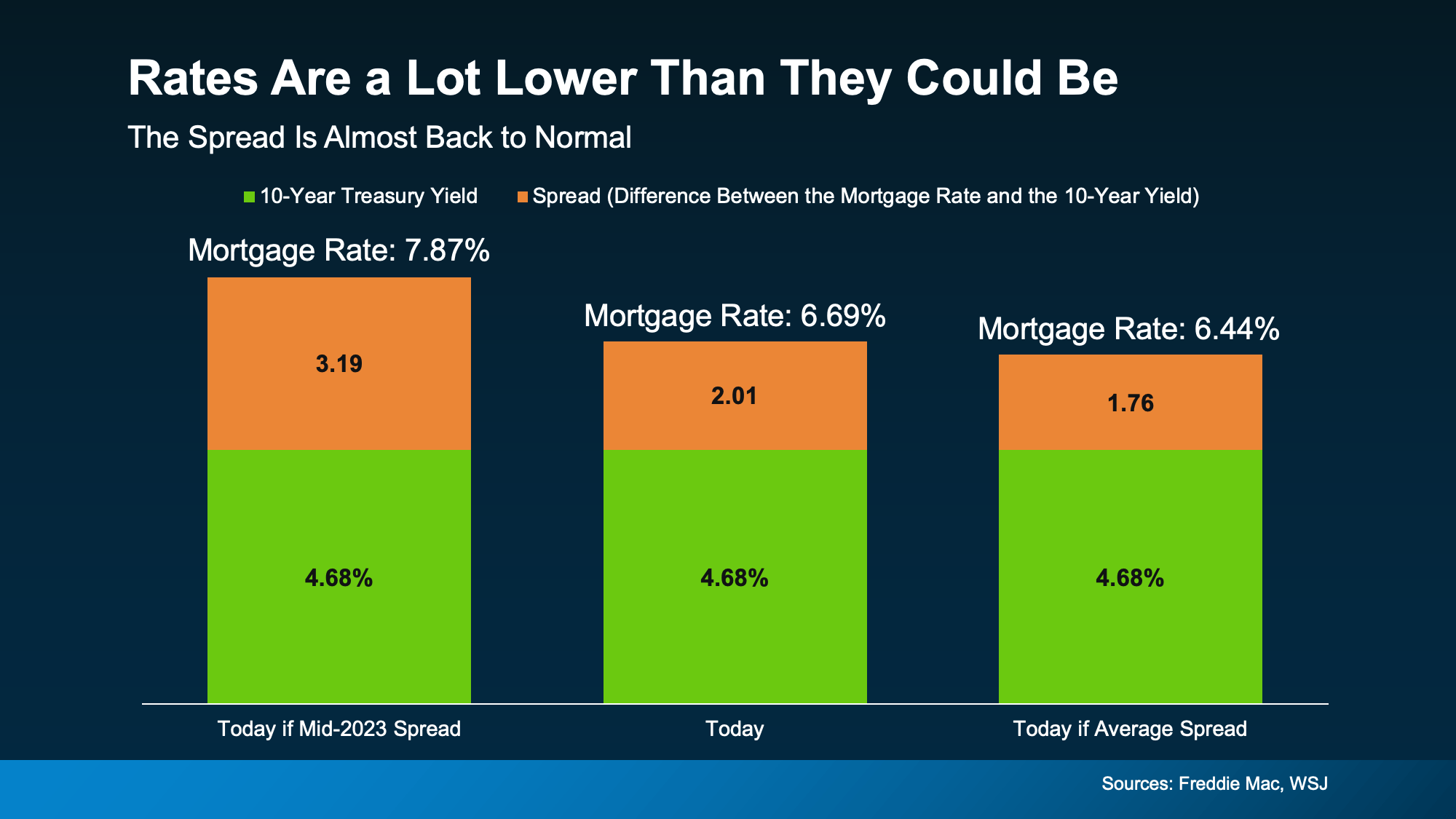
Today’s mortgage rate is basically the treasury yield plus the spread. So, when either one moves, your rate moves with it. Here are 3 different rates, all built off today’s 10-year treasury yield of 4.68% to show you just how much the spread matters for your bottom line (see graph below):
If the spread were still stretched out like it was in 2023, rates would be pushing close to 8% right now. That’s because the spread was over a full point wider than it is today.
But now, thanks to the spread narrowing recently, today’s rate sits around 6.69%. That’s the middle scenario in that visual. That’s a big difference in your monthly payment compared what we could see if the spread was as big as it was 2023.
Now compare that middle bar to the 3rd one. If the spread were sitting at its exact long-term average, rates would be around 6.5%. That’s only about a quarter of a point away from where rates actually are today. That means most of the improvement in mortgage rates we should realistically expect from a shrinking spread has already happened.
In other words, the same narrowing spread that’s the reason rates aren’t close to 8% today is also a big reason why they’re not likely to fall a lot further.
That’s the trade-off with a narrowing spread. Rates may not be where you want them, but they’re better than they could’ve been.
That’s also not what many buyers want to hear, but it’s the fact of life right now.
If you’ve been holding off on the change you know you need to make because of mortgage rates, maybe it’s time to have a serious conversation with a lender to see what your options are. If you need a referral, we’re happy to pass along contact information for some of the outstanding mortgage bankers we work with on a regular basis.
You can always find us at 508-388-1994 (Mari and Hank) and 781-264-5517 (Colleen.) We’re here to help.
Mari, Hank, and Colleen
PS: Please visit our updated website at http://www.makeyourmovewithmari.com. It’s designed to provide you with one place to look whether you’re planning to buy, sell, or are just curious about market conditions. We hope that you find it helpful.
Nothing herein should be construed as investment advice. You should always conduct your own research and due diligence and obtain professional advice before making any investment decision.
Then please join us for a one-hour seminar on Wednesday, August 12 at 6:30pm that will cover key information you need to know.
We’re excited to be bringing together experts like Stephanie Viva, Executive Director of the Mashpee Chamber of Commerce, who will talk about the Cape’s economic outlook for the fall; Patti Lotane, Cape Cod 5 senior mortgage banker, who will describe some of the various financing options your buyers may be considering, and Atty. Bryan Reardon, from the firm of Dubin & Reardon, who will outline how the selling process has changed since you last bought your home.
We’ll be talking about current market conditions and how you can best position your property for a successful sale.
The presentations will be brief so there can be plenty of time for questions and talk around the table.
The event is being held at the Cape Space/Mashpee Chamber offices in Mashpee Commons. We’ll have some light bites and beverages for you, too.
Seating is limited, so please let us know at 508-388-1994 or msennott@todayrealestate.com if you will be attending.
Every dollar counts when you’re buying a home, which is why the recent dip in typical down payments really matters.
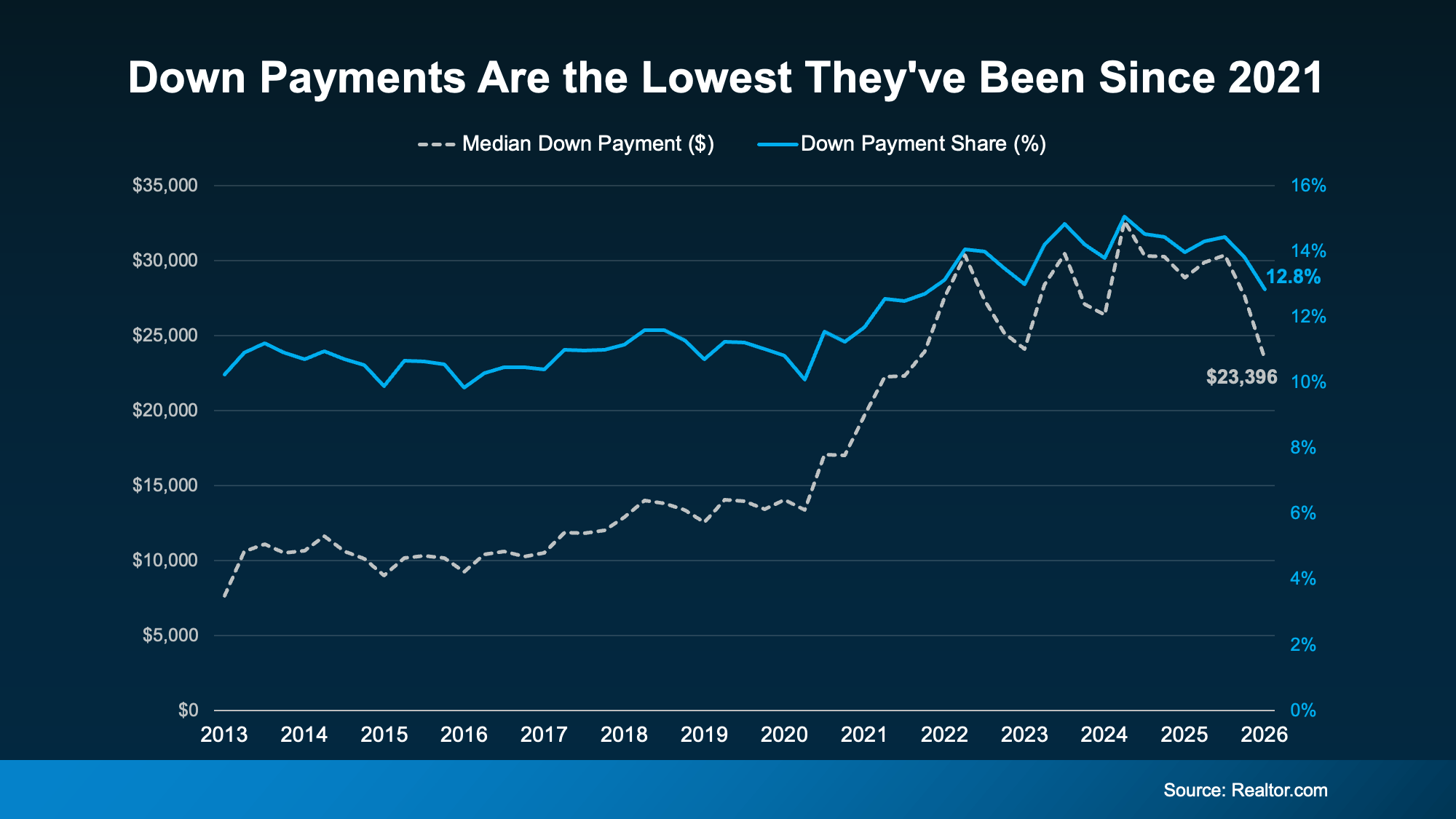
According to Realtor.com, the typical buyer put down about $23,400 in early 2026 – that’s $5,000 less than in 2025 and a 19% drop year over year! That’s the lowest down payments have been since 2021(see graph below):
So why are buyers putting less money down, and how can you put less down, too? Here’s your answer.
Why Down Payments Are Getting Smaller
There are a few things driving the trend:
Less competition between buyers. Part of it comes down to a more balanced market. With buyers facing less competition than they did a few years ago, there’s less pressure to put a big sum down just to stand out.
More moderate home prices. Your down payment is a percentage of the purchase price. So, as price growth cools, the amount you need to put down may change too. In a lot of markets, prices have slowed or leveled off, and some areas are even seeing slight dips. That can translate into smaller down payments.
Buyers opting for loans with lower down payments. More buyers are also turning to government-backed loans, like FHA and VA, which often need little or no money down. FHA loans have made up more than 24% of purchase mortgages for five straight quarters, and VA loans recently hit their highest share in over a decade, according to Mortgage Professional America.
But even a smaller down payment is still a significant chunk of cash, and saving it can be hard. So where does the rest come from? For many buyers, two things make the difference: programs built to help, and a hand from loved ones.
Help You May Not Know You Qualify For
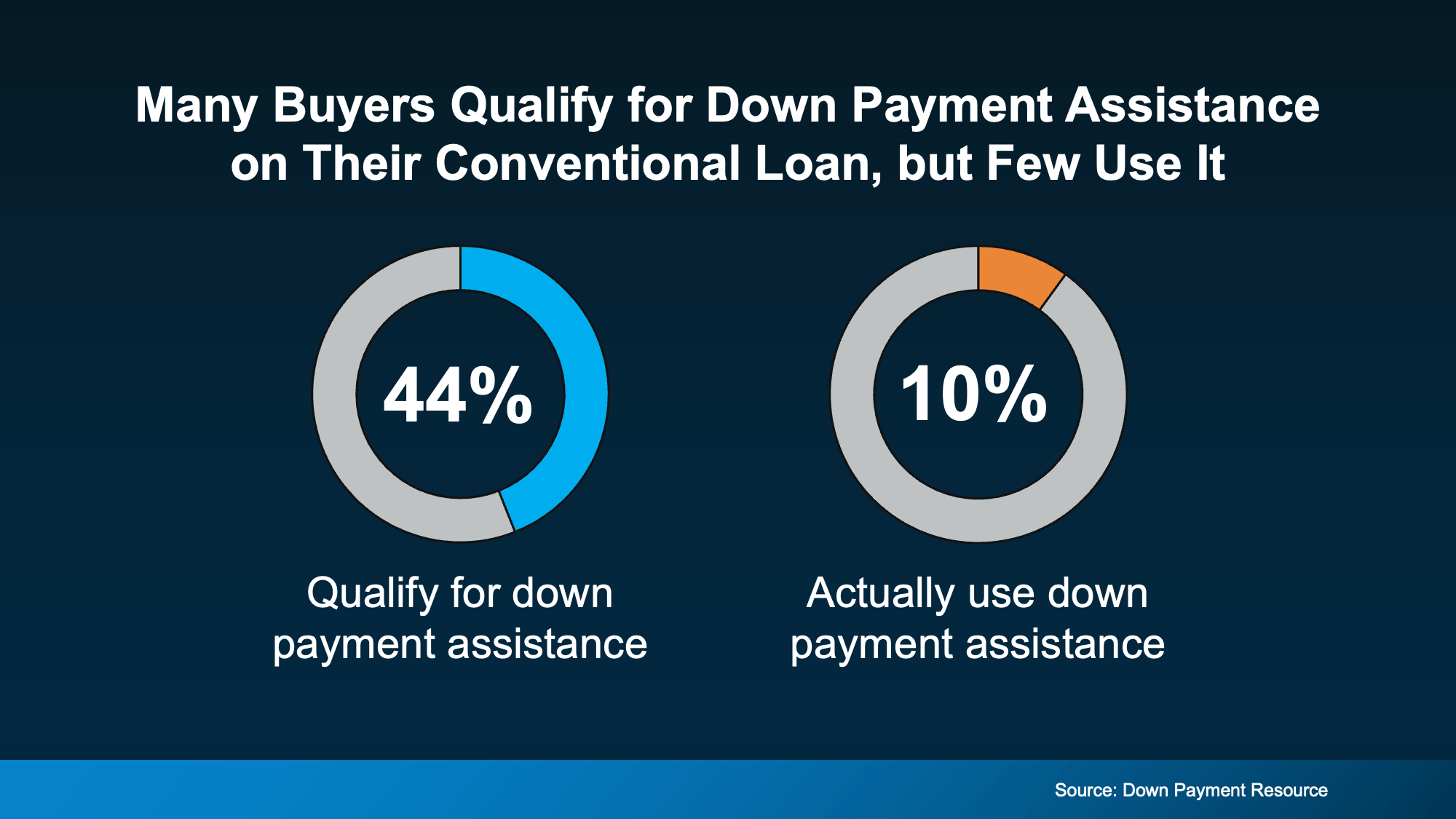
Down payment assistance is one of the most overlooked tools out there. Looking at the 10 largest U.S. metros, Urban Institute and Down Payment Resource found nearly 44% of recent buyers already qualified for a down payment program, but many of them closed on their loan without tapping the help(see chart below):
The options are broader than you might assume, too. According to Down Payment Resource:
There are more than 2,600 down payment assistance programs available
More than half (62%) are designed to help first-time buyers
38% have no first-time buyer requirement, so you may qualify even if you’ve owned before
62% are open to buyers earning $100,000 or more
A Boost from Loved Ones
For a growing number of buyers, help comes from closer to home. Research from Veterans United shows about 59% of parents have provided or plan to provide financial support to help their child buy a home.
That support most often goes toward the down payment, followed by help qualifying for a mortgage and covering closing costs. Chris Birk, VP of Mortgage Insight at Veterans United, puts it this way:
“For many families, helping a child buy a home has become less of an optional gesture and more of a practical response to today’s affordability challenges.”
If your loved ones are in a position to help, it can make a real difference in how soon you can buy.
Bottom Line
Down payments are smaller than they’ve been in years, and that opens the door for more buyers.
And with added help from assistance programs and a little help from loved ones, you may have more ways forward than you realized.
We can help you sort through your options and connect you with a trusted lender. You can always find us at 508-399-1994 (Mari and Hank) or 781-264-5517 (Colleen).
Let’s talk soon..
Mari, Hank, and Colleen
Nothing herein should be construed as investment advice. You should always conduct your own research and due diligence and obtain professional advice before making any investment decision.
Summer months consistently bring more sellers into the market than later in the year.
A lot of people who want to move are telling themselves the same thing: “Maybe I’ll just wait until later this year once things calm down.”
While waiting sounds like a good plan, there’s no way to know when “things will calm down.”
What we do know is that rates aren’t expected to change much, so if that’s the #1 reason you’re waiting, it may not pay off. And there could be other things you miss out on in the meantime.
Plus, you may be delaying a move that you know you have to make.
Historically, summer is one of the strongest seasons of the year for both buyers and sellers. And if you delay your move until fall or winter, some of those opportunities may already be fading.
Buyers: Fresh Inventory Is Your Real Summer Advantage
One of the biggest frustrations buyers have faced over the past few years has been a lack of affordable options. Maybe you’ve run into that yourself:
You find a house you like, but it’s out of your budget.
You find something in your budget, but you don’t like it.
Or worse, nothing interesting hits the market for weeks.
Historically, summer helps with that.
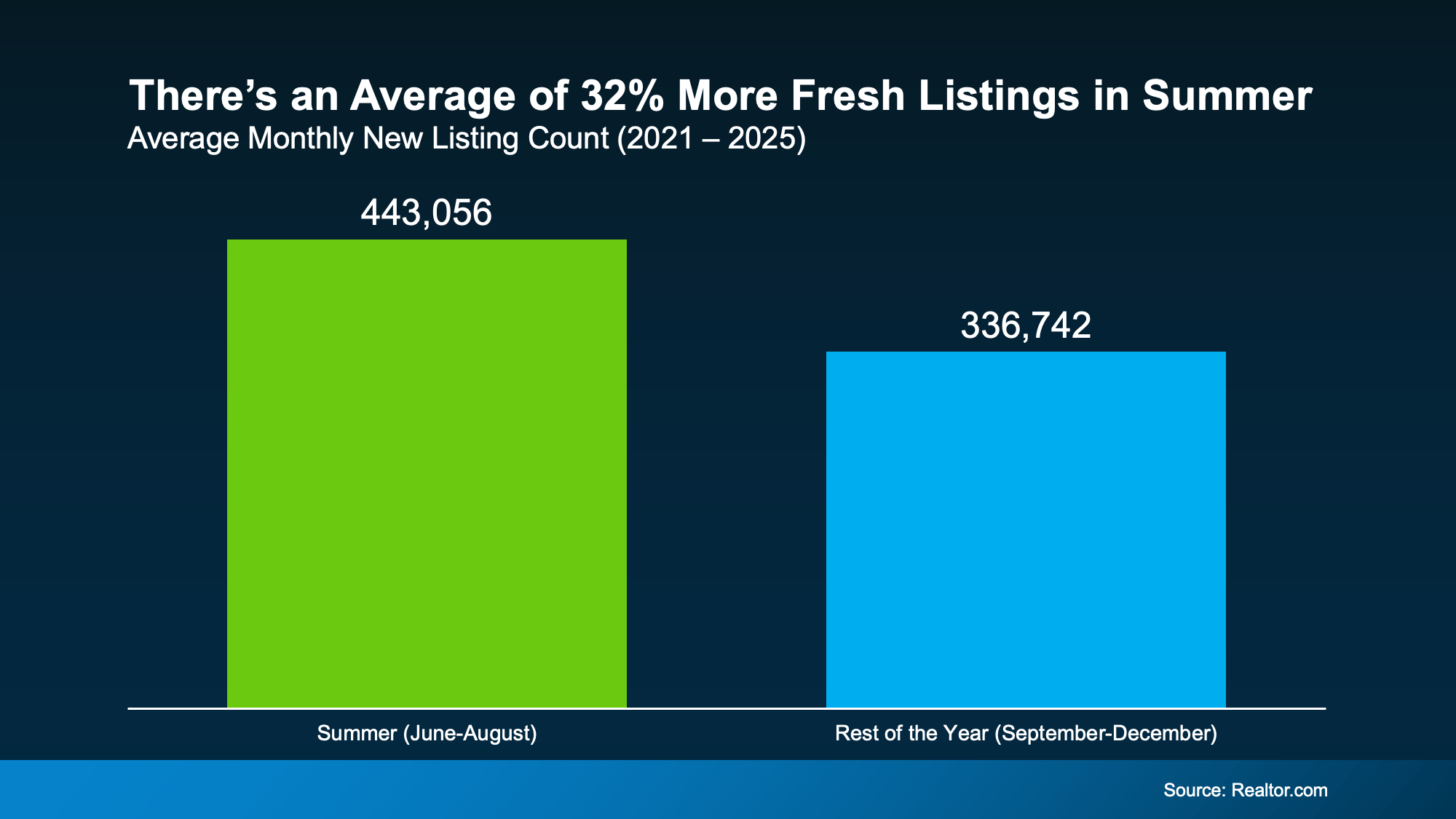
Looking at data from the last few years, summer months consistently bring more sellers into the market than later in the year. And that gives buyers a real window of fresh choices.
According to Realtor.com, any given summer month typically sees about 32% more fresh options than the average month from September-December.
With more newly listed homes, there’s a better chance of finding one you like where the numbers actually work.
Because all it really takes is one home to completely change your search. And if you’ve got more popping onto the market to choose from, maybe one of those is exactly what you need.
But keep in mind, this seasonal window isn’t open forever. Fresh inventory tends to slow down once Summer ends.
Many homeowners who planned to sell this year have already listed by then. Families who wanted to move before school starts have often already gotten it done, or at least, set it into motion. So, new listing activity usually cools as we head into fall and winter.
Of course, every year is different. But if finding the right home at the right price has been your biggest challenge, waiting until later in the year may not necessarily give you more options. In fact, recent history suggests it may do just the opposite.
Sellers: Homes Usually Sell for More and sometimes quicker in the Summer
If you’re thinking of selling, you may be considering holding off because you’ve seen headlines about lower asking prices, price cuts, and softer conditions in some markets. But those headlines don’t tell the whole story or convey just how much it varies by area.
Here’s what you really need to know. Even though the market’s becoming more balanced and some pockets are experiencing price declines, that doesn’t mean you’ve missed your chance to sell.
Seasonality can still work in your favor no matter where you are. And this Summer could still give you the chance to sell for a good price.
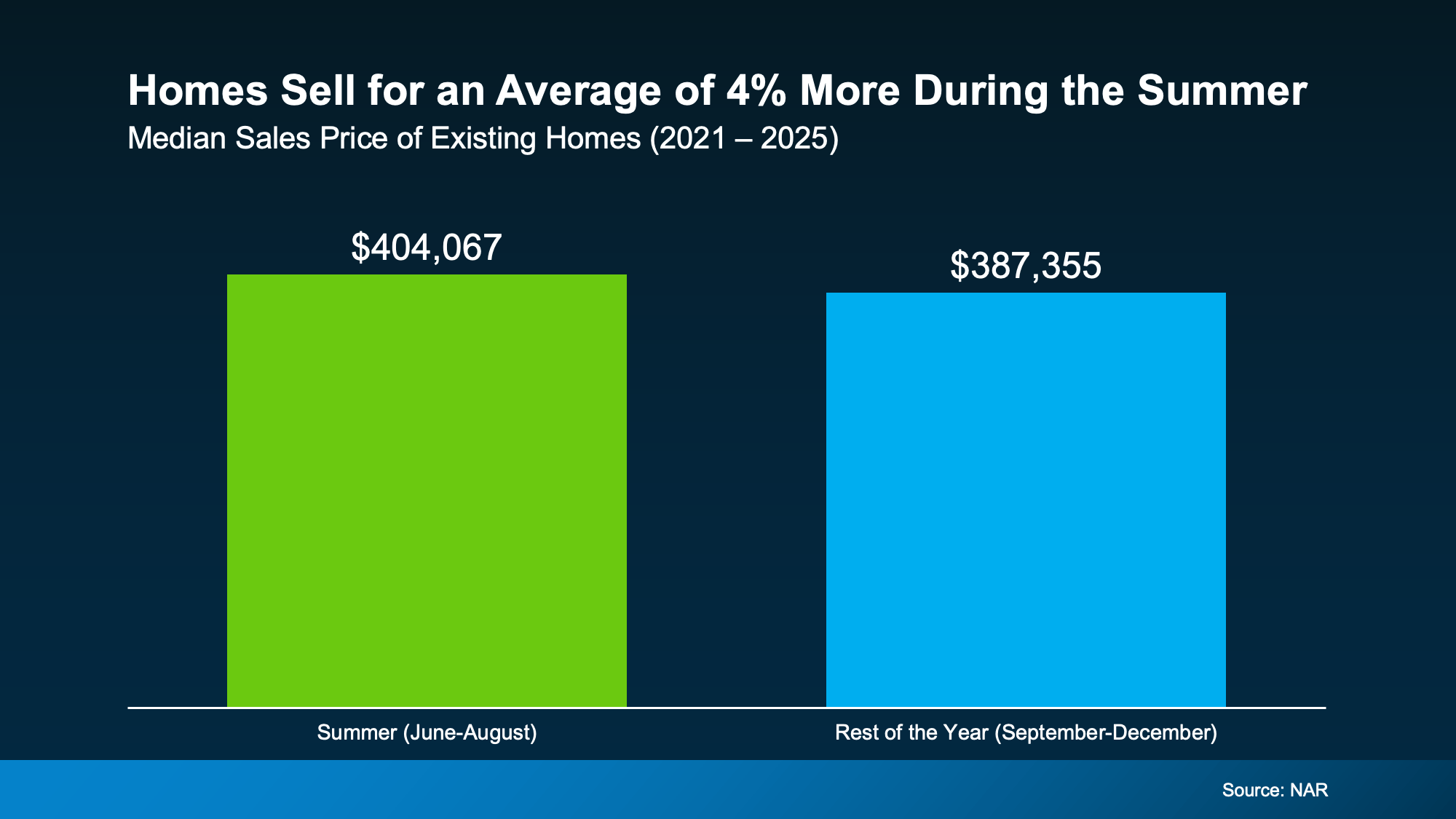
According to the National Association of Realtors (NAR), homes sold during a summer month usually sell for about 4% more than homes sold during the typical month from September-December:
Why? Summer buyers are usually operating on a set timeframe. They’re trying to move before the next school year or when they have more PTO and warmer weather to tour houses. That urgency can translate into better offers.
Now, that doesn’t mean you should price your house 4% higher this summer. That would actually be a mistake in today’s market.
It just means if you’re looking to get as much for your house as you reasonably can, a summer move could be a smarter play than waiting until later this year.
Because based on typical seasonality, you may get more for your house than you would if you waited until the fall or winter (when there are typically fewer buyers active).
And if you’re considering a move anyway, that’s worth factoring in.
Bottom Line
Could waiting until later this year work out? Sure. But it’s important to understand what you may gain by moving now too – that way you have the full picture before you decide.
If a 2026 move is on your radar, let’s connect and talk about what matters most to you. You can always find us at 508-388-1994 (Mari and Hank) or 781-264-5517 (Colleen).
Depending on your priorities, summer could be your moment.
Mari, Hank, and Colleen
Nothing herein should be construed as investment advice. You should always conduct your own research and due diligence and obtain professional advice before making any investment decision.
You may be telling yourself that you’re going to wait to move – maybe you’re hoping mortgage rates will come down, prices will fall, or the market will feel a little easier.
And honestly? A lot of people are feeling that way right now. But here’s what some are starting to realize.
Waiting doesn’t usually fix the thing that made you want to move in the first place.
Your family still desperately needs more room. Your empty nest still feels too…empty.
Your parents or grandparents still need you to live closer.
You just got married… or divorced.
Your vision of retirement has you living somewhere else.
Eventually, life can reach a point where waiting feels harder than moving.
That’s why some people are still deciding to buy right now, even in today’s market. Not because conditions are perfect. But because the life changes behind their move never really went away.
And maybe that’s exactly where you are too. If so, you’re certainly not alone.
The Real Reasons People Move
Data from the National Association of Realtors (NAR) shows 1 in 5 buyers last year said they felt like they had to purchase a home at that time, no matter the market.
That’s an important reminder right now. Sure, the dollars and cents of your move have to make sense for you. But big life changes happen whether mortgage rates and home prices are high, low, or somewhere in between.
And those big life events happen more than you may think. NAR says roughly 22.5 million people experience major life changes in a typical two-year span (see graph below):
These are exactly the kinds of things that can change how much space you need, where you want to live, or what kind of lifestyle makes sense now. Chen Zhao, Head of Economics Research at Redfin, explains:
“Life doesn’t stand still—people get new jobs, grow their families, downsize after retirement, or simply want to live in a different neighborhood.”
And that’s what makes waiting so hard. Every month you spend hoping the market changes is another month living in a house that no longer works for your life. It’s stressful to feel stuck. And that feeling usually doesn’t disappear.
There May Be More Opportunity Than You Think
But while affordability is still a challenge, there may still be a way for you to make your move.
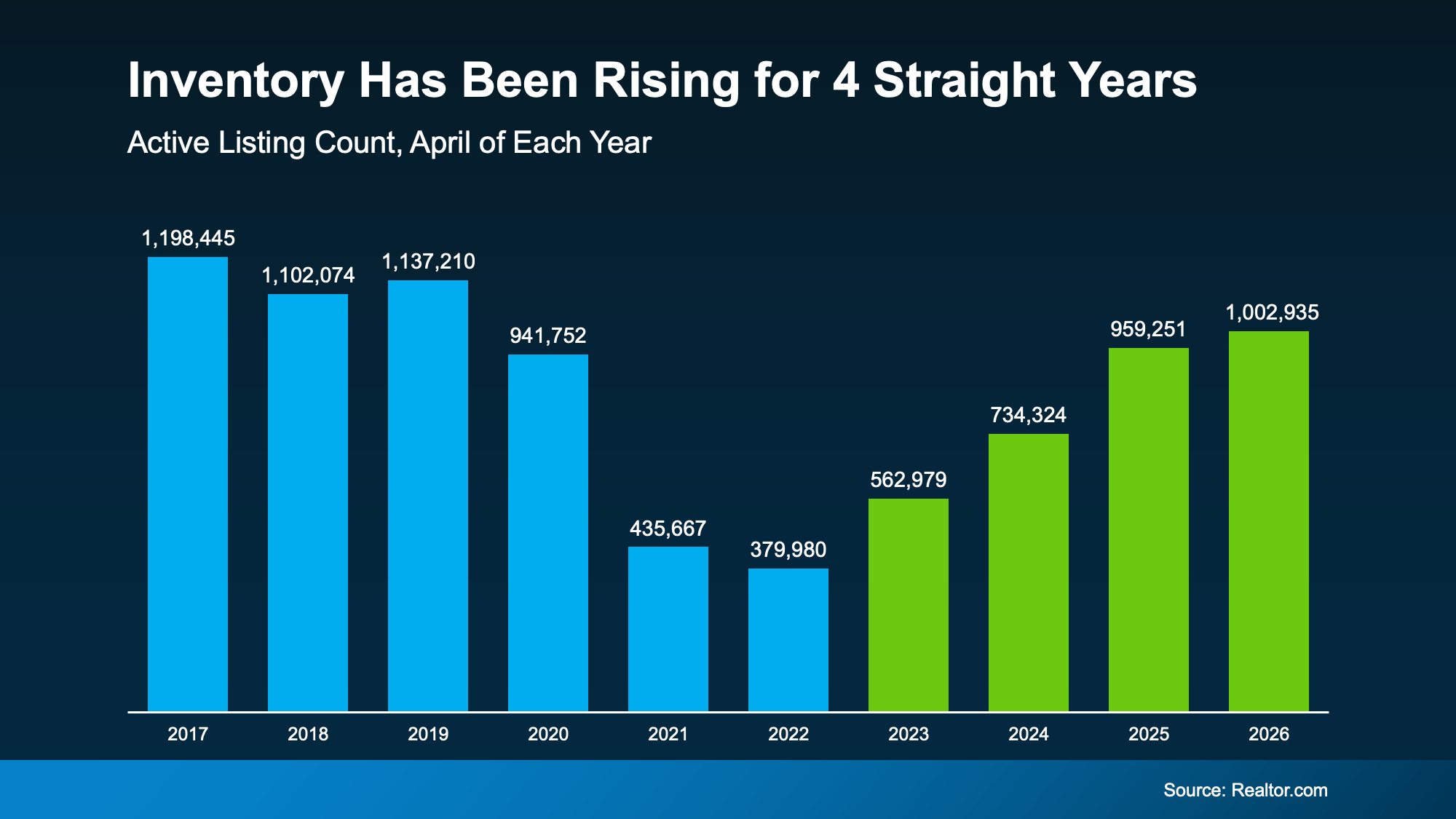
The number of homes for sale has been growing for 4 straight years (see graph below). That means more homes to choose from, and, in some markets, more room to negotiate than buyers had just a few years ago.
That doesn’t mean moving is suddenly easy. But it does mean some buyers are finding ways to make a move work. So, if you’ve been putting your plans on hold, maybe the question isn’t just:
“What’s the market doing?” or “When will it get better?”
Maybe ask yourself this, too: “Can I still live where I’m at right now and make it work?”
If the answer to that second question is “no,” it may be worth having a conversation about what your options look like today – despite where rates or prices are. You could find your move is still possible after all. With more homes for sale, there’s a better chance to find one that fits your life (and your budget) right now.
Bottom Line
Life changes. Priorities shift. Families grow. Kids move out. Careers evolve. And eventually, the house you’re in may stop fitting the life you’re living.
If that’s been weighing on you lately, let’s talk through what your options could realistically look like today, no matter where rates or prices are. You can always find us at 508-388-1994 (Mari and Hank) or 781-264-5517 (Colleen).
Life can’t always wait for perfect market conditions. Maybe you don’t have to either.
Mari, Hank, and Colleen
Nothing herein should be construed as investment advice. You should always conduct your own research and due diligence and obtain professional advice before making any investment decision.
Most sellers come into the market with one number in mind. And it’s often the one that costs them the most. Their asking price.
A survey from Realtor.com shows about 8 in 10 (80%) of sellers expect to sell at or above their asking price today. But here’s where things get interesting.
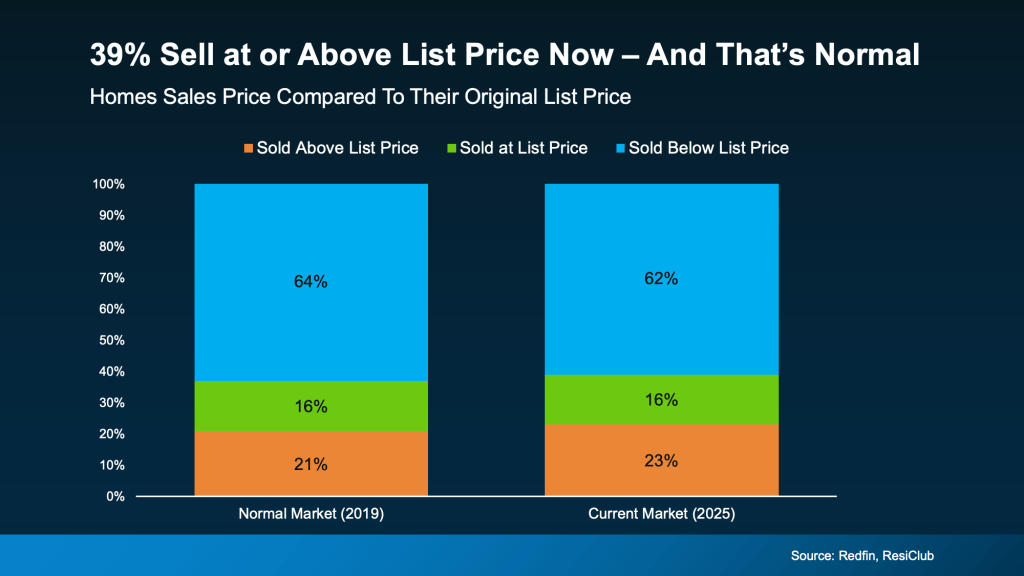
In reality, only about 4 out of every 10 (roughly 40%) actually do.
That’s a big gap. And it’s where a lot of sellers get caught off guard. So, why the disconnect? And how can you set yourself up to be one of the 4 in 10 that get top dollar?
Let’s break it down.
What Should You Really Expect To Get for Your House?
That 40% may sound low at first, but it’s not.
If you look back to the last typical year for the housing market (2019), what we’re really seeing is a return to what’s normal (see chart below). If anything, slightly more homeowners are able to sell above list price today compared to 2019:
It only feels low because the past few years were anything but typical. Between 2020 and mid-2022, buyer demand was sky-high and the number of homes for sale was at record lows. Almost everything sold over asking.
Now, the market has shifted.
There are more homes for sale. Buyers have more options. And that means they’re more selective about how they spend their money.
In other words, the rules have changed – and pricing like it’s still 2021 is where sellers run into trouble. You have to meet the market where it is if you really want to cash in big.
What Happens When a Home Is Priced Too High
Here’s the reality. It’s easy to think pricing high gives you room to negotiate. But it usually does the opposite.
When your home is priced above what buyers expect, in this market, they don’t negotiate. They move on.
Because buyers notice price first. And if your home doesn’t line up with similar options in your area, it may not even get a showing. And that’s when things start to snowball:
A high price gets less interest from buyers.
Less interest means fewer offers.
And fewer offers usually means more time on the market.
The Price Cut Trap (And How To Avoid It)
When a home sits that long without offers, a lot of sellers will do a price reduction. According to Realtor.com, 16.7 of sellers are going that route today.
But here’s the real problem. Even a price cut doesn’t guarantee a sale.
In fact, some buyers will see a reduction as a sign something’s wrong with the house – even when nothing is.
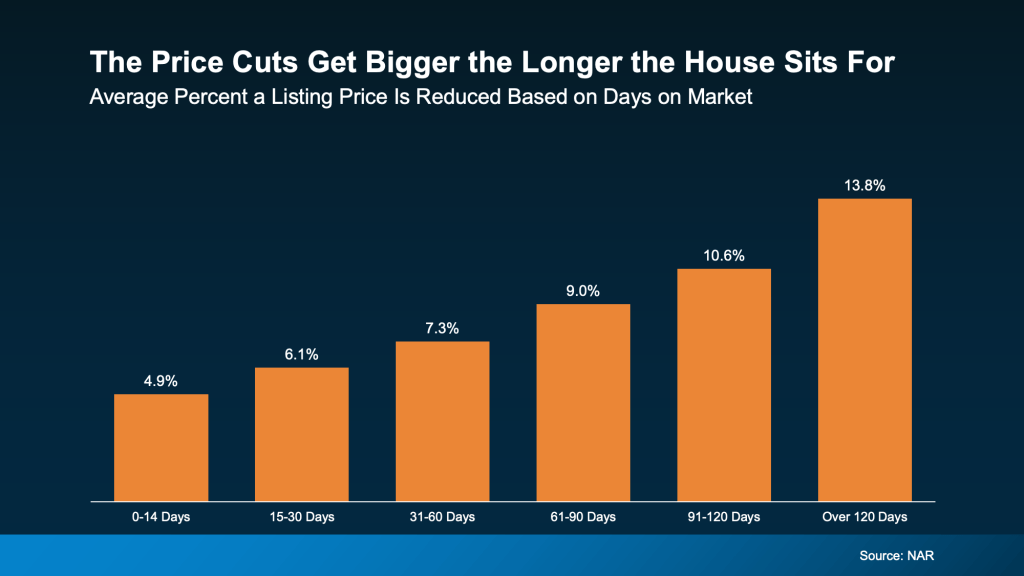
That’s why data from the National Association of Realtors (NAR) shows the longer a home sits, the bigger that price cut tends to be to attract buyers back:
So, what starts as a strategy to “leave room” for negotiate can end up costing you more in the long run.
Why Pricing Right from Day One Matters
Even though listing at or even just shy of market value may sound counter intuitive if you’re looking to get as much money for your house as possible, a lot of the time it really is the best strategy.
Because the goal isn’t just to list your house to see what price sticks. It’s to price it in a way that creates demand from day one.
NAR puts it best:
“While some sellers are pricing their homes higher than ever, a more ‘goldilocks’ frame of mind is a better approach to avoid price cuts and lingering time on the market.”
In other words, there’s a sweet spot. Too high, and buyers disappear. Too low, and they question the value.
But right in the middle? That’s where the magic happens.
And that’s where we come in.
We will help you understand what buyers are actually paying right now, how your home compares, and how to price it so it stands out immediately. And in today’s market, that strategy is the difference between:
Listing high, watching it sit, and selling for less later.
Or, pricing it right, creating competition, and putting yourself in a position to win from the start.
Bottom Line
A lot of homeowners think they can list high now and negotiate later, but that’s a mistake that costs them. And it’s the reason only 4 out of every 10 sellers are getting their asking price or more.
If you want to be in that group, it starts with getting the price right from day one.
Let’s connect so we can make sure you are. You can always find us at 508-388-1994 (Mari and Hank) or 781-423-8662 (Colleen).
Talk soon…
Mari, Hank, and Colleen
Nothing herein should be construed as investment advice. You should always conduct your own research and due diligence and obtain professional advice before making any investment decision.
For a lot of potential first-time home buyers, affordability is what’s standing in their way. But some buyers are getting creative and finding a way to still make the numbers work – and that’s through co-buying.
The Dream Is Still Alive. The Math Just Isn’t Working for Everyone.
Young people haven’t given up on the dream of owning a home – not even close. According to FirstHome IQ, homeownership still ranks among the top life goals for the next generation.
The problem? 73% of Gen Z and millennial buyers cite affordability as the reason for not making homeownership a priority. And it shows. First-time buyers now make up just 21% of all home purchases, the lowest share since the National Association of Realtors (NAR) started tracking the data in 1981.
But still, some buyers are making it happen. And a portion of them are turning to co-buying to get their foot in the door.
So, What’s Co-Buying?
Co-buying means purchasing a home with someone else, like a friend, sibling, or unmarried partner. You combine incomes, split the down payment, and share monthly costs. For some people, it’s a creative way to turn “someday” into a concrete move-in date that’s just around the corner.
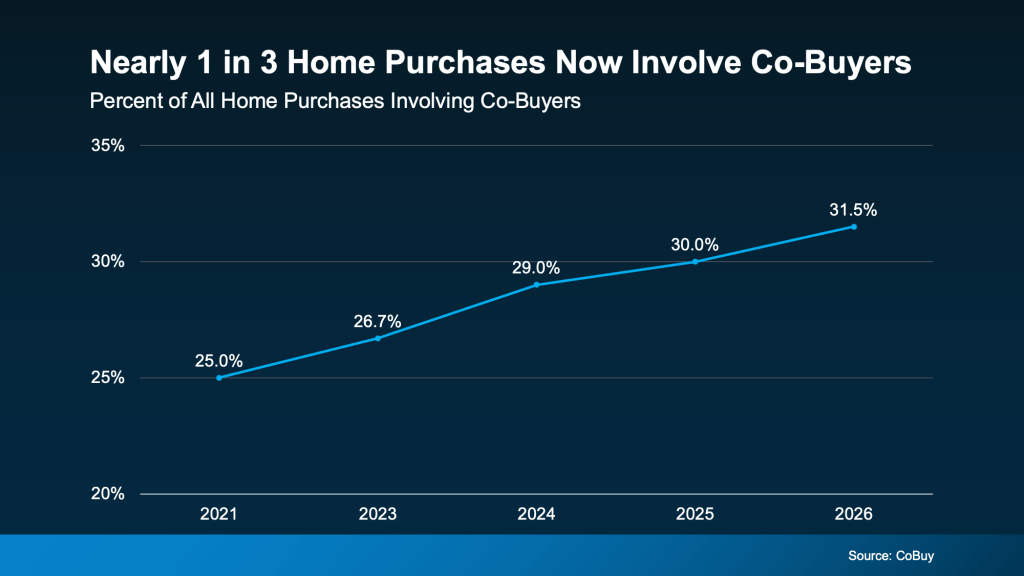
And it’s catching on fast, just look at where things stand today. According to CoBuy.io, 64 million Americans now co-own a home with someone they’re not married to. In fact, 31.5% of home purchases involve co-buyers (see graph below):
Why It Works
Here are just a few of the top reasons buyers are going this route, according to NerdWallet:
Quicker path to homeownership: If owning a home is a serious goal for you, buying with someone else can help make that reality on a shorter timeline. Two or more people can save up a down payment a lot faster than one. That’s less time waiting and more time building equity in a place that’s yours.
More purchasing power: With multiple incomes going toward the home purchase, you might be able to afford a nicer home or live in a more popular neighborhood. Sometimes teaming up means getting the home you actually want, not just the one you can barely afford on your own.
Easier loan qualification: Added income from more than one buyer can also help with your debt-to-income (DTI) ratio, which the lender will calculate based on all the borrowers.
Lower housing costs: Splitting up a mortgage payment multiple ways could maybe even make owning less expensive than renting Plus, sharing costs can make repairs or renovations more manageable, too.
Things To Keep in Mind
If you’re considering going this route, there are some things you’ll want to think over. For starters, co-buying works best with people you trust and share financial goals with. So, before moving forward, make sure everyone agrees on how costs are split, who handles what, and what happens if one person wants to sell down the road.
That’s why a written co-ownership agreement can be a smart move. It keeps everyone on the same page and helps avoid headaches down the line. Think of it less like a legal formality and more like a game plan for your new investment.
Bottom Line
Affordability challenges are real, but they don’t have to mean waiting indefinitely. Co-buying is helping some first-time buyers stop waiting and start putting down roots.
If you’re curious whether it could work for your situation, let’s talk. Reach out today and let’s figure out your path to homeownership together. You can always find us at 508-388-1994 (Mari and Hank) and 781-423-8662 (Colleen).
Mari, Hank, and Colleen
Nothing herein should be construed as investment advice. You should always conduct your own research and due diligence and obtain professional advice before making any investment decision.
You don’t have to be ready to buy to be ready to buy.
Be honest. Have you started looking at homes online or in person? If you have, it’s already past time to get pre-approved. Here’s why.
If buying a home is on your radar – even if it’s more of a someday plan than a right now plan – you don’t want to wait to find out what you can afford and what lenders are willing to loan you.
No matter what you’ve heard, pre-approval isn’t about commitment. It’s about clarity.
Here are the two big ways pre-approval sets you up for success.
You Know Your Numbers Up Front
During the pre-approval process, a lender will walk through your finances and tell you what you can borrow based on your income, debts, credit score, and more. Once you have that number, your search becomes a lot more focused.
With a mortgage pre-approval, you know what you can borrow, so it’s easier to figure out your ideal price point, and what you can actually afford. And that clarity is key.
Because if you just start browsing online or going to open houses just guessing at your price point, you run the risk of falling for a house that’s outside of your price range – and missing out on ones that are.
You want this number to be clearly defined before your search. Here’s why.
You Can Move Quickly When You Find the One
This is how a lot of home searches go today. You scroll through listings just to see what’s out there, and then it happens. You fall in love with something you’ve seen online.
If you’re already pre-approved? You’re probably in great shape.
But if you’re not…
Instead of being able to quickly make an offer, you have to scramble to get a lender, gather the financial documents, and then submit the necessary pre-approval paperwork first. And while you’re waiting to hear back from your lender, someone else who’s more prepared could beat you to the house. As Bankrate explains
“The best time to get a mortgage preapproval is before you start looking for a home. If you find a home you love but don’t have a preapproval in hand, you likely won’t have time to get preapproved before you need to make an offer . . .”
And that’s avoidable, with the right prep.
While you can’t control when the right home will show up, you can be ready for it. Think of it like showing up to the starting line with your shoes tied and your warm-up done – while everyone else is still looking for parking.
It’s not about rushing your timeline. It’s about removing the delay between finding the right home and being able to move on it.
One Thing You Need To Know About Pre-Approvals
Speaking of timing, pre-approvals do have an expiration date. So, be sure to ask your lender how long it’s good for. The Mortgage Reports explains:
“Mortgage preapproval letters are typically valid for anywhere from 30 to 90 days. However, a preapproval can be updated and extended if the lender re-checks your information.”
Doing the right prep and knowing this information can make the whole process a lot smoother.
You don’t have to be ready to buy to be ready to buy.
Getting pre-approved doesn’t mean you’re committing to buy right now. It just means you’ve taken a step to understand your numbers. And when a home catches your attention, you’re prepped and good to go.
Bottom Line
So, ask yourself this:if your perfect home popped up tomorrow, would you be ready to make a move?
If the answer is no and you’re thinking about buying, it may be time to get pre-approved. You don’t feel behind before your search even officially kicks off.
If you don’t already have a lender, just let us know. We can connect you with several trusted professionals who have worked with many of our buyers and consistently delivered excellent service.
You can always find us at 508-388-1994 (Mari and Hank) or 781-423-8662 (Colleen).
If you have buying on your mind, let’s talk soon…
Mari, Hank, and Colleen
Nothing herein should be construed as investment advice. You should always conduct your own research and due diligence and obtain professional advice before making any investment decision.
Realtor.com says there’s one window where the stars really seem to align year after year.
While the spring season consistently offers up some of the best conditions for home sellers, Realtor.com says there’s one window where the stars really seem to align year after year. And it’s coming up fast.
Based on their analysis of historical trends, the ideal week to put your house on the market this year is: April 12–18.
And here’s why this window stands out as being particularly seller-friendly:
Buyers Are More Active. According to the research coming out of Realtor.com, homes listed during this week typically get about 16.7% more views than in a normal week. And in a market where buyers have options, getting that extra attention can set the tone for your entire sale.
Sales Happen Faster. Realtor.com also explains the added demand from buyers sets you up for a faster process. While homes have been taking longer to sell lately, homes up for sale this week were on the market for 17% less time than usual. And that’s a difference you’ll be able to feel.
A Better Price for Your House. Since the number of homes for sale has grown, it’s normal for buyers to ask for credits, repairs, and price adjustments today. But, during this early Spring window, about 18.9% fewer homes do a price cut. That gives you a better chance of getting your full asking price.
More Profit in Your Pocket. According to the study, well-prepped homes listed this week can command a price that’s about $5,300 more than the average week (and $26,000 more than homes at the start of the year).
And who doesn’t want more eyes on their house, getting an offer in hand sooner (rather than later), and their best shot at selling for top dollar?
What You Need To Do To Get Ready
If you’re already thinking about selling and you want to take advantage of this sweet spot, your next step is shockingly simple. Just give us a call now. You can always find us at 508-388-1994 (Mari and Hank) and 781-423-8662 (Colleen).
Our expertise is going to be key over the next few weeks. We’ll help you figure out what you need to do now to get your house ready. Including:
What you’ll want to spruce up before listing
How to prioritize any repairs (and contractors that can help)
Quick wins that’ll have a big impact
What buyers care most about today
For some sellers, that’s a few easy fixes they can knock out in the next couple of weeks. A fresh coat of paint. Some new mulch. Or some light Spring cleaning.
For others, it’s worth taking another month or so to make some minor updates before listing. And that’s okay. Because while this mid-April window may give sellers an advantage, it’s not your only opportunity to sell.
And don’t forget…Colleen was on the staff the This Old House TV program. So, she knows a thing or two about this.
Bottom Line
Getting your house on the market in mid-April may give you an extra edge, but the bigger opportunity is the Spring season as a whole. The real question is:
Do you know what you need to do before you can list?
Because it’s officially go-time for any seller planning a Spring move.
If you want your house to hit the market during the “best” week (or even this season), let’s talk about what it’ll take to get it ready.
Mari, Hank, and Colleen
Nothing herein should be construed as investment advice. You should always conduct your own research and due diligence and obtain professional advice before making any investment decision.