Sellers Are Cutting Prices

They know that to sell, they have to be willing to engage in some give and take.

You’re scrolling through listings on your phone and everything looks good until you see the price (or the estimated monthly payment). Then you close the app. 

Because even if you love the house, the numbers feel impossible. But here’s the thing.

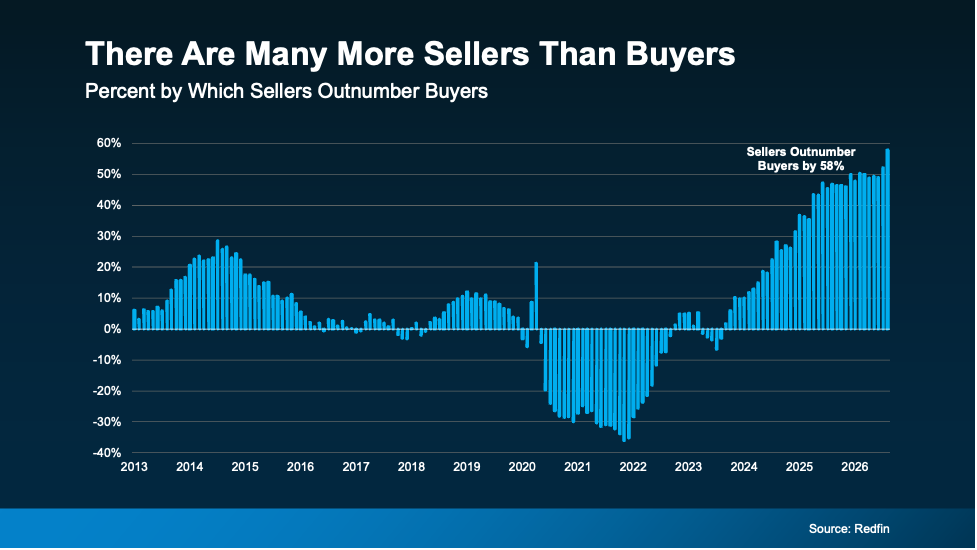
Nationally, there are more house sitting on the market than there are people out there looking. And when sellers need buyers more than buyers need sellers, that shows up in the price.

Lower asking prices. More price cuts. And homes priced for what buyers can actually afford – not what sellers hope someone might pay.

Not what sellers say they “need,” either.

And it may be enough to make buying more doable than you’d think. 

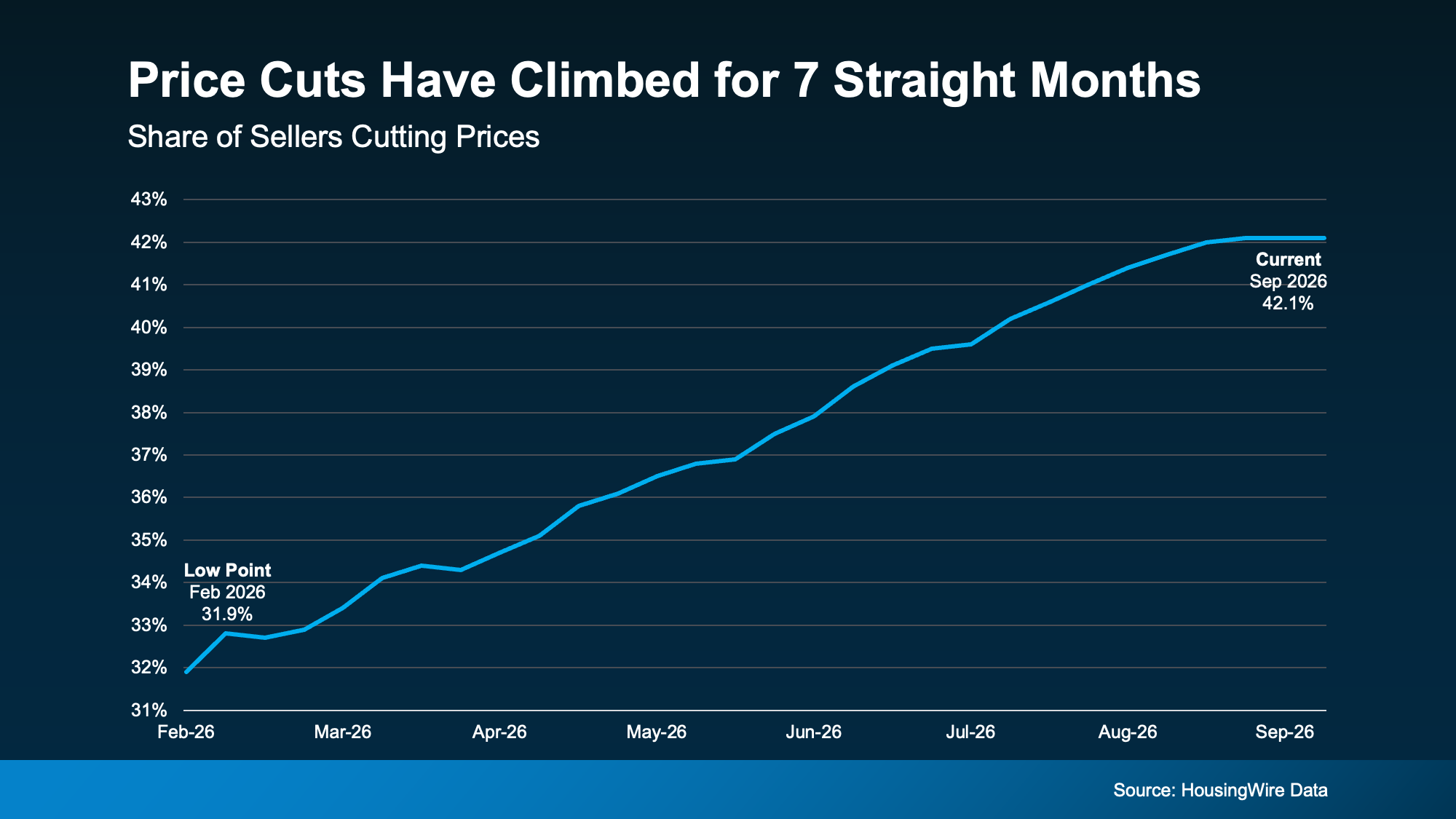
4 Out of 10 Sellers Are Cutting Their Price 

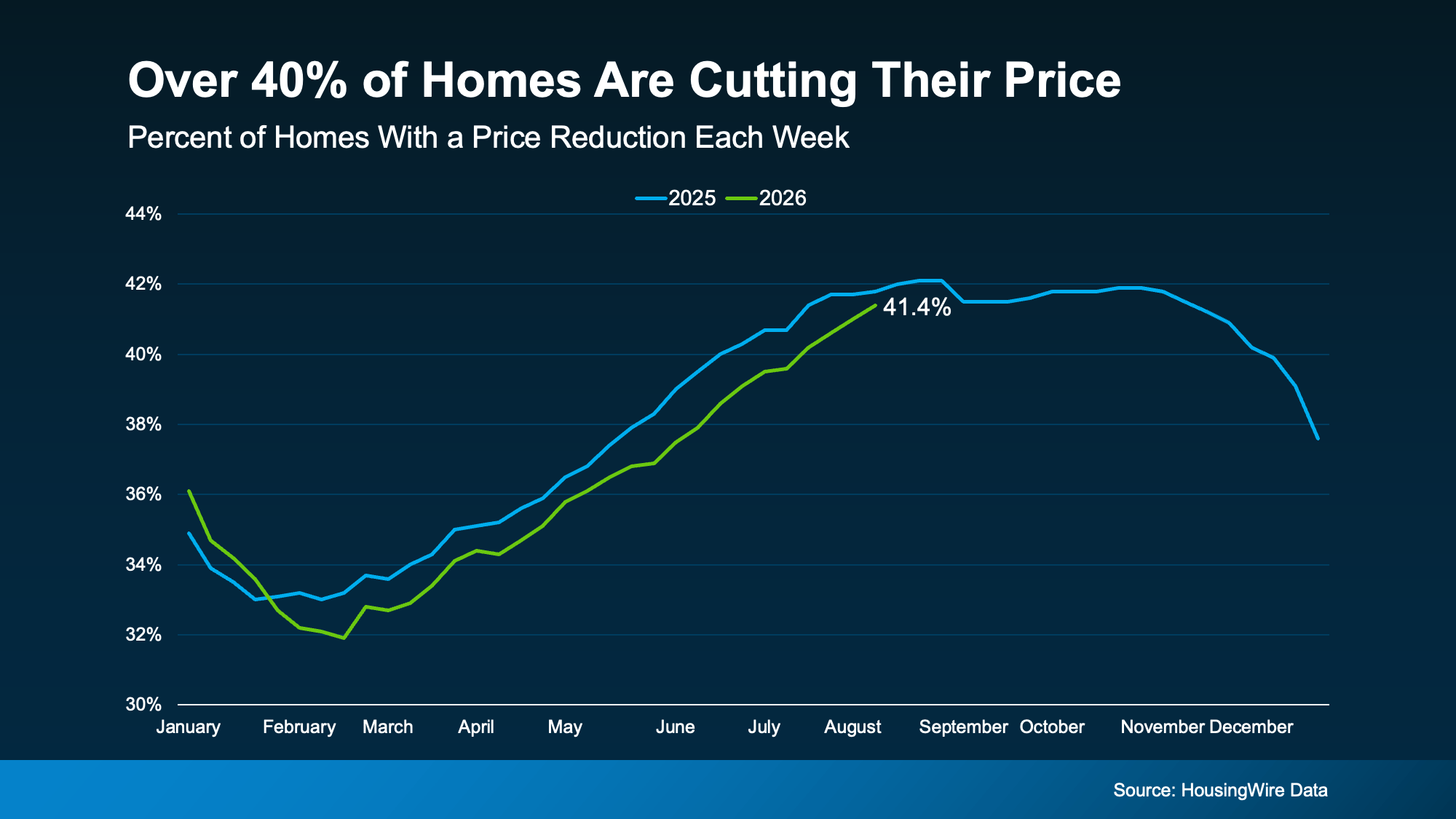
One of the clearest signs sellers are adjusting? Price cuts. HousingWire Data shows more than 40% of sellers are dropping this price.

That’s just slightly behind the volume we saw last year (see graph below):

a graph of a price reduction

That’s more than 4 out of every 10 homes listed. Think about what that means. That’s thousands of sellers deciding they’d rather lower their asking price than keep waiting for someone willing to stretch their budget. 

They know that to sell, they have to be willing to do some give and take. And when no buyers are biting, they’re pulling their biggest lever to draw buyers back in – their price. As Danielle Hale, Chief Economist at Realtor.com, explains:

“This is a market where people are adjusting and showing up rather than giving up. Sellers are meeting the market with more realistic asking prices, which is helping deals get done.”

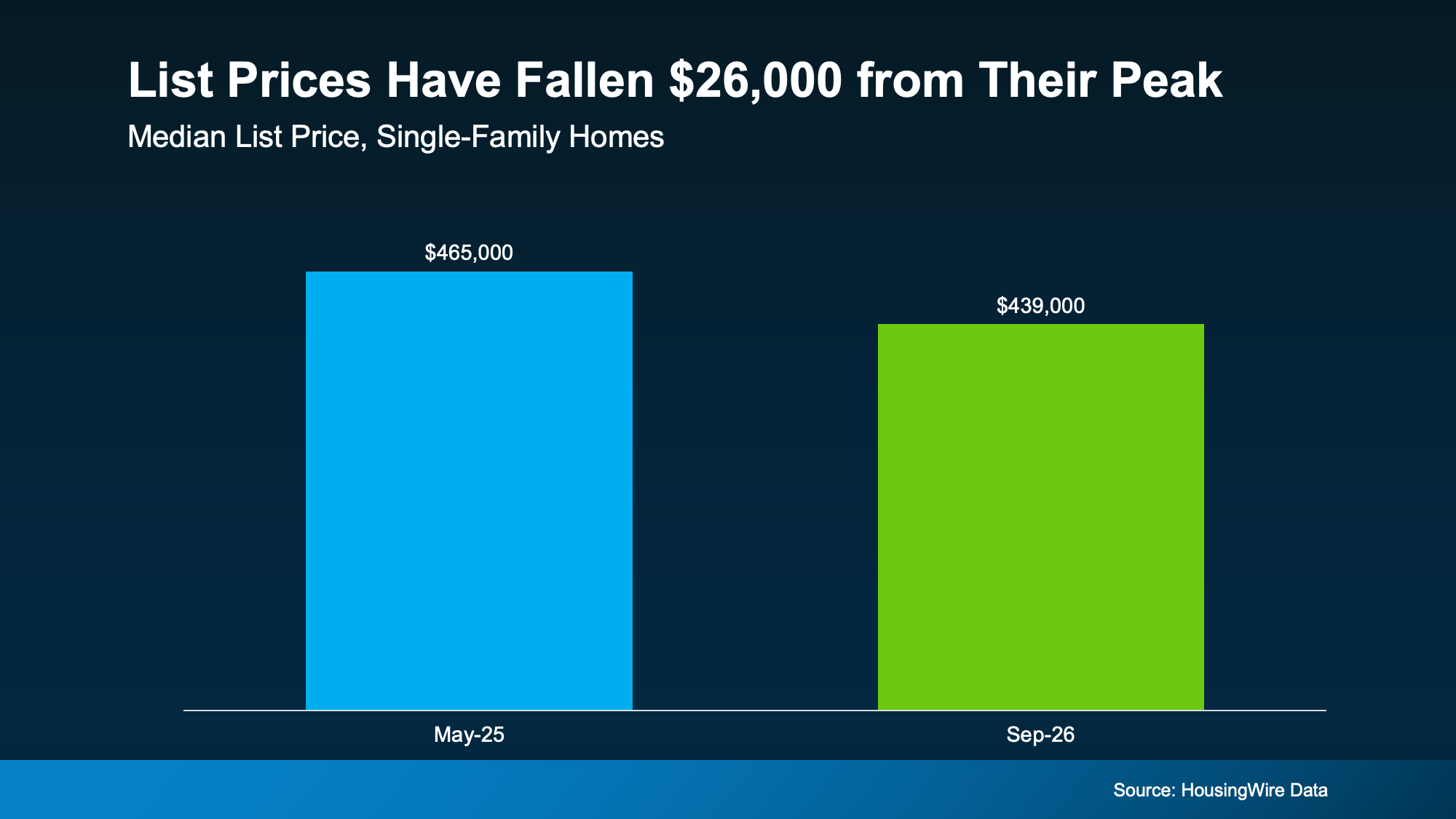
This July Saw the Lowest Median List Price for Any July in Five Years

What about the other 6 in 10 sellers? A lot of them started with a lower asking price to begin with rather than test the higher price and get crickets from buyers.

This is the strategy we recommend to our buyers. Those who start higher? They end up reducing the price and wait longer for their home to sell than they needed to.

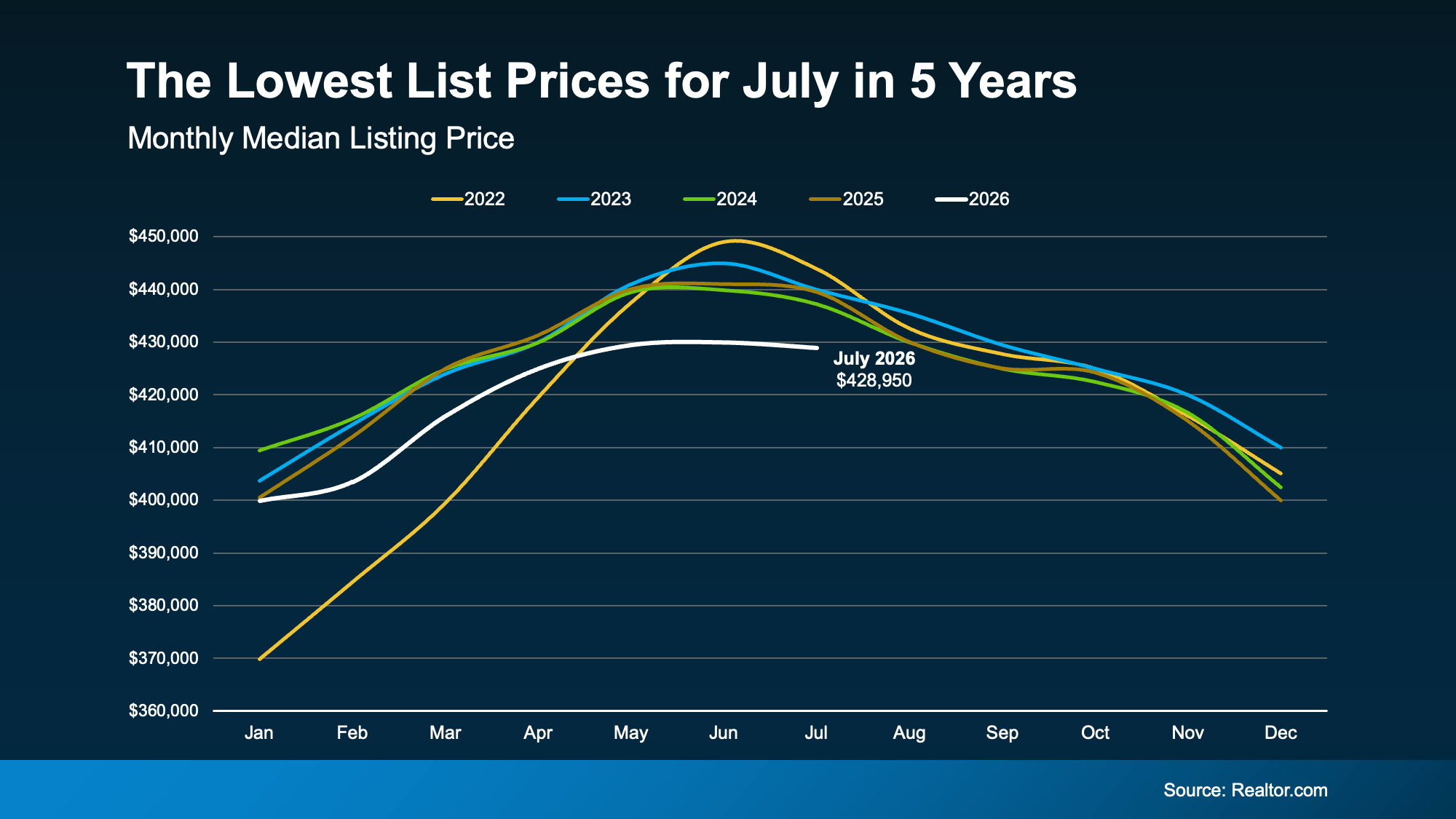
That may be why July 2026 had the lowest median list price of any July in the past five years, according to Realtor.com (see the white line in the graph below):

a graph of sales and prices

Now, that doesn’t mean home values are falling or that everything’s suddenly a steal. Prices are still above where they were before the pandemic. But what it does mean is this.

Sellers no longer banking on bidding wars or expecting buyers to pay whatever they ask. Instead, many are listing at prices that better reflect today’s market from the very beginning. 

And honestly, whether they’re pricing competitively from day one or adjusting after a few weeks on the market, the message for you is the same:

Sellers are more willing to meet you where you’re at.

Yes, affordability can be a real challenge. And the monthly payment you take on definitely does matter. But if you’ve been assuming everything is out of budget, there may be more wiggle room than you think.

Bottom Line

Right now, sellers are flexible on the price in ways they weren’t before. Let’s take advantage of that flexibility.

You may be surprised by what’s available – and how willing today’s sellers are to work with you.

If you’re ready to go, please let us know. You can always find us at 508-388-1994 (Mari and Hank) or 781-264-5517 (Colleen).

Mari, Hank. and Colleen

Nothing herein should be construed as investment advice. You should always conduct your own research and due diligence and obtain professional advice before making any investment decision.

Mortgage Rates vs. the Spread

Mortgage rates don’t move on their own.

If you’re waiting for mortgage rates to fall significantly before you buy, you may be waiting a while.

But before you get discouraged, there’s a number working behind the scenes that’s actually good for you right now. It’s called the spread, and once you understand it, you may see today’s rates in a whole new light.

The Pattern That’s Held for 50+ Years

For starters, mortgage rates don’t move on their own. They tend to follow the 10-year treasury yield, a number tied to how investors feel about the economy.

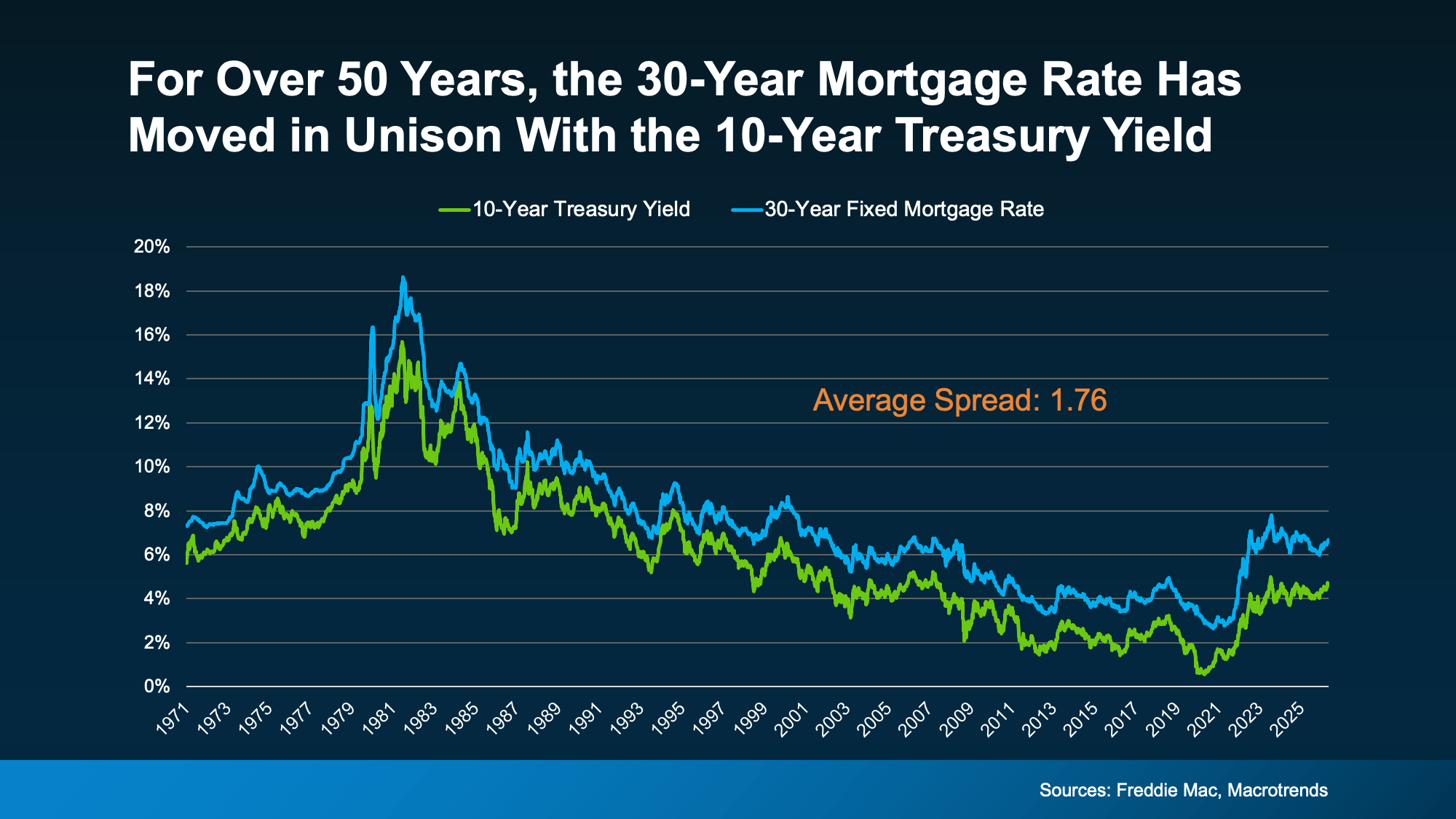
It’s not an exact science, since plenty of other factors can move it day to day. But broadly speaking, when the economy looks strong, that yield tends to climb over time. When the outlook gets shaky, it tends to ease. For over 50 years, the 10-year treasury yield and mortgage rates have moved almost in lockstep (see graph below):

a graph of a graph showing the number of mortgage rates

The gap between them is called the “spread.” On average, that gap runs about 1.76 percentage points. And that spread impacts your mortgage rate. A wider spread tends to push mortgage rates higher than the treasury yield alone would suggest, while a narrower spread keeps rates closer to the treasury yield.

One of the Big Reasons Rates Likely Won’t Drop Dramatically Anytime Soon

If you’re hoping mortgage rates will drop a lot, here’s the reality – they probably won’t. At least not anytime soon. One of the big reasons comes down to that spread between the 10-year treasury yield and mortgage rates.

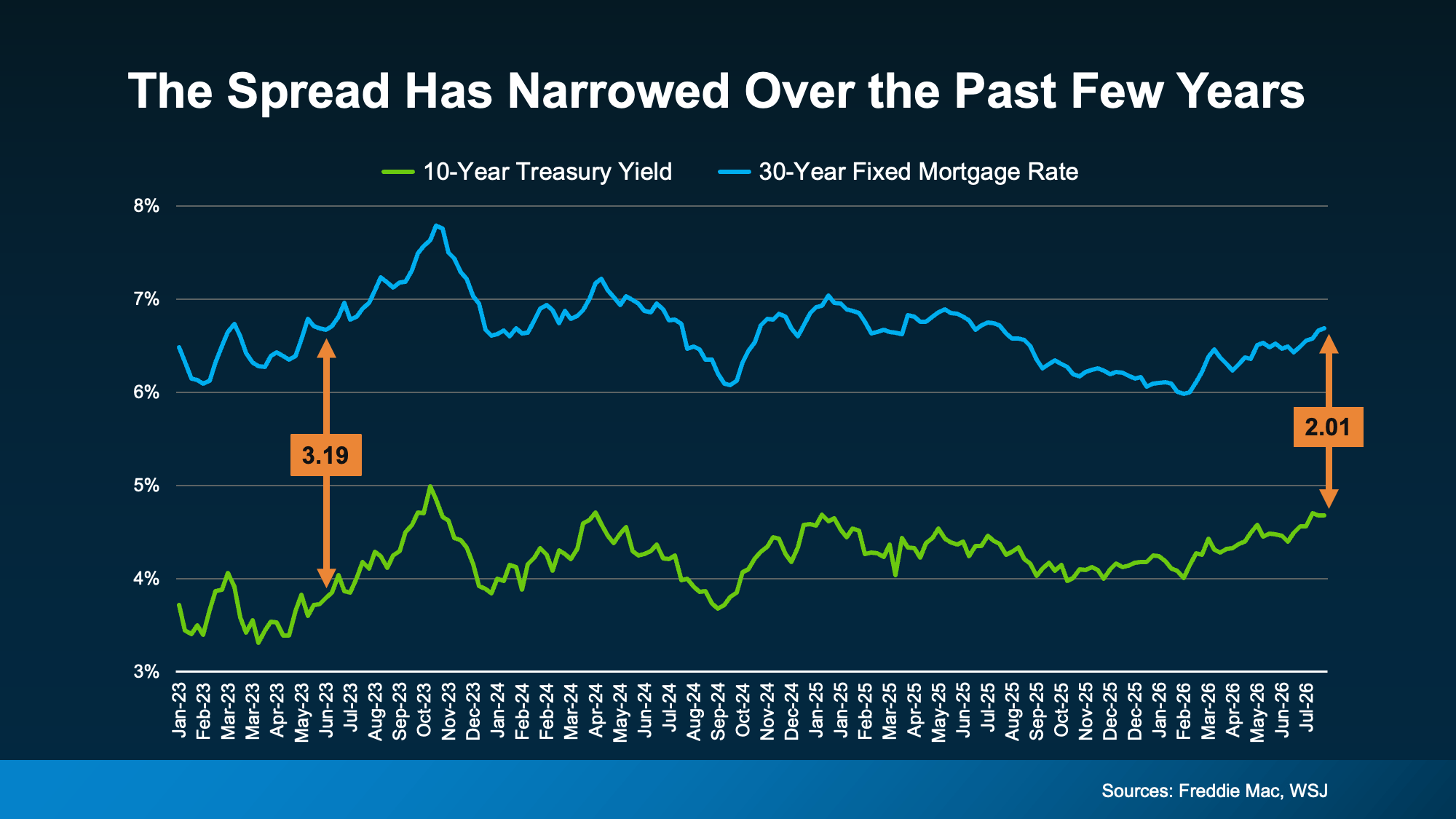
A few years ago, that gap got a lot wider as uncertainty in the economy pushed it as high as 3.19 points in 2023.

Now here’s the part worth noting – that gap has been narrowing lately. It’s down to about 2.01, just above the long-term average of 1.76 (see graph below):

a graph of a graph of a graph of a graph of a graph of a graph of a graph of a graph of a graph of a graph of a graph of a graph of a graph of

When the gap is wide, there’s more room for rates to fall. But when it’s relatively normal, like it is now, there’s less wiggle room for rates to fall.

Why Mortgage Rates Aren’t Higher Right Now

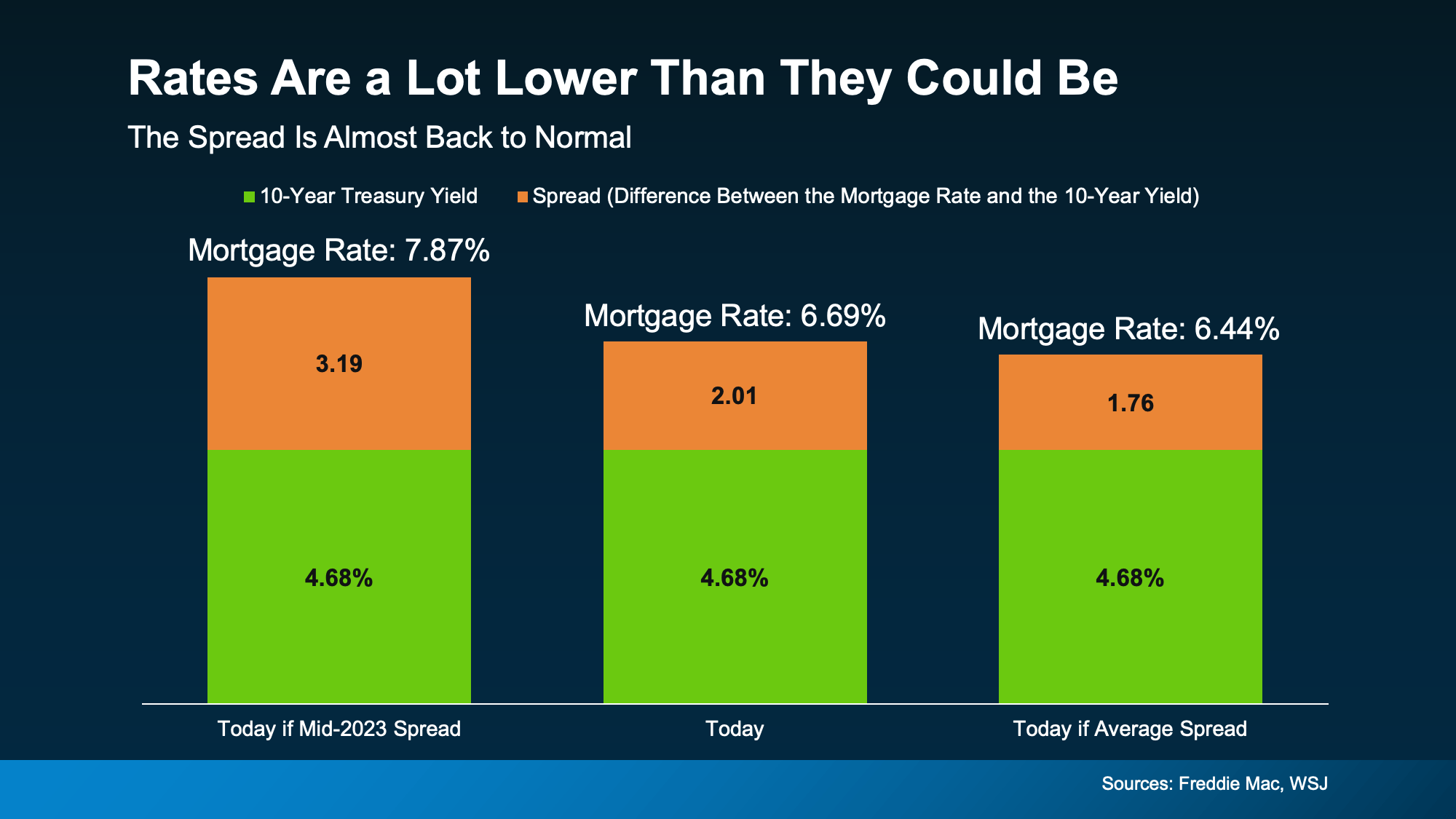
Today’s mortgage rate is basically the treasury yield plus the spread. So, when either one moves, your rate moves with it. Here are 3 different rates, all built off today’s 10-year treasury yield of 4.68% to show you just how much the spread matters for your bottom line (see graph below):

a graph of a graph showing a rate of interest

If the spread were still stretched out like it was in 2023, rates would be pushing close to 8% right now. That’s because the spread was over a full point wider than it is today.

But now, thanks to the spread narrowing recently, today’s rate sits around 6.69%. That’s the middle scenario in that visual. That’s a big difference in your monthly payment compared what we could see if the spread was as big as it was 2023.

Now compare that middle bar to the 3rd one. If the spread were sitting at its exact long-term average, rates would be around 6.5%. That’s only about a quarter of a point away from where rates actually are today. That means most of the improvement in mortgage rates we should realistically expect from a shrinking spread has already happened.

In other words, the same narrowing spread that’s the reason rates aren’t close to 8% today is also a big reason why they’re not likely to fall a lot further.

That’s the trade-off with a narrowing spread. Rates may not be where you want them, but they’re better than they could’ve been.

That’s also not what many buyers want to hear, but it’s the fact of life right now.

If you’ve been holding off on the change you know you need to make because of mortgage rates, maybe it’s time to have a serious conversation with a lender to see what your options are. If you need a referral, we’re happy to pass along contact information for some of the outstanding mortgage bankers we work with on a regular basis.

You can always find us at 508-388-1994 (Mari and Hank) and 781-264-5517 (Colleen.) We’re here to help.

Mari, Hank, and Colleen

PS: Please visit our updated website at http://www.makeyourmovewithmari.com. It’s designed to provide you with one place to look whether you’re planning to buy, sell, or are just curious about market conditions. We hope that you find it helpful.

Nothing herein should be construed as investment advice. You should always conduct your own research and due diligence and obtain professional advice before making any investment decision.

Don’t Forget about Insurance

Your premium will depend on things like where you’re buying, the home itself, and the coverage you choose.

If buying a home is on your radar, you’ve probably been keeping an eye on mortgage rates and home prices. But don’t forget about homeowners’ insurance. 

Insurance has always been part of owning a home. But over the past few years, it has become a larger expense for many homeowners – something that’s especially frustrating when affordability already feels tight.

Here’s what you should know.

Insurance Costs Have Gone Up

You’ve probably heard stories from friends or family about their premiums increasing.

While no one likes rising costs, knowing what to expect can help you plan ahead. Your first insurance payment is typically included in your closing costs, but after that it’ll become part of your monthly housing expenses.

rate increases are slowing

Most of the headlines focus on how home insurance is getting more expensive. And that’s true. Depending upon where you live, rates may have gone up dramatically due to weather or the type of home you own. (Think Florida where severe storms and the quality of home construction have combined to cause major increases.)

But here’s the part that’s easy to miss.

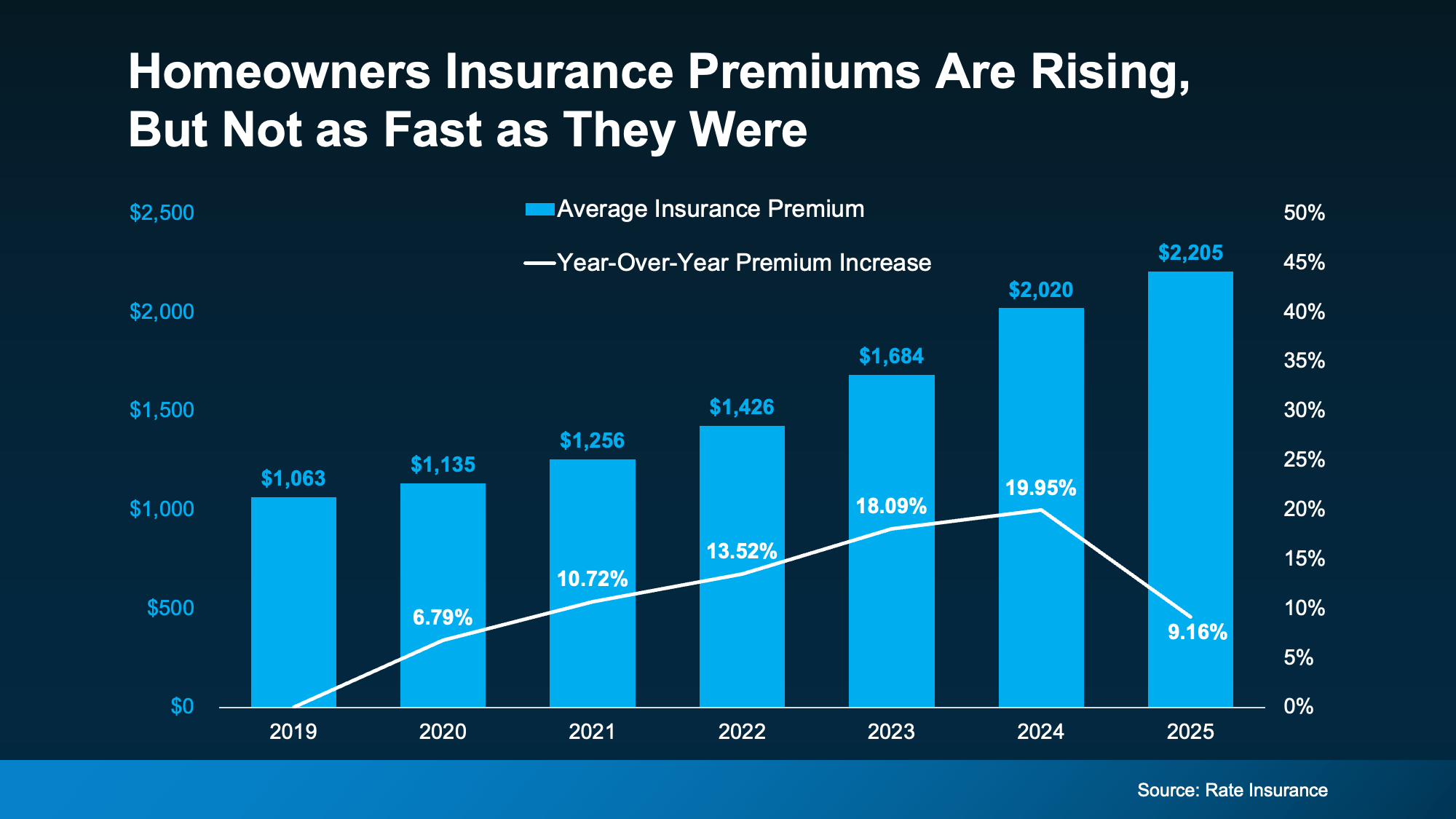
Insurance premiums are still rising.

But they’re not rising as fast as they were.

According to the latest report from Rate Insurance, 2025 saw the first slowdown in annual premium increases since 2019 (see graph below):

a graph of insurance coverage

That doesn’t mean premiums are getting cheaper. It simply means the rapid increases of the past several years may finally be starting to ease – a small but welcome step in the right direction.

But what you’ll pay in one part of the country can look very different from what someone pays somewhere else.

Where You Buy Can Make a Big Difference

Insurance costs vary because some parts of the country experience more claims than others.

Your premium will depend on things like where you’re buying, the home itself, and the coverage you choose. A condo has different insurance requirements than a stand alone house.

On Cape Cod, some locations may require flood insurance, as well. This is information your realtor should have. It’s important not to assume based on the location of the home that this insurance is not required. You’d be surprised at what areas are considered to be in a flood zone!

Ways To Lower Your Costs

While you can’t control everything that comes with buying a home, you can control how prepared you are. If you’re crunching the numbers and trying to find ways to save, Insurify and NerdWallet offer these tips that can help you get the best insurance price possible:

  • Shop Around – Compare quotes from multiple companies.
  • Bundle Policies – Combine home and auto to see if a bundle price is cheaper.
  • Ask If There Are Discounts – Don’t miss out on savings you may qualify for.
  • Highlight Upgrades – Features like a new roof or storm windows can cut costs.
  • Improve Your Credit – A stronger credit score can mean better premiums.

One of the smartest things you can do is get an insurance quote before you make an offer. That way, you’ll know what your monthly housing costs are likely to be before you commit.

An insurance professional can walk you through your options and help you find coverage that fits both your needs and your budget.

Bottom Line

Homeowners insurance has become a bigger part of the homebuying conversation. But it doesn’t have to become a bigger source of stress.

The key is knowing what to expect before you buy. Get an insurance quote early, factor it into your budget, and lean on trusted local professionals to help you make the most informed decision possible.

If you wish to speak with an insurance professional, we can connect you with several who we work with. Just contact us at 508-388-1994 (Mari and Hank) or 781-264-5517 (Colleen) and we’ll pass on contact information.

Mari, Hank, and Colleen

PS: Don’t forget to let us know if you’ll be attending our “How You Can Sell Your House This Fall” seminar next week on Wednesday, August 12, from 6:30pm – 7:30pm at the Cape Space/Mashpee Chamber offices in Mashpee Commons.

The information contained, and the opinions expressed, in this article are not intended to be construed as investment advice. You should always conduct your own research and due diligence and obtain professional advice before making any investment decision.
Is Selling on Your Mind this Fall?

This seminar on August 12 is for you!

Are you thinking about selling this fall?

Then please join us for a one-hour seminar on Wednesday, August 12 at 6:30pm that will cover key information you need to know.

We’re excited to be bringing together experts like Stephanie Viva, Executive Director of the Mashpee Chamber of Commerce, who will talk about the Cape’s economic outlook for the fall; Patti Lotane, Cape Cod 5 senior mortgage banker, who will describe some of the various financing options your buyers may be considering, and Atty. Bryan Reardon, from the firm of Dubin & Reardon, who will outline how the selling process has changed since you last bought your home.

We’ll be talking about current market conditions and how you can best position your property for a successful sale.

The presentations will be brief so there can be plenty of time for questions and talk around the table.

The event is being held at the Cape Space/Mashpee Chamber offices in Mashpee Commons. We’ll have some light bites and beverages for you, too.

Seating is limited, so please let us know at 508-388-1994 or msennott@todayrealestate.com if you will be attending.

See you there!

Mari, Hank, and Colleen

Cape Cod Home Prices Just Too High?

Expanding your search can increase your options.

It’s n0 secret: Cape Cod home prices sit well above the national average, and that gap has only widened in recent years. The core takeaway is simple: if you’re feeling squeezed by Cape Cod’s market, there are plenty of appealing, more affordable regions across the country where budgets stretch further without sacrificing quality of life.

Cape Cod’s pricing reality

The Cape’s median single‑family home price now hovers around $800,000–$900,000, driven by limited inventory, strong second‑home demand, and our appealing environment. (Remember: median means the price in the middle. There are as many homes for sale below that price as above.)

Homes that are price correctly still can attract multiple offers, and renovation‑ready properties often command premium prices. For many buyers—especially first‑timers—this creates a sense that homeownership is slipping out of reach.

More affordable regions across the U.S.

If Cape Cod feels too steep, several areas of the country offer significantly lower median prices, often $250,000–$400,000, with strong communities, job markets, and lifestyle perks.

  • Midwest cities — Places like Columbus, Indianapolis, and Kansas City offer stable economies and median prices often under $350,000. Buyers can find newer construction, larger lots, and vibrant neighborhoods without coastal premiums.
  • Southern metros — Greenville, Knoxville, and Charleston (pictured above) combine affordability with growing job markets. Median prices frequently fall between $275,000–$375,000, and cost‑of‑living advantages amplify purchasing power.
  • Mountain West towns — While some areas have surged, places like suburban Boise, Billings, or parts of New Mexico still offer attainable pricing and outdoor‑focused lifestyles.
  • Rust Belt revivals — Buffalo, Cleveland, and Pittsburgh continue to reinvent themselves, offering historic homes, strong cultural scenes, and median prices well below national averages.

Why exploring other markets makes sense

Cape Cod’s charm is undeniable—beaches, community, and coastal character—but its pricing reflects scarcity. In contrast, many inland or emerging markets offer:

  • More square footage for the dollar
  • Lower property taxes
  • Newer construction options
  • Stronger affordability for first‑time buyers

For anyone feeling discouraged by the Cape’s price tags, expanding your search radius can transform your buying experience. The U.S. housing landscape is incredibly diverse, and affordability varies widely. Exploring other regions doesn’t mean giving up on Cape Cod forever—it simply opens doors to homeownership that may feel closed here.

If you’re interested in exploring options in other parts of the country, we can help. Because of our long-time association with the Tom Ferry Organization — our industry’s largest and most respected training organization — we know agents from across the country. We can connect you with a qualified real estate professional whether you’re interested in Columbus, Knoxville, or Boise.

Just let us know. You can always find us at (508)-388-1994 [Mari and Hank] or (781) 264-5517 [Colleen].

Mari, Hank, and Colleen

PS: We’re not ones to brag, but we’re excited to tell you that we earned Agents of the Month for June at Today RE. We were involved in nine successful transactions last month. It’s said that the average, active Cape Cod realtor has three successful transactions over a year! Many thanks to our clients who trusted us to help them find where’s next. When you love what you do, it’s not work.

What to Expect in Second Half of 2026

Here are some encouraging signs.

If you’ve had moving on your mind during the first half of the year, you may be feeling stuck. (BTW…you’re not the only one.)

Mortgage rates stayed higher than people wanted. Affordability remained tight. And uncertainty overseas added another layer of pressure nobody saw coming.

So the question is: Will the second half of the year be any better for the housing market?

While no one can say for sure, there are a few encouraging signs that the market could start moving in a better direction. Here’s what to watch.

Mortgage Rates Could Be Near a Turning Point 

One of the biggest reasons mortgage rates haven’t come down yet is inflation. And higher energy prices and uncertainty overseas are at least part of the reason inflation is still elevated. The encouraging news?

Oil prices seem to be coming back down. What does that have to do with buying a home? It’s because historically, mortgage rates and oil prices tend to move in the same direction.

Take a look at the graph below. Generally, they rise and fall together. Both went up in February when the conflict with Iran began. While there’s still been some volatility, experts at the U.S. Energy Information Administration (EIA) say oil prices are forecast to come down. And since oil prices have been on an overall downward trend lately, mortgage rates could come down too:

a graph showing the price of a mortgage rate

It’s too soon to say exactly when that will happen (or by how much they’ll fall), but if energy prices go down, inflation cools off, and tensions overseas ease, mortgage rates could come down in the second half of the year.

And that’s good news for anyone thinking about moving. The first half of the year tested everyone’s patience. The second half may finally reward it.

Home Prices Could Pick Back Up

A lot of people want home prices to fall, too. But that’s not what most forecasts show.

While price trends are going to vary by area, and some places are seeing mild declines, experts still expect home prices to net positive this year at the national level.

In fact, they’re projecting prices will rise by an average of 2.3% in 2026 (see graph below):

a graph of blue rectangular objects

What does that mean for you? Right now, Federal Housing Finance Agency (FHFA) data shows prices are up about 1.7% nationally year-over-year. The average forecast for all of 2026? 2.3%.

Based on those projections, home price growth would have to pick up a bit during the second half of the year. Nothing dramatic, just enough to finish the year around that projected 2.3% gain.

Here’s why that’s possible.

The number of homes for sale has grown, but that growth may be starting to slow down. And if rates improve, more buyers could jump back into the market. More buyers competing could put modest upward pressure on prices, especially if inventory’s not growing as fast.

That’s why buyers shouldn’t assume waiting will guarantee a lower price later. (It never really does.) For sellers, that’s great news if you’ve been worried about your home’s value.

More Homes Are Expected To Sell

If you’ve been wondering why the housing market has felt quieter lately, you’re not imagining it. Home sales have been slower than many experts expected. But that doesn’t mean people have stopped wanting to move.

In fact, for the first half of the year Today Real Estate has exceeded expectations for successful transactions!

We’ve been able to help our clients close on 15 properties during the first half of the year. It is said that the average, active Cape Cod realtor has three successful transactions over the course of a year!

Bottom Line

A lot of people still want or need to make a change. They’ve just been waiting for more certainty, better affordability, or a clearer read on where the market is headed. And early signs show that may be on the horizon. 

Mortgage rates may ease. Home sales could pick up. And prices are expected to continue rising at a healthier, more sustainable pace. If you’ve been waiting for signs of progress, this is it.

If you want to understand what these forecasts mean for your plans and what’s happening on Cape, let’s connect. You can always find us 508-388-1994 (Mari and Hank) or 781-264-5517.

We’re ready to help.

Mari, Hank, and Colleen

Nothing herein should be construed as investment advice. You should always conduct your own research and due diligence and obtain professional advice before making any investment decision.
Downpayments Are Smaller than They’ve Been Since 2021

Why buyers are putting less down.

Every dollar counts when you’re buying a home, which is why the recent dip in typical down payments really matters.

According to Realtor.com, the typical buyer put down about $23,400 in early 2026 – that’s $5,000 less than in 2025 and a 19% drop year over year! That’s the lowest down payments have been since 2021 (see graph below):

a graph of a line graph

So why are buyers putting less money down, and how can you put less down, too? Here’s your answer.

Why Down Payments Are Getting Smaller

There are a few things driving the trend:

  • Less competition between buyers. Part of it comes down to a more balanced market. With buyers facing less competition than they did a few years ago, there’s less pressure to put a big sum down just to stand out.
  • More moderate home prices. Your down payment is a percentage of the purchase price. So, as price growth cools, the amount you need to put down may change too. In a lot of markets, prices have slowed or leveled off, and some areas are even seeing slight dips. That can translate into smaller down payments.
  • Buyers opting for loans with lower down payments. More buyers are also turning to government-backed loans, like FHA and VA, which often need little or no money down. FHA loans have made up more than 24% of purchase mortgages for five straight quarters, and VA loans recently hit their highest share in over a decade, according to Mortgage Professional America.

But even a smaller down payment is still a significant chunk of cash, and saving it can be hard. So where does the rest come from? For many buyers, two things make the difference: programs built to help, and a hand from loved ones.

Help You May Not Know You Qualify For

Down payment assistance is one of the most overlooked tools out there. Looking at the 10 largest U.S. metros, Urban Institute and Down Payment Resource found nearly 44% of recent buyers already qualified for a down payment program, but many of them closed on their loan without tapping the help (see chart below):

a diagram of a payment

The options are broader than you might assume, too. According to Down Payment Resource:

  • There are more than 2,600 down payment assistance programs available
  • More than half (62%) are designed to help first-time buyers
  • 38% have no first-time buyer requirement, so you may qualify even if you’ve owned before
  • 62% are open to buyers earning $100,000 or more

A Boost from Loved Ones

For a growing number of buyers, help comes from closer to home. Research from Veterans United shows about 59% of parents have provided or plan to provide financial support to help their child buy a home.

That support most often goes toward the down payment, followed by help qualifying for a mortgage and covering closing costs. Chris Birk, VP of Mortgage Insight at Veterans United, puts it this way:

“For many families, helping a child buy a home has become less of an optional gesture and more of a practical response to today’s affordability challenges.”

If your loved ones are in a position to help, it can make a real difference in how soon you can buy.

Bottom Line

Down payments are smaller than they’ve been in years, and that opens the door for more buyers.

And with added help from assistance programs and a little help from loved ones, you may have more ways forward than you realized.

We can help you sort through your options and connect you with a trusted lender. You can always find us at 508-399-1994 (Mari and Hank) or 781-264-5517 (Colleen).

Let’s talk soon..

Mari, Hank, and Colleen

Nothing herein should be construed as investment advice. You should always conduct your own research and due diligence and obtain professional advice before making any investment decision.
Two Good Reasons to Move This Summer

Summer months consistently bring more sellers into the market than later in the year.

A lot of people who want to move are telling themselves the same thing: “Maybe I’ll just wait until later this year once things calm down.” 

While waiting sounds like a good plan, there’s no way to know when “things will calm down.”

What we do know is that rates aren’t expected to change much, so if that’s the #1 reason you’re waiting, it may not pay off. And there could be other things you miss out on in the meantime. 

Plus, you may be delaying a move that you know you have to make.

Historically, summer is one of the strongest seasons of the year for both buyers and sellers. And if you delay your move until fall or winter, some of those opportunities may already be fading.

Buyers: Fresh Inventory Is Your Real Summer Advantage

One of the biggest frustrations buyers have faced over the past few years has been a lack of affordable options. Maybe you’ve run into that yourself:

  • You find a house you like, but it’s out of your budget.
  • You find something in your budget, but you don’t like it.
  • Or worse, nothing interesting hits the market for weeks.

Historically, summer helps with that.

Looking at data from the last few years, summer months consistently bring more sellers into the market than later in the year. And that gives buyers a real window of fresh choices.

According to Realtor.comany given summer month typically sees about 32% more fresh options than the average month from September-December.

a graph showing a number of prices

With more newly listed homes, there’s a better chance of finding one you like where the numbers actually work.

Because all it really takes is one home to completely change your search. And if you’ve got more popping onto the market to choose from, maybe one of those is exactly what you need. 

But keep in mind, this seasonal window isn’t open forever. Fresh inventory tends to slow down once Summer ends.

Many homeowners who planned to sell this year have already listed by then. Families who wanted to move before school starts have often already gotten it done, or at least, set it into motion. So, new listing activity usually cools as we head into fall and winter.

Of course, every year is different. But if finding the right home at the right price has been your biggest challenge, waiting until later in the year may not necessarily give you more options. In fact, recent history suggests it may do just the opposite.

Sellers: Homes Usually Sell for More and sometimes quicker in the Summer

If you’re thinking of selling, you may be considering holding off because you’ve seen headlines about lower asking prices, price cuts, and softer conditions in some markets. But those headlines don’t tell the whole story or convey just how much it varies by area.

Here’s what you really need to know. Even though the market’s becoming more balanced and some pockets are experiencing price declines, that doesn’t mean you’ve missed your chance to sell. 

Seasonality can still work in your favor no matter where you are. And this Summer could still give you the chance to sell for a good price.

According to the National Association of Realtors (NAR), homes sold during a summer month usually sell for about 4% more than homes sold during the typical month from September-December:

a graph of a sales report

Why? Summer buyers are usually operating on a set timeframe. They’re trying to move before the next school year or when they have more PTO and warmer weather to tour houses. That urgency can translate into better offers.

Now, that doesn’t mean you should price your house 4% higher this summer. That would actually be a mistake in today’s market.

It just means if you’re looking to get as much for your house as you reasonably can, a summer move could be a smarter play than waiting until later this year. 

Because based on typical seasonality, you may get more for your house than you would if you waited until the fall or winter (when there are typically fewer buyers active).

And if you’re considering a move anyway, that’s worth factoring in.

Bottom Line

Could waiting until later this year work out? Sure. But it’s important to understand what you may gain by moving now too – that way you have the full picture before you decide.

If a 2026 move is on your radar, let’s connect and talk about what matters most to you. You can always find us at 508-388-1994 (Mari and Hank) or 781-264-5517 (Colleen).

Depending on your priorities, summer could be your moment.

Mari, Hank, and Colleen

Nothing herein should be construed as investment advice. You should always conduct your own research and due diligence and obtain professional advice before making any investment decision.

Why People Decide to Move

Life doesn’t wait for the perfect market.

You may be telling yourself that you’re going to wait to move – maybe you’re hoping mortgage rates will come down, prices will fall, or the market will feel a little easier.

And honestly? A lot of people are feeling that way right now. But here’s what some are starting to realize.

Waiting doesn’t usually fix the thing that made you want to move in the first place.

Your family still desperately needs more room. Your empty nest still feels too…empty.

Your parents or grandparents still need you to live closer.

You just got married… or divorced.

Your vision of retirement has you living somewhere else.

Eventually, life can reach a point where waiting feels harder than moving.

That’s why some people are still deciding to buy right now, even in today’s market. Not because conditions are perfect. But because the life changes behind their move never really went away.

And maybe that’s exactly where you are too. If so, you’re certainly not alone.

The Real Reasons People Move 

Data from the National Association of Realtors (NAR) shows 1 in 5 buyers last year said they felt like they had to purchase a home at that time, no matter the market.

That’s an important reminder right now. Sure, the dollars and cents of your move have to make sense for you. But big life changes happen whether mortgage rates and home prices are high, low, or somewhere in between. 

And those big life events happen more than you may think. NAR says roughly 22.5 million people experience major life changes in a typical two-year span (see graph below):

a graph of blue rectangular objects

These are exactly the kinds of things that can change how much space you need, where you want to live, or what kind of lifestyle makes sense now. Chen Zhao, Head of Economics Research at Redfin, explains:

“Life doesn’t stand still—people get new jobs, grow their families, downsize after retirement, or simply want to live in a different neighborhood.”

And that’s what makes waiting so hard. Every month you spend hoping the market changes is another month living in a house that no longer works for your life. It’s stressful to feel stuck. And that feeling usually doesn’t disappear.

There May Be More Opportunity Than You Think

But while affordability is still a challenge, there may still be a way for you to make your move.

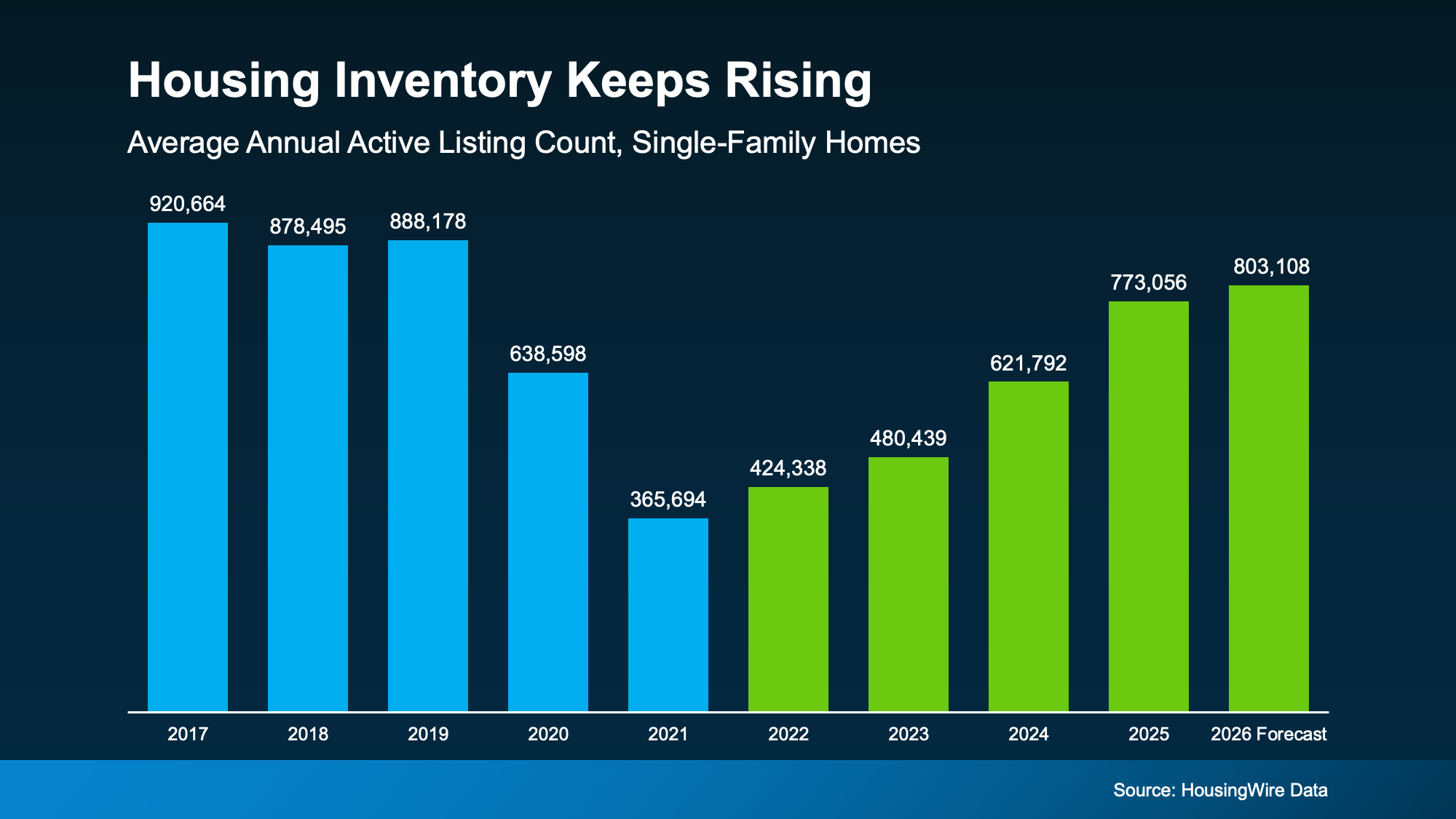
The number of homes for sale has been growing for 4 straight years (see graph below). That means more homes to choose from, and, in some markets, more room to negotiate than buyers had just a few years ago. 

a graph of growth of a straight year

That doesn’t mean moving is suddenly easy. But it does mean some buyers are finding ways to make a move work. So, if you’ve been putting your plans on hold, maybe the question isn’t just:

“What’s the market doing?” or “When will it get better?”

Maybe ask yourself this, too: “Can I still live where I’m at right now and make it work?”

If the answer to that second question is “no,” it may be worth having a conversation about what your options look like today – despite where rates or prices are. You could find your move is still possible after all. With more homes for sale, there’s a better chance to find one that fits your life (and your budget) right now.

Bottom Line

Life changes. Priorities shift. Families grow. Kids move out. Careers evolve. And eventually, the house you’re in may stop fitting the life you’re living.

If that’s been weighing on you lately, let’s talk through what your options could realistically look like today, no matter where rates or prices are. You can always find us at 508-388-1994 (Mari and Hank) or 781-264-5517 (Colleen).

Life can’t always wait for perfect market conditions. Maybe you don’t have to either.

Mari, Hank, and Colleen

Nothing herein should be construed as investment advice. You should always conduct your own research and due diligence and obtain professional advice before making any investment decision.

The Problem with Over Pricing

Buyers notice price first.

Most sellers come into the market with one number in mind. And it’s often the one that costs them the most. Their asking price

A survey from Realtor.com shows about 8 in 10 (80%) of sellers expect to sell at or above their asking price today. But here’s where things get interesting.

In reality, only about 4 out of every 10 (roughly 40%) actually do.

That’s a big gap. And it’s where a lot of sellers get caught off guard. So, why the disconnect? And how can you set yourself up to be one of the 4 in 10 that get top dollar? 

Let’s break it down.

What Should You Really Expect To Get for Your House? 

That 40% may sound low at first, but it’s not.

If you look back to the last typical year for the housing market (2019), what we’re really seeing is a return to what’s normal (see chart below). If anything, slightly more homeowners are able to sell above list price today compared to 2019:

It only feels low because the past few years were anything but typical. Between 2020 and mid-2022, buyer demand was sky-high and the number of homes for sale was at record lows. Almost everything sold over asking. 

Now, the market has shifted.

There are more homes for sale. Buyers have more options. And that means they’re more selective about how they spend their money.

In other words, the rules have changed – and pricing like it’s still 2021 is where sellers run into trouble. You have to meet the market where it is if you really want to cash in big.

What Happens When a Home Is Priced Too High

Here’s the reality. It’s easy to think pricing high gives you room to negotiate. But it usually does the opposite.

When your home is priced above what buyers expect, in this market, they don’t negotiate. They move on.

Because buyers notice price first. And if your home doesn’t line up with similar options in your area, it may not even get a showing. And that’s when things start to snowball:

  • A high price gets less interest from buyers.
  • Less interest means fewer offers.
  • And fewer offers usually means more time on the market.

The Price Cut Trap (And How To Avoid It)

When a home sits that long without offers, a lot of sellers will do a price reduction. According to Realtor.com, 16.7 of sellers are going that route today.

But here’s the real problem. Even a price cut doesn’t guarantee a sale.

In fact, some buyers will see a reduction as a sign something’s wrong with the house – even when nothing is.

That’s why data from the National Association of Realtors (NAR) shows the longer a home sits, the bigger that price cut tends to be to attract buyers back:

So, what starts as a strategy to “leave room” for negotiate can end up costing you more in the long run.

Why Pricing Right from Day One Matters

Even though listing at or even just shy of market value may sound counter intuitive if you’re looking to get as much money for your house as possible, a lot of the time it really is the best strategy.

Because the goal isn’t just to list your house to see what price sticks. It’s to price it in a way that creates demand from day one.

NAR puts it best:

“While some sellers are pricing their homes higher than ever, a more ‘goldilocks’ frame of mind is a better approach to avoid price cuts and lingering time on the market.”

In other words, there’s a sweet spot. Too high, and buyers disappear. Too low, and they question the value.

But right in the middle? That’s where the magic happens.

And that’s where we come in.

We will help you understand what buyers are actually paying right now, how your home compares, and how to price it so it stands out immediately. And in today’s market, that strategy is the difference between:

  1. Listing high, watching it sit, and selling for less later.
  2. Or, pricing it right, creating competition, and putting yourself in a position to win from the start.

Bottom Line

A lot of homeowners think they can list high now and negotiate later, but that’s a mistake that costs them. And it’s the reason only 4 out of every 10 sellers are getting their asking price or more.

If you want to be in that group, it starts with getting the price right from day one.

Let’s connect so we can make sure you are. You can always find us at 508-388-1994 (Mari and Hank) or 781-423-8662 (Colleen).

Talk soon…

Mari, Hank, and Colleen

Nothing herein should be construed as investment advice. You should always conduct your own research and due diligence and obtain professional advice before making any investment decision.