
Three Misconceptions About the Market

It’s fact vs. fiction.

Some buyers, sellers, and commentators are a little uncertain right now about the housing market. And that’s led to some dramatic headlines. If you’re thinking about buying a home, this may be making you feel a little uneasy about your decision.

A recent study by CNBC asked homebuyers what they’re most worried about, and three themes kept coming up again and again:

  • Mortgage rates
  • The number of homes for sale
  • Home prices

You should know that a lot of what you may be hearing is based more on misconceptions than facts. So, let’s break it down and separate fact from fiction.

Misconception #1:“I’ll Just Wait, Because Mortgage Rates Are Going To Fall Dramatically”

One idea going around on social is that mortgage rates are going to drop dramatically soon. So, it’s better to wait to buy.

But is thatreallywhat’s expected?

While mortgage rates have come down a bit in the last few weeks, forecasts don’t show a major drop ahead.The most likely scenario is that rates stay somewhere in the low 6% range this year.

And that’s not a big change from where rates are now (see graph below):
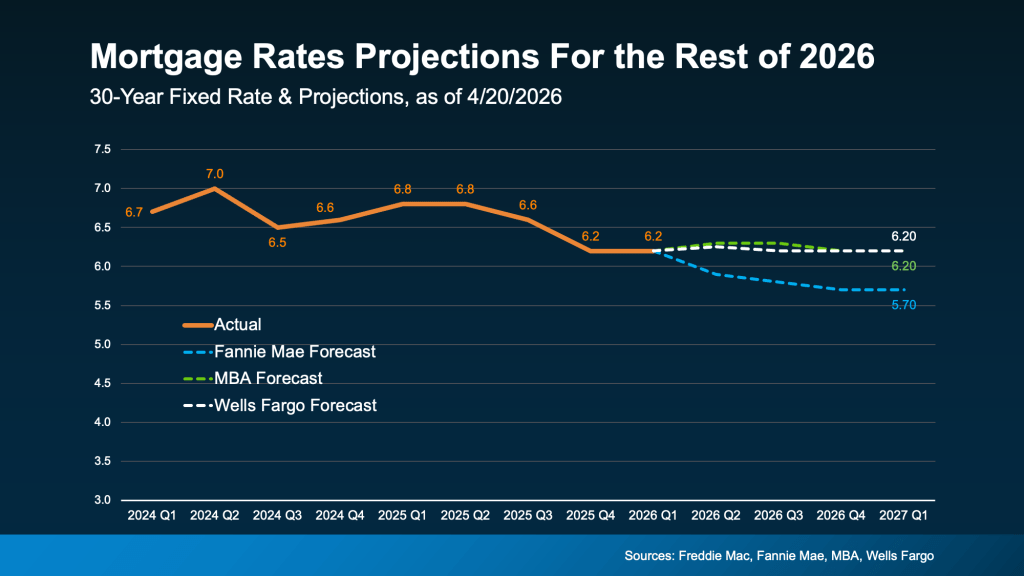
Of course, this depends on where inflation and the economy go from here. But, based on what we know today, waiting for a big drop in rates may not work out the way some people hope. AsU.S. Newsexplains:

“Mortgage rates aren’t expected to change much over the next several quarters . . .”

Not to mention, even with rates where they are today, it’s alreadymore affordable than a year ago. So, even if they don’t change much, it’s still better than it was.

Misconception #2:“There Are Too Many Homes for Sale Right Now”

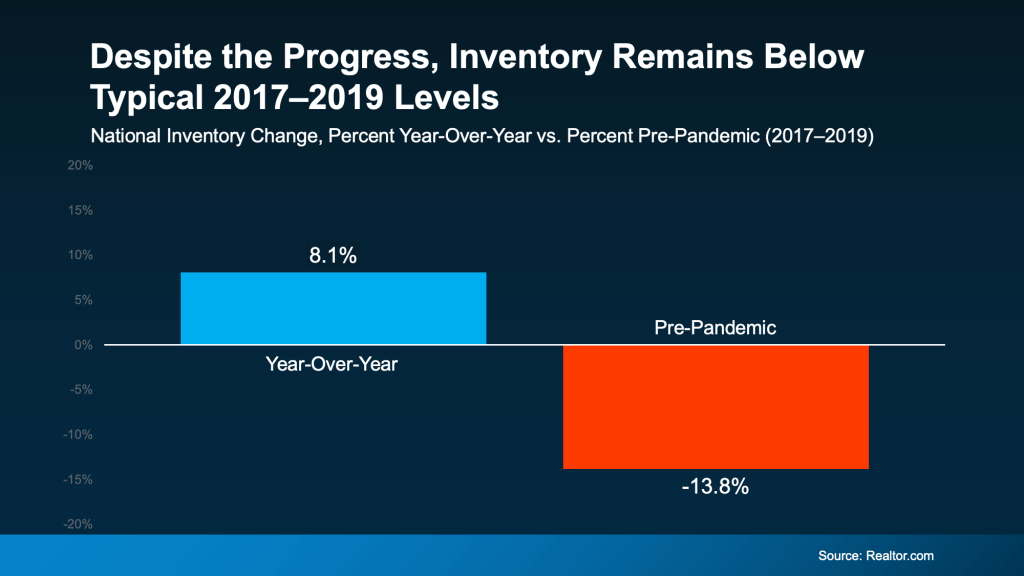
You’ve probably heard inventory is up. And nationally, it is. The number of homes for sale is 8% higher than this time last year. But that’s not a bad thing. In fact, it’s one of the reasons buyers have a bit morebreathing room right now.

The problem is the headlines are making something good, sound bad. They’re focusing on how this is the most inventory we’ve had since 2019 or how many homes builders are building. And that can make it sound like the number of homes for sale is rising too far, too fast.

But that’s not what the bigger picture shows.

DatafromRealtor.comshows that, even though inventory is up compared to last year, it’s still nearly 14% lower than it was during the last normal housing market (2017-2019):
On Cape Cod, inventory is down 21% comparing this March to last.

Misconception #3:“Home Prices Are About to Crash”

You’ve probably seen this one, too. The confusion is coming from the fact that some areas are experiencing price declines. And influencers are running with that and saying prices are crashing. But that’s not the reality.

Most areas are seeing prices rise, not fall. On Cape, the median sales price for a single-family home is up almost 2% YTD comparing the first three months of this year with the same time period in 2025.

Why are prices up?

  • Many homeowners aren’t selling because they don’t want to give up the low mortgage rate they locked in a few years ago. And that’s keeping a lid on how much inventory can grow.
  • Since inventory is still below pre-pandemic norms, there aren’t enough homes for sale to cause a price crash.
  • And even in markets with more inventory, some sellers are choosing to pull their homes off the market instead of cutting prices.

Bottom Line

Online posts are going to make things sound worse than they are. If you want a true, data-bound look at what’s really happening in today’s market, please talk with us. You can always find us at 508-388-1994 (Mari and Hank) or 781-423-8662

We can separate fact from fiction.

Mari, Hank, and Colleen

Nothing herein should be construed as investment advice. You should always conduct your own research and due diligence and obtain professional advice before making any investment decision.

Did Uncle Bob Give You Bad Advice This Weekend?

Everyone loves to talk about the real estate market.

We hope you were able to enjoy the Labor Day Weekend with family and friends.

When people get together it’s pretty common for them to talk about the issues of the day and everyone loves to talk about the real estate market.

Your Uncle Bob who “knows a little something about real estate” may have commented over the weekend that new home inventory is at its highest level since the crash. And that was a bad sign.

If you lived through the crash back in 2008, hearing that new construction is up may feel a little scary.

But here’s what you need to remember: a lot of what you see online is designed to get clicks. Of course, the more sensational the more likely the headline is to be repeated by people like your Uncle Bob. (With all due respect to everyone’s Uncle Bob!)

So, you may not be getting the full story. A closer look at the data and a little expert insight can change your perspective completely.

Why This Isn’t Like 2008

While it’s true the number of new homes on the market hit its highest level since the crash, that’s not a reason to worry. That’s because new builds are just one piece of the puzzle. They don’t tell the full story of what’s happening today.

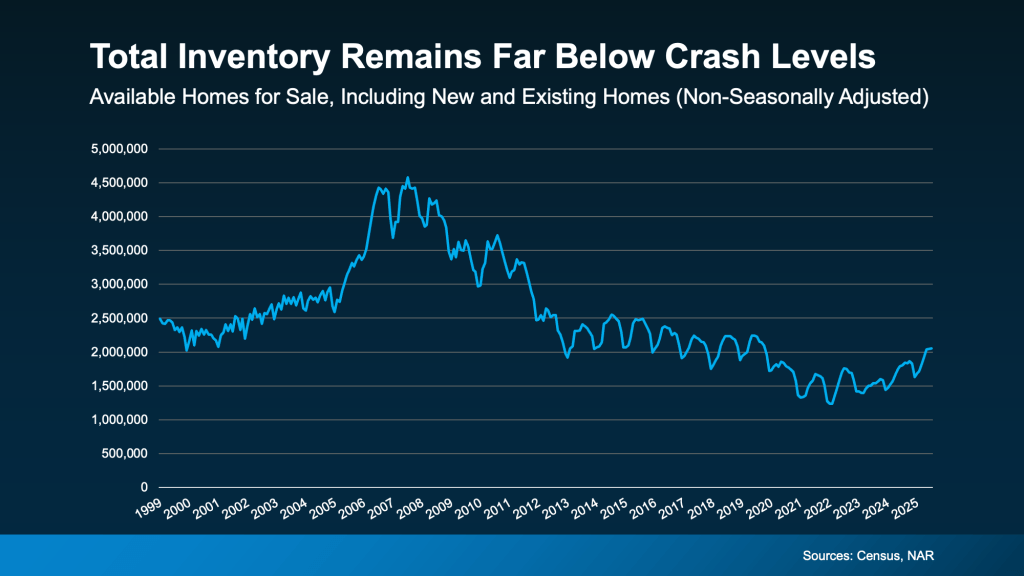
To get the real picture of how much inventory we have and how it compares to the surplus we saw back then, you’ve got to look at both new homes and existing homes (homes that were lived in by a previous owner).

When you combine those two numbers, it’s clear overall supply  looks very different today than it did around the crash (see graph below):

So, saying we’re near 2008 levels for new construction isn’t the same as the inventory surplus we had the last time.

Builders Have Actually Underbuilt for Over a Decade

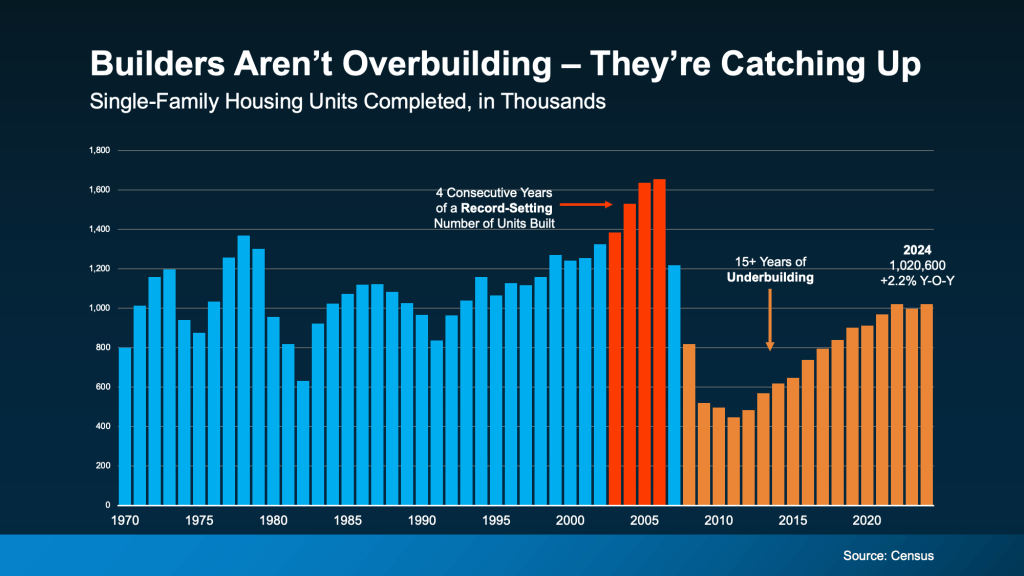
And here’s some other important perspective you’re not going to get from those headlines. After the 2008 crash, builders slammed on the brakes. For 15 years, they didn’t build enough homes to keep up with demand. That long stretch of underbuilding created a major housing shortage, which we’re still dealing with today.

The graph below uses Census data to show the overbuilding leading up to the crash (in red), and the period of underbuilding that followed (in orange):

Basically, we had more than 15 straight years of underbuilding – and we’re only recently starting to slowly climb out of that hole. But there’s still a long way to go (even with the growth we’ve seen lately). Experts at Realtor.com say it would roughly 7.5 years to build enough homes to close the gap.

Of course, like anything else in real estate, the level of supply and demand is going to vary by market. Some markets may have more homes for sale, some less. But nationally, this isn’t like the last time.

Bottom Line

Just because there are more new homes for sale right now, it doesn’t mean we’re headed for a crash. The data shows today’s overall inventory situation is different.

If you have questions or want to talk about what builders are doing on Cape Cod, let’s connect at 508-388-1994 or msennott@todayrealestate.com.

We’ll talk to Uncle Bob, too!

Mari and Hank

The information contained, and the opinions expressed, in this article are not intended to be construed as investment advice. You should always conduct your own research and due diligence and obtain professional advice before making any investment decision.
Think No One Is Buying Right Now??

Think again.

Maybe you’ve seen headlines saying home sales are down compared to last year. You might even be thinking – is it even a good time to sell? 

Here’s the thing. There’s no denying that the pace of the market has cooled compared to the frenzy we saw just a few years ago. Cumulative days on market for 2025 is 61 as opposed to 47 one year ago. But that’s not a red flag. It’s a return to normal. And normal doesn’t mean nothing’s happening. Buyers are still out there – and homes are still selling.

Why? Because real life doesn’t pause for perfect conditions. There are always people who need to buy – and this year is no exception. Buyers who are in the middle of a big change in their lives, a new marriage, a growing family, or a new job still need to move, no matter where mortgage rates are. And they may be looking for a home just like yours.

Every Minute 8 Homes Sell

Let’s break it down using the latest sales from the National Association of Realtors (NAR). Based on the current pace, we’re on track to sell 4.03 million homes this year (not including new construction).

  • 4.03 million homes ÷ 365 days = 11,041 homes sell per day
  • 11,041 homes ÷ 24 hours = 460 homes sell per hour
  • 460 homes ÷ 60 minutes = roughly 8 homes sell every minute

That means in the time it takes to read this; another 8 homes will sell. Let that sink in. Every minute, buyers are making moves – and sellers are closing deals.

If you’ve been holding off on selling your house because you think buyers aren’t out there, let this reassure you – there are still buyers looking to buy.

On Cape Cod more than 900 single family homes have closed this year with nearly 1,100 more pending. The median sales price for the year thus far is $756,490.00. That’s 3% higher than last year.

Remember: median sales price is the midway point. There are just as many homes for sales below the median price as above.

But since the market is balancing out, selling today takes more than just putting up a sign in the yard. You’ve got to price your house right, market it well, and know how to reach the buyers who are ready to act. That’s where we come in.

We’ll help you navigate this market, position your home to stand out, and guide you through every step.

We know the market so we also can assist you in finding the right home that meets your goals.

Bottom Line

The market hasn’t stopped. Buyers are still buying. Life is still happening. And if selling your home or buying one (or both!) is part of your next chapter, you can make it happen.

Roughly 11,000 homes are selling every day. When you’re ready to make the change you need to, let’s connect at 508-388-1994 or msennott@todayrealestate.com and we’ll start working on where’s next for you.

Mari and Hank

The information contained, and the opinions expressed, in this article are not intended to be construed as investment advice. You should always conduct your own research and due diligence and obtain professional advice before making any investment decision.