The Best Time to Buy is Here!

Homebuyers are in the best position in more than five years to find the right home and negotiate for a better price. 

If you’ve been watching from the sidelines, now’s the time to lean in. It’s officially the best time to buy this year. According to Realtor.com, this October will have the most buyer-friendly conditions of any month in 2025:

“By mid-October, buyers may finally find the combination of inventory, pricing, and negotiating power they’ve been waiting for—a rare opportunity in a market that has been tight for most of the past decade.”

So, if you’re ready and able to buy this month this means you should see:

  • More homes to choose from
  • Less competition from other buyers
  • More time to browse
  • Better home prices
  • Sellers who are more willing to negotiate

While October 12-18 is the national “best week,” conditions are in place now for buyers who have been waiting to upsize, downsize or right size to find the properties they’ve been looking for at prices that they’re willing to pay.

Here on Cape Cod, inventory is increasing as are days on market for listed properties. This means sellers should be interested in negotiating prices and terms so they can move on with their lives. Mortgage interest rates are also the lowest that they have been in a year helping buyers afford what are still high prices.

And remember home prices are lower elsewhere in other parts of Massachusetts, as well as New England and the country as a whole. So, you don’t have to limit your search to just on Cape. Through the various connections we have with realtors off Cape and elsewhere, we can refer you to a very qualified Realtor who can help you with your search.

What the Experts Are Saying

Realtor.com isn’t the only one saying you’ve got an opportunity if you move now. Lawrence Yun, Chief Economist at the National Association of Realtors (NAR), explains:

Homebuyers are in the best position in more than five years to find the right home and negotiate for a better price. Current inventory is at its highest since May 2020, during the COVID lockdown.”

Daryl Fairweather, Chief Economist at Redfin, puts it like this:

Nationally, now is a good time to buy, if you can afford it . . . with falling mortgage rates and significantly more inventory, buyers have an upper hand in negotiations.”

And NerdWallet says:

“This fall just might be the best window for home buyers in the past five years.”

How To Get Ready

To make sure you’re ready to jump, talk to us now. We can give you the information you need to decide if this is the time for you to buy. We can discuss timing, strategy, and how you may be able to buy your new home before selling your current one.

You can find us at 508-388-1994 or msennott@todayrealestate.com. We’re here to help…


BTW…Hank’s new book of short stories will be available soon. Please watch for it. Copies “signed by the author” can be purchased via Venmo. Contact Mari for details. Thanks.

Nothing herein should be construed as investment advice. You should always conduct your own research and due diligence and obtain professional advice before making any investment decision.

Mortgage Rates Just Saw Their Biggest Drop in a Year

If you’ve been feeling stuck, this is the break you’ve been waiting for.

You’ve been waiting for what feels like forever for mortgage rates to finally budge. And last week, they did – in a big way.

On Friday, September 5th, the average 30-year fixed mortgage rate fell to the lowest since October 2024. It was the biggest one-day decline in over a year.

What Sparked the Drop?

According to Mortgage News Daily, this was a reaction to the August jobs report, which was weaker than expected for a second month in a row. That sent signals across the financial markets, and then mortgage rates came down as a result.

Basically, we’re seeing signs the economy may be slowing down, and as certainty grows in the direction the economy is going, the markets are reacting to what is likely ahead. That historically brings mortgage rates down.

Why Buyers Should Pay Attention Now

But this isn’t just about one day of headlines or one report. It’s about what the drop means for you.

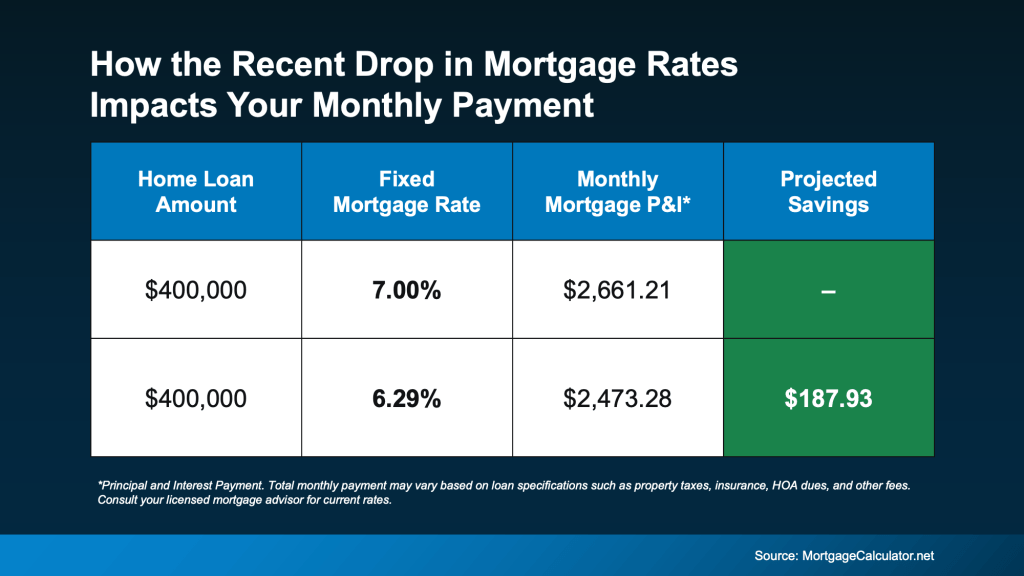
This recent change saves you money when you buy a home. The chart below shows you an example of what a monthly mortgage payment (principal and interest) would be at 7% (where mortgage rates were in May) versus where rates roughly are now:

Compared to just 4 months ago, your future monthly payment would be almost $200 less per month. That’s close to $2,400 a year in savings.

Locally, Cape Cod Five has announced 30 and 15 year rates below 6%.

How Long Will It Last?

That really depends on where the economy and inflation go from here. Rates could drop lower, or they could inch up slightly. 

So, make sure you stay in touch with us and your lender. We’ll be keeping a close eye on inflation indicators, job market updates, and reactions to upcoming Fed policy to gauge where mortgage rates may go from here.

But for now, focus on this. While no one can say for sure where rates are headed, the fact that rates broke out of their months-long rut is a good thing. If you’ve been feeling stuck, this could make the start of a new chapter. As Diana Olick, Senior Real Estate and Climate Correspondent at CNBC, says:

“Rates are finally breaking out of the high 6% range, where they’ve been stuck for months.” 

And that’s gives you more reason to hope than you’ve had in quite some time.

Bottom Line

This is the shift you’ve been waiting for.

Mortgage rates just saw their biggest decline in over a year. And if rates stay near this level, it could make a home you couldn’t afford just a few months ago feel possible again.

With inventory increasing, is this finally the time for you to make the change you know you need to whether buying, selling or both?

Questions? Concerns? You can find us at 508-388-1994 or msennott@todayrealestate.com. We’re here to help.

Mari and Hank

Nothing herein should be construed as investment advice. You should always conduct your own research and due diligence and obtain professional advice before making any investment decision.

Our New TV Show!

We’re happy to tell you that we have begun a new monthly program on Mashpee TV.

Called “How’s the Market?” — which is the question we get all the time from family, friends, and even total strangers! — we will answer that question and many others with just the facts and no spin.

In our first episode, which you can see linked below, we talk about current market data, as well as some of the most recent changes to the home buying and selling process.

We’ll have guests, as well. Our September program will feature Todd Machnik, President of Today Real Estate, as well as the President of the Cape Cod and Islands Association of Realtors. We should be heading into the studio soon to have what we’re sure will be a very informative discussion.

If you live in our hometown of Mashpee, you can see “How’s the Market?” on channel 1072.

If not, we’ll be sharing the link on our social media. The program can also be found on the Mashpee TV YouTube channel. (And our own YouTube channel soon.)

We hope you’ll watch. If you have suggestions for topics you’d like to see us cover, please let us know at 508-388-1994 or msennott@todayrealesate.com.

See you on TV!

Mari and Hank

Buy Now or Wait for Rates to Drop?

Buyers who are holding out for lower mortgage rates may be missing a key opening in the market.

Mortgage rates are always a hot topic – and for good reason. After the most recent jobs report came out weaker than expected, the bond market reacted almost instantly. As a result, in early August mortgage rates dropped to their lowest point so far this year (6.55%).

While that may not sound like a big deal, pretty much every buyer has been waiting for rates to fall. And even a seemingly small drop like this reignites the hope we’re finally going to see rates trending down. But what’s realistic to expect?

According to the latest projections, rates aren’t expected to fall dramatically anytime soon. Most experts project they’ll stay somewhere in the mid-to-low 6% range through 2026 (see graph below):

In other words, no big changes are expected. But small shifts, like the one we just saw, are still likely. 

What Rate Would Get Buyers Moving Again?

The magic number most buyers seem to be watching for is 6%. And it’s not just a psychological benchmark; it has real impact. A recent report from the National Association of Realtors (NAR) says if rates reach 6%:

  • And roughly 550,000 people would buy a home within 12 to 18 months
  • 5.5 million more households could afford the median-priced home

That’s a lot of pent-up demand just waiting for the green light. And if you look back at the graph above, you’ll see Fannie Mae thinks we’ll hit that threshold next year. That raises an important question: Does it really make sense to wait for lower rates?

Because here’s the tradeoff. If you’re waiting for 6%, you need to realize a lot of other people are too. And when rates do continue to inch down and more buyers jump into the market all at once, you could face more competition, fewer choices, and higher home prices. NAR explains it like this:

“Home buyers wishing for lower mortgage interest rates may eventually get their wish, but for now, they’ll have to decide whether it’s better to wait or jump into the market.”

Consider the unique window that exists right now:

  • Inventory is up = more choices
  • Price growth has slowed down = more realistic pricing
  • You may have more room to negotiate = you could get a better deal

These are all opportunities that will go away if rates fall and demand surges. That’s why NAR says:

“Buyers who are holding out for lower mortgage rates may be missing a key opening in the market.”

Bottom Line

Some people have told us that they are holding off on making their next move in order to see “what happens.” If that means if rates are going to drop, you have your answer. They aren’t expected to hit 6% this year.

But when rates drop, you’ll have to deal with more competition as other buyers jump back in. If you want less pressure and more negotiating power, that opportunity is already here – and it might not last for long. It all depends on what happens next in the economy.

If you’re thinking about entering the market but want to talk it through, we’re here to listen. You can find us at 508-388-1994 or msennott@todayrealestate.com. Let us know how we can help.

Mari and Hank

Nothing herein should be construed as investment advice. You should always conduct your own research and due diligence and obtain professional advice before making any investment decision.

Three Things You Risk by Pricing Too High

When selling your house, the price you choose isn’t just a number, it’s a strategy.

If you’ve been following the real estate market, you’ve no doubt noticed that there have been a lot of price changes lately. More than we’ve seen in a while.

Does that mean prices are falling? Not exactly. In many cases the seller priced their home too high to begin with.

When selling your house, the price you choose isn’t just a number, it’s a strategy.

The number of homes for sale is climbing. And that means buyers have more choices and can be more selective. If your price doesn’t line up with what else is out there, they’ll go right past it and go on to the next one.

Pricing right from the start is your best move – we can help make sure you do.

Overpricing Comes at a Cost

More sellers are finding that out the hard way. They list their house based on how things were a year ago – or based on a neighbor’s sale that happened under completely different circumstances. Maybe even what they “want.” Then, when their house doesn’t sell, they’re left with three tough choices:

  1. Drop the price: Cutting the price might help get more eyes on the house again, but it can also trigger red flags. Buyers may wonder what’s wrong with it. And that’s going to impact any offers you get after the price cut.
  2. Take it off the market: Some sellers give up on the idea of selling right now. The worst part about this is that it means putting their future plans on the back burner. That dream of more space, downsizing, or relocating? On pause.
  3. Rent it out: Others go the landlord route, but managing tenants and navigating leases isn’t always the simple fallback it seems. Renting can work, but being a landlord is often a lot more hassle than people expect.

None of those options were part of the original plan. And honestly, none of them are where you should end up if you wanted to sell. Here’s a look at how our expertise can help you avoid these headaches. Let’s use price cuts as an example.

location Makes a Difference

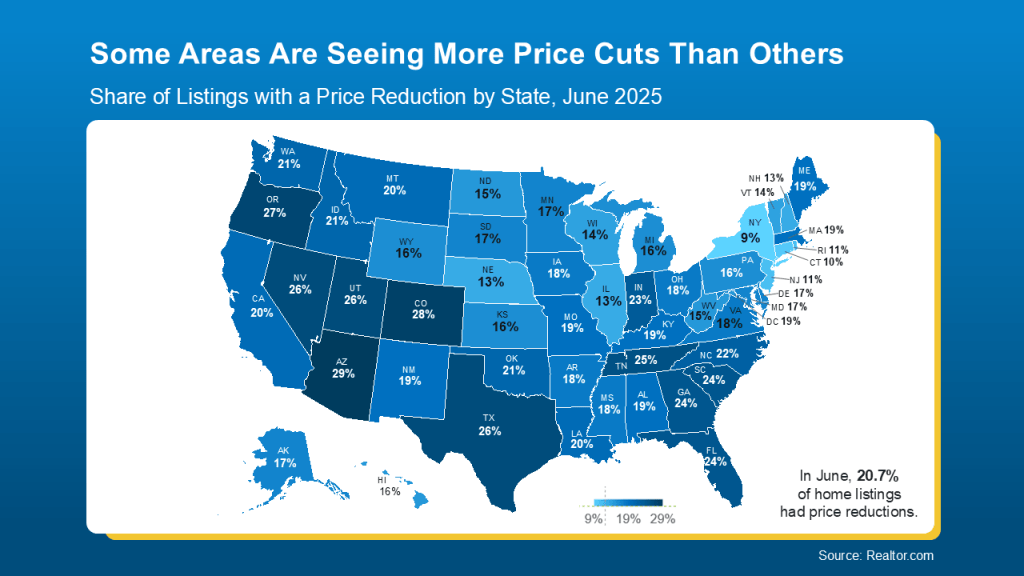
While the number of price cuts is up nationally, this map shows some parts of the country are seeing far more of them than others. It all comes down to how much inventory has grown in that area (see map below):

As Realtor.com explains:

“Regionally, price reductions in June were significantly more common in the South and West (23% of listings) than they were in the Northeast (13% of listings), reflecting the inventory divergence across these regions.”

In Massachusetts, 19% of listings had price reductions.

That means pricing isn’t one-size-fits-all. And that’s why you shouldn’t try to determine your list price on your own.

We can Help You Nail the Price

We just don’t just toss out a number or tell you what you want to hear.

As Zillow says:

Well-priced homes are more likely to sell quickly, but pricing your home to sell quickly and for maximum dollar requires strategy and knowledge of your local market. You need to have a clear-eyed view of your home in relation to the competition, and knowledge about whether you’re in a buyers or sellers market. It also helps to know what buyers in your area can afford.” 

And that’s all knowledge we have. We know the Cape Cod market, compare recent sales, and factor in your goals and buyer behavior. Based on what’s happening, sometimes the best play will be pricing right at current market value. Other times pricing a little lower actually will spark more offers and ultimately get you a better final sale price.

Bottom Line

Overpricing can lead to tough choices you never want to face. But with the right price, and the right guidance, you can skip the stress and sell with confidence. Let’s connect so you have a pricing strategy that works for today’s market and gets you where you want to go. You can always find us at 508-388-1994 or msennott@todayrealestate.com.

Mari and Hank

Nothing herein should be construed as investment advice. You should always conduct your own research and due diligence and obtain professional advice before making any investment decision.

Three Reasons to Buy a Home This Summer

Are you thinking about buying a home, but not sure if this is the right time? A lot of people are waiting and wondering what the market’s going to do next. But here’s something only the savviest buyers realize:

This summer might actually be the best time to buy in years. Here are three big reasons why.

1. You Have More Negotiating Power

After several years of sellers having all the leverage, things are starting to shift. Check out the graph below. It uses data from Redfin to show that right now, there are more sellers active in the market than buyers:

Take a look at what happened back in 2021 through roughly 2023. In that time period, there were far more buyers (the blue line) looking to buy than homes for sale (the green line). That’s what drove the intense competition, bidding wars, and the exponential price growth the market saw back then.

Now, the market has shifted, and buyers are regaining their negotiating power as a result. With more sellers than buyers, sellers may be more willing to pay for repairs, cover some of your closing costs, or lower their asking price. The return of this kind of normal balance is a sign of a much healthier, more sustainable market. As Lawrence Yun, Chief Economist of the National Association of Realtors (NAR), explains:

“ . . . with housing inventory levels reaching five-year highs, homebuyers in nearly every region of the country are in a better position to negotiate more favorable terms.”

And just in case you’re worried there are too many homes on the market, here’s what you should know. Overall inventory is still lower than normal, so you don’t have to worry about a nationwide oversupply or a crash.

As we noted in our post last week, inventory has increased on Cape Cod, as well. But it is still not close to pre-pandemic levels. So, if you’re waiting for that crash that your Uncle Bob who “knows a little something about real estate” is talking about, you’re going to have a long wait.

2. You Have More Choices

The number of homes for sale has improved a lot. Based on the latest data from Realtor.com, more homes were listed this May than in May 2024 or May 2023 (see graph below):

And more homes for sale means more choices. There’s a good chance your perfect match just hit the market – or it will soon. So, it’s a great time to explore what’s out there. As Jake Krimmel, Economist at Realtor.com, says:

“With more fresh inventory hitting the market, buyers have better opportunities to find a home that fits their needs.”

3. You May See More Flexibility on Price

With more homes for sale, they’re not selling at the same frenzied pace they were just a few years ago.

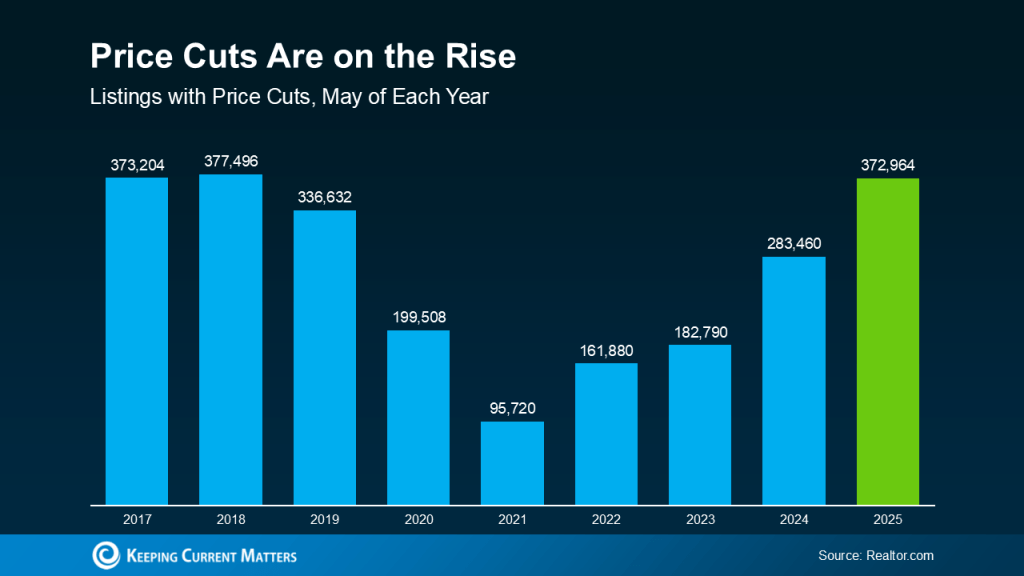
Since homes are taking more time to sell, some sellers are choosing to lower their asking prices to draw buyers back in or speed up the process. And that’s to-be-expected. According to Realtor.com, 19.1% of listings had a price cut this May (see graph below):

That’s the fifth straight month where more sellers have reduced their price. And, as of May, the volume of price cuts is back at normal levels. This is yet another sign of the return to a more balanced market.

While you shouldn’t expect a big discount, you may find sellers are a bit more flexible right now. As a recent article from The Street says:

Although sellers have had the upper hand in the housing market over the past few years, houses are now staying on the market for longer, shifting negotiating power back to homebuyers.”

Just remember, most sellers still aren’t adjusting their prices – just the ones who overpriced to start with. So, this isn’t a sign of a crash, it’s a sign of some sellers having outdated expectations in a shifting market.

Bottom Line

This summer brings a powerful combo for buyers: more homes to choose from, less competition, and sellers being more flexible on pricing.

What would finding the right home this summer mean for your next chapter? If you’re ready to find out, let’s connect at 508-360-5664 or msennott@todayrealestate.com.

Talk soon…

Mari and Hank

Tempted to Sell Your Home Yourself?

Selling your house without an agent as a “For Sale by Owner” (FSBO) may be something you’ve considered. Everyone knows someone who knows someone who sold a home on their own and everything went “just fine.”

But did it really?

Did they leave money on the table? Agree to a concession that they didn’t need to? Spend too much on legal fees? When it was all over, how much money did they really save by not hiring a real estate professional to manage the sale??

You don’t hear much about any of that because maybe the “successful” seller doesn’t understand what they lost.

Here’s what you need to know. In today’s shifting market, more homeowners are deciding that it’s not worth the risk to go it alone.

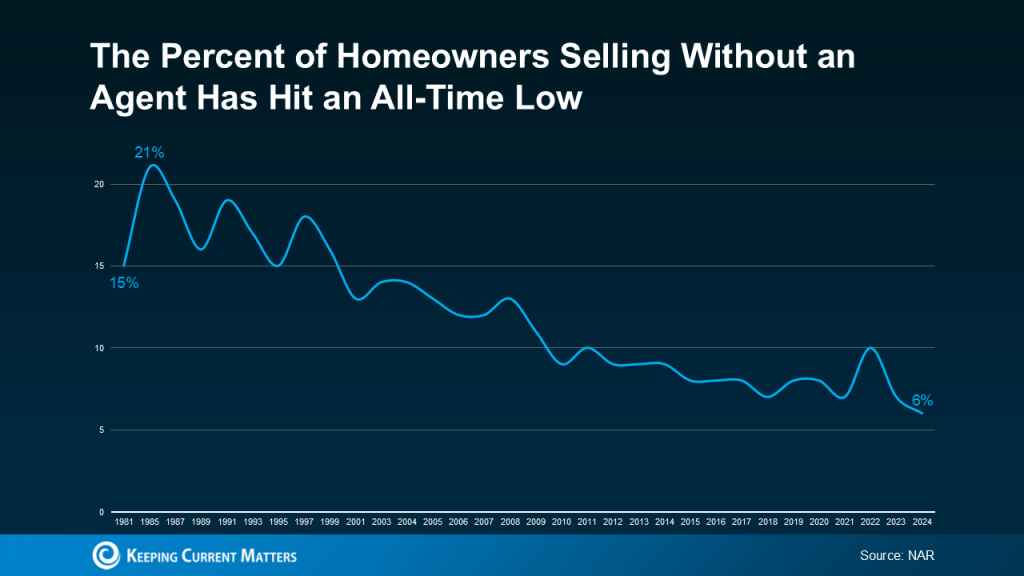
According to the latest data from the National Association of Realtors (NAR), the number of homeowners selling without professional assistance has hit an all-time low (see graph below):

And for the small number of homeowners who do decide to sell on their own, data shows they’re still not confident they’re making a good choice.

A recent survey finds three out of every four homeowners who don’t plan to use an agent have doubts about whether that’s actually the right decision.

And here’s why. The market is changing – not in a bad way, just in a way that requires a smarter, more strategic approach. And having a professional in your corner really pays off.

Here are just two of the ways our expertise makes a difference.

1. Getting the Price Right in a Market That’s Evolving

One of the biggest hurdles when selling a house on your own is figuring out the right price. It’s not as simple as picking a price that you want, sounds good, or is what your neighbor’s home sold for a few years back – you need to hit the bullseye for where the market is right now. Without professional to help, you’re more likely to miss. As Zillow explains:

“Agents are pros when it comes to pricing properties and have their finger on the pulse of your local market. They understand current buying trends and can provide insight into how your home compares to others for sale nearby.”

Basically, we know what’s really selling, what buyers are willing to pay today, and how to position your house to sell quickly. That kind of insight can have a big impact, especially in a market that’s balancing out.

2. Handling (and Actually Understanding) the Legal Documents

There’s also a mountain of documentation when selling a house, including everything from disclosures to seller and buyer contracts. A mistake can have big legal implications. This is another area where we can help.

We’ve handled these documents countless times and know exactly what’s needed to keep everything on track, so you avoid delays. And now that buyers are including more contingencies and asking for concessions again, we can guide you step by step, making sure everything is done right and documented correctly the first time.

Selling Your House Quickly in a Shifting Market

Even though inventory has grown, homes aren’t selling at quite the same pace as they were. But you can still sell quickly if you have a proven plan to help your house stand out.

Just remember, as a homeowner you don’t have the same network or marketing tools that we do. Selling a house is more than sticking a sign in the ground and putting a posting on Facebook.

We’ve sold over 400 homes.

So, if you want the process to happen in a timely manner, let’s connect at 508-388-1994 or msennott@todayrealestate.com.

Mari and Hank

Is Inventory Improving?

After years of feeling like it was almost impossible to find the home you want to buy, things are changing for the better.

Nationally, inventory is growing, and that gives you more options for your move. But here’s what you need to know. That level of growth is going to vary based on where you live.

Here’s a quick rundown of the current inventory situation, so you know what’s happening and what to expect.

Significant Growth Across the Nation

Nationally, the number of homes for sale is rising – and that’s true in all regions of the country. That’s shown in this data from Realtor.com. In each of the four regions, inventory is up at least 19% compared to the same time last year. In the West, it’s actually up almost 41% year-over-year (see graph below):

There are two main reasons for this increase:

  • More sellers are listing their homes. Many homeowners have been waiting for mortgage rates to drop before making a move. Now, some have decided they can’t wait any longer. May had more new listings than any May in the past three years.
  • Homes are taking longer to sell. That means listings are staying on the market longer, which increases the total number of homes available. In May, the typical home took 51 days to sell – much closer to what’s more typical for the market.

More homes for sale helps the market become more balanced. For the past few years, sellers have had the upper hand. Now, things are shifting. Nationally, it’s not a full-on buyer’s market yet, but it’s heading toward a healthier place, especially for homebuyers. Danielle Hale, Chief Economist at Realtor.com, explains:

“The number of homes for sale is rising in many markets, giving shoppers more choices than they’ve had in years . . . the market is starting to rebalance.

How Much Growth We’ve Seen Varies by Area

But, how long it’s going to take to achieve true balance is going to vary by area. Some parts of the country are seeing inventory bounce all the way back to normal levels, while others haven’t grown quite that much yet.

Let’s take a look at another graph. This time, we’ll compare the current data (what you already saw) to the last normal years in the housing market (2017-2019).

In this comparison, the green shows which regions are back at more typical levels for inventory based on the growth we’ve seen lately. The red shows where things have improved, but are still well below the norm (see graph below):

Here’s what that means for you. Across the board, you have more options now than you would’ve just one year ago. And that’s a really good thing. More choices means it should be a bit easier to find a home you love.

But not all markets are the same – some will take a bit longer to get back to more typical levels.

Here on Cape Cod, the inventory of single-family homes is up nearly 17% comparing this past May to a year ago. Not surprisingly days on market are also up. (61 as opposed to 47 in May 2024.)

For sellers this means that competition is increasing, so it’s important that they price their homes right. What the neighbor up the street sold their home that’s “wasn’t as nice” for two years ago really doesn’t mean much.

For buyers, this means you have more options. The answer to the question “but where will I go” is getting easier.

Bottom Line

Inventory is getting better, but how long it takes to get back to normal is going to be different based on where you’re looking to buy. Let’s connect at 508-388-1994 or msennott@todayrealestate.com to review your options.

Mari and Hank

Maybe You Can Help Your Kids with Their First Home

If you’re a homeowner, chances are you’ve built up a lot of wealth – just by living in your house and watching its value grow over time. And that equity? It’s something that could help change your child’s life.

Since affordability is still a challenge, a lot of first-time buyers are struggling to buy a home in today’s market. Even if they have a stable job and a solid plan, buying can still feel out of reach. But that’s where your equity could make all the difference.

To give you an idea, the average homeowner with a mortgage has $311,000 worth of equity, according to Cotality (formerly CoreLogic). That’s significant. And some parents are using a portion of their equity to help their children become homeowners, too.

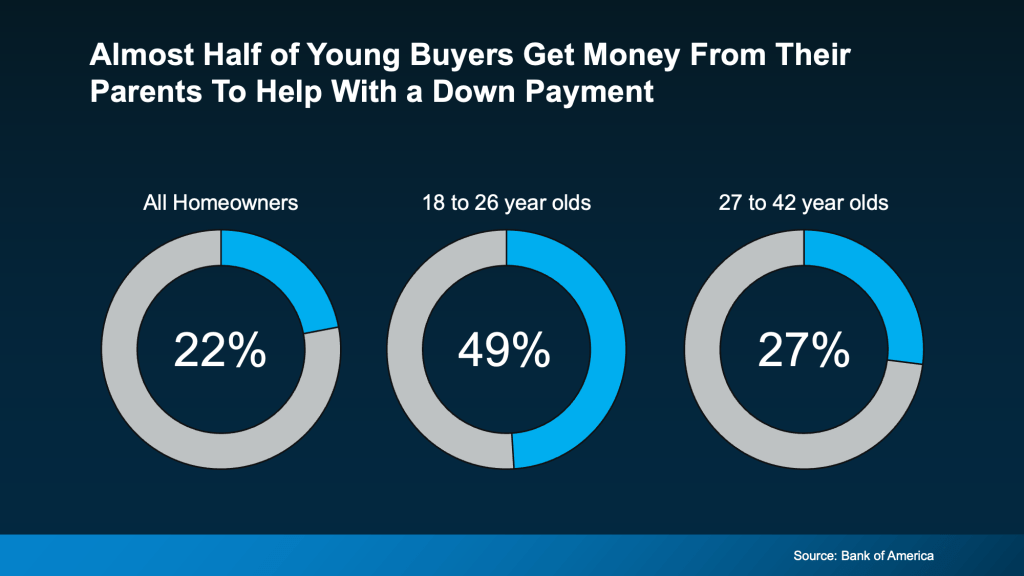
According to Bank of America49% of buyers between 18 and 26 got money from their parents to use toward their down payment (see chart below): 

Even though the data doesn’t specify how many parents used their equity, the wealth they’ve built through homeownership may have helped make it possible – especially given how much equity the average homeowner has today.

While what’s right for each person’s specific situation will vary on a case-by-case basis, that’s a powerful legacy to pass on. It helps those younger people buy a home, build equity of their own, and begin the next chapter of their life with a little less financial stress and a lot more stability. And for those parents? It’s a way to turn what they’ve built into something deeply meaningful.

This isn’t just about money. For many homeowners, it’s about being the reason their child gets to say, “we got the house.” And giving them the kind of head start they might’ve only dreamed of at their age. And here’s the part that really sticks. Compare the Market says: 

“Of those who did receive monetary aid from parents and grandparents to buy a house, 45% of Americans said they would not have been able to purchase a house without financial support from parents and grandparents.”

Bottom Line

Your equity could be the thing that makes homeownership possible for your children when they might not be able to do it on their own. So, here’s the question.

If helping your kids buy a home was more feasible than you thought, would you want to explore that option?

If you want to learn more or find out the best way to make it happen, talk to your lender and a financial advisor you trust.

If you’re not working with a lender, we can recommend several who we have worked with over the years and trust. Let us know if we can help.

Mari and Hank

The information contained, and the opinions expressed, in this article are not intended to be construed as investment advice. You should always conduct your own research and due diligence and obtain professional advice before making any investment decision.

” I Have a 3% Mortgage, Why Would I Move?”

If you have a 3% mortgage rate, you’re probably pretty hesitant to let that go. And even if you’ve toyed with the idea of moving, this nagging thought may be holding you back: why would I give that up?”

But when you ask that question, you may be putting your needs on the back burner without realizing it. Most people don’t move because of their mortgage rate. They move because they want or need to. So, let’s flip the script and ask this instead: 

What are the chances you’ll still be in your current house 5 years from now?

Think about your life for a moment. Picture what the next few years will hold. Are you planning on growing your family? Do you have adult children about to move out? Is retirement on the horizon? Are you already bursting at the seams?

If nothing’s going to change, and you love where you are, staying put might make perfect sense. But if there’s even a slight chance a move is coming, even if it’s not immediate, it’s worth thinking about your timeline.

Because even a year or two can make a big difference in what your next home might cost you.

What the Experts Say About Home Prices over the Next 5 Years

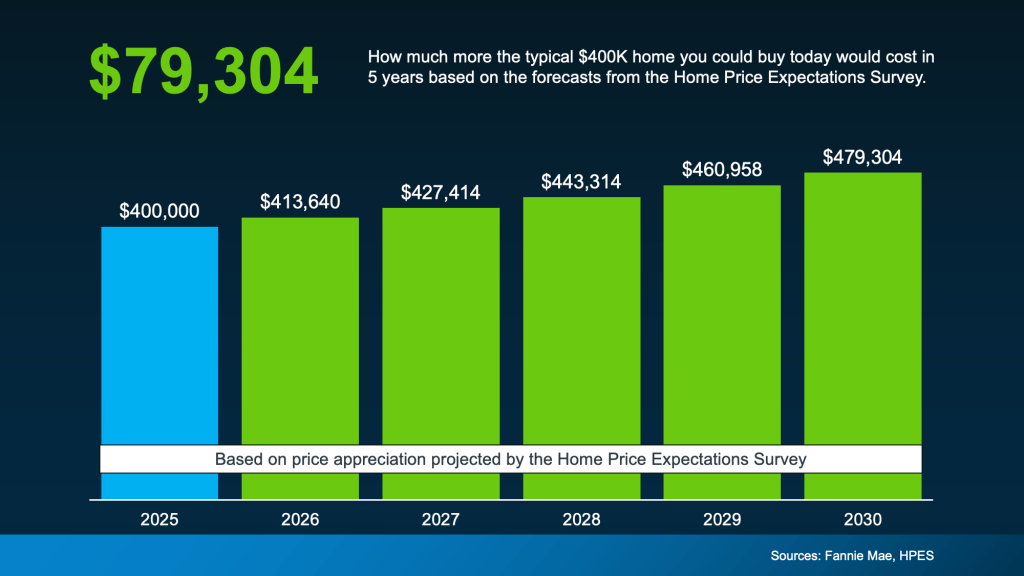
Each quarter, Fannie Mae asks more than 100 housing market experts to weigh in on where they project home prices are headed. And the consensus is clear. Home prices are expected to rise through at least 2029 (see graph below):

While those projections aren’t calling for big increases each year, it’s still an increase. And sure, some markets may see flatter prices or slower growth, or even slight dips in the short term. But look further out. In the long run, prices almost always rise. And over the next 5 years, the anticipated increase – however slight – will add up fast.

Here’s an example. Let’s say you’ll be looking to buy a roughly $400,000 house when you move. If you wait and move 5 years from now, based on these expert projections, it could cost nearly $80,000 more than it would now (see graph below):

That means the longer you wait, the more your future home will cost you.

If you know a move is likely in your future, it may make sense to really think about your timeline. You certainly don’t have to move now. But financially, it may still be worth having a conversation about your options before prices inch higher. Because while rates are expected to come down, it’s not by much. And if you’re holding out in hopes we’ll see the return of 3% rates, experts agree it’s just not in the cards.

So, the question really isn’t: “why would I move?” It’s: “when should I?” – because when you see the real numbers, waiting may not be the savings strategy you thought it was.

Bottom Line

Keeping that low mortgage rate is smart – until it starts holding you back.

If a move is likely on the horizon for you, even if it’s a few years down the line, it’s worth thinking through the numbers now, so you can plan ahead.

When the time comes, where’s next for you? Let’s have a conversation about how increasing mortgage rates will impact your next move. That way, you can make an informed decision about your timeline.

You can reach us at our new business cell phone numbers (508) 388-1994 [Mari] or (508) 338-9928 [Hank]. Talk soon…

Mari and Hank

Nothing herein should be construed as investment advice. You should always conduct your own research and due diligence and obtain professional advice before making any investment decision.