
Two Good Reasons to Move This Summer

Summer months consistently bring more sellers into the market than later in the year.

A lot of people who want to move are telling themselves the same thing: “Maybe I’ll just wait until later this year once things calm down.” 

While waiting sounds like a good plan, there’s no way to know when “things will calm down.”

What we do know is that rates aren’t expected to change much, so if that’s the #1 reason you’re waiting, it may not pay off. And there could be other things you miss out on in the meantime. 

Plus, you may be delaying a move that you know you have to make.

Historically, summer is one of the strongest seasons of the year for both buyers and sellers. And if you delay your move until fall or winter, some of those opportunities may already be fading.

Buyers: Fresh Inventory Is Your Real Summer Advantage

One of the biggest frustrations buyers have faced over the past few years has been a lack of affordable options. Maybe you’ve run into that yourself:

  • You find a house you like, but it’s out of your budget.
  • You find something in your budget, but you don’t like it.
  • Or worse, nothing interesting hits the market for weeks.

Historically, summer helps with that.

Looking at data from the last few years, summer months consistently bring more sellers into the market than later in the year. And that gives buyers a real window of fresh choices.

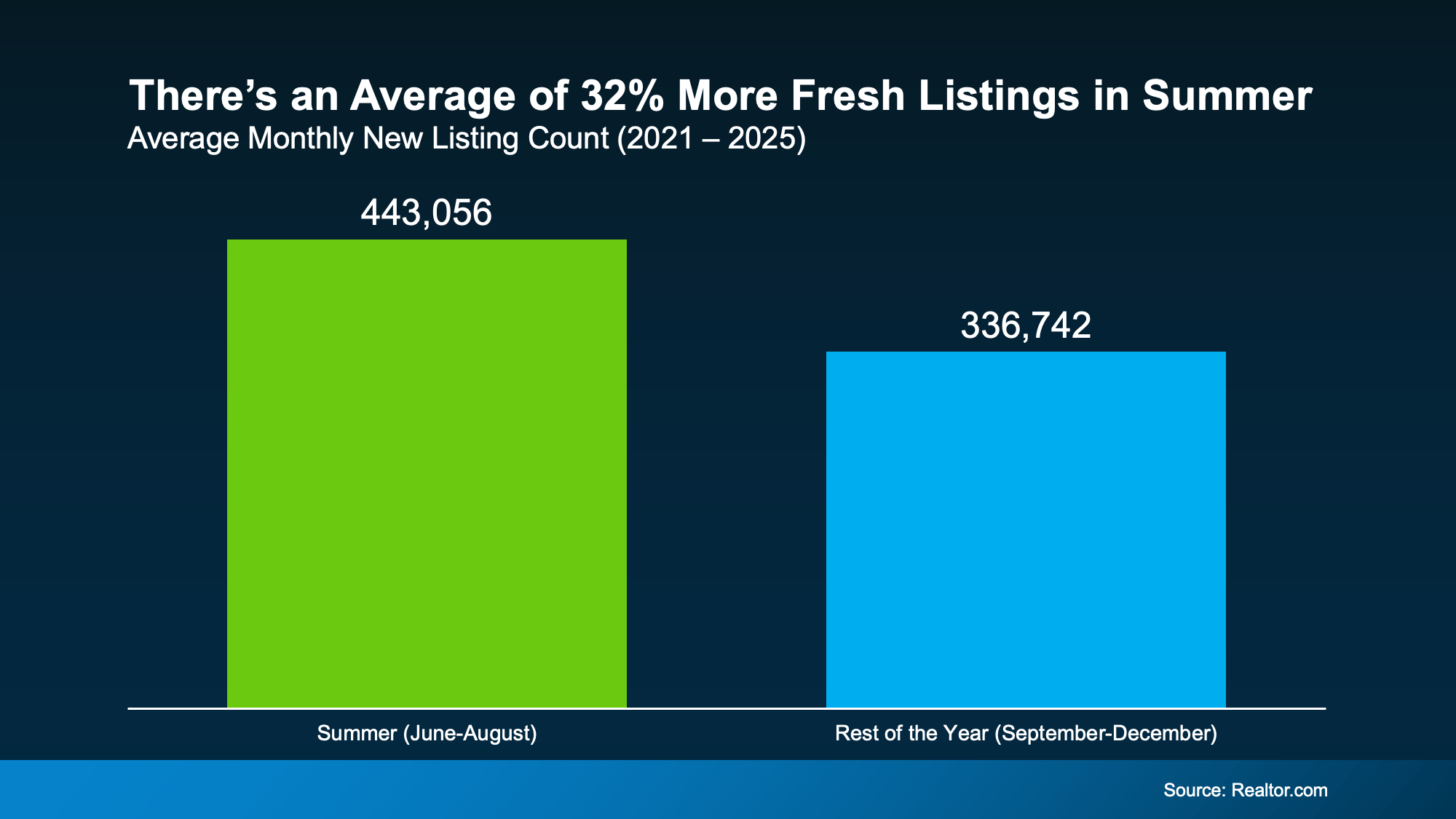
According to Realtor.comany given summer month typically sees about 32% more fresh options than the average month from September-December.
a graph showing a number of prices

With more newly listed homes, there’s a better chance of finding one you like where the numbers actually work.

Because all it really takes is one home to completely change your search. And if you’ve got more popping onto the market to choose from, maybe one of those is exactly what you need. 

But keep in mind, this seasonal window isn’t open forever. Fresh inventory tends to slow down once Summer ends.

Many homeowners who planned to sell this year have already listed by then. Families who wanted to move before school starts have often already gotten it done, or at least, set it into motion. So, new listing activity usually cools as we head into fall and winter.

Of course, every year is different. But if finding the right home at the right price has been your biggest challenge, waiting until later in the year may not necessarily give you more options. In fact, recent history suggests it may do just the opposite.

Sellers: Homes Usually Sell for More and sometimes quicker in the Summer

If you’re thinking of selling, you may be considering holding off because you’ve seen headlines about lower asking prices, price cuts, and softer conditions in some markets. But those headlines don’t tell the whole story or convey just how much it varies by area.

Here’s what you really need to know. Even though the market’s becoming more balanced and some pockets are experiencing price declines, that doesn’t mean you’ve missed your chance to sell. 

Seasonality can still work in your favor no matter where you are. And this Summer could still give you the chance to sell for a good price.

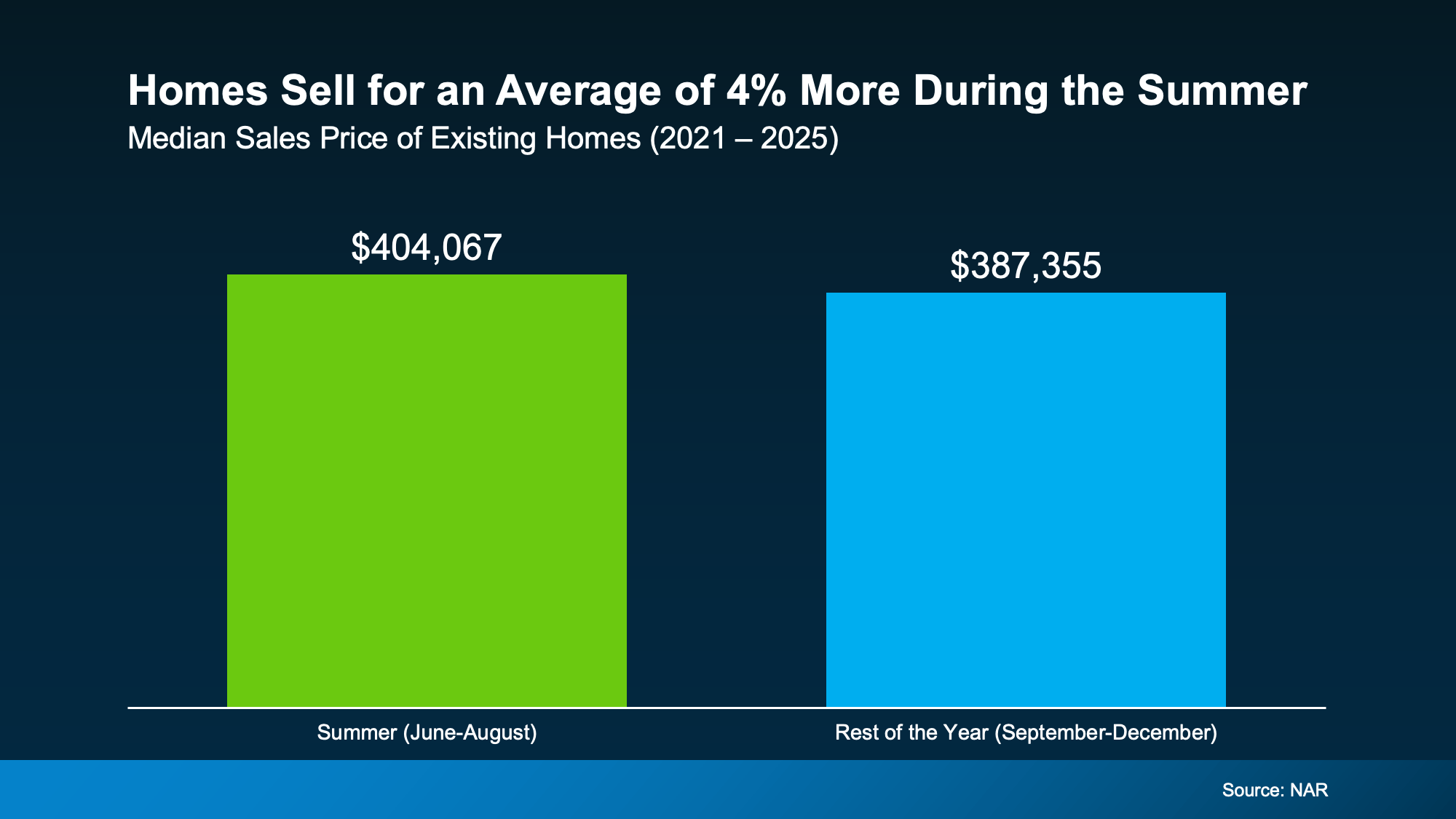
According to the National Association of Realtors (NAR), homes sold during a summer month usually sell for about 4% more than homes sold during the typical month from September-December:
a graph of a sales report

Why? Summer buyers are usually operating on a set timeframe. They’re trying to move before the next school year or when they have more PTO and warmer weather to tour houses. That urgency can translate into better offers.

Now, that doesn’t mean you should price your house 4% higher this summer. That would actually be a mistake in today’s market.

It just means if you’re looking to get as much for your house as you reasonably can, a summer move could be a smarter play than waiting until later this year. 

Because based on typical seasonality, you may get more for your house than you would if you waited until the fall or winter (when there are typically fewer buyers active).

And if you’re considering a move anyway, that’s worth factoring in.

Bottom Line

Could waiting until later this year work out? Sure. But it’s important to understand what you may gain by moving now too – that way you have the full picture before you decide.

If a 2026 move is on your radar, let’s connect and talk about what matters most to you. You can always find us at 508-388-1994 (Mari and Hank) or 781-264-5517 (Colleen).

Depending on your priorities, summer could be your moment.

Mari, Hank, and Colleen

Nothing herein should be construed as investment advice. You should always conduct your own research and due diligence and obtain professional advice before making any investment decision.

Does Buying Seem Out of Reach?

Here’s a possible solution.

The math on buying a home doesn’t seem to be adding up right now for some folks. Maybe that’s how it feels for you, as well. You look at the cost of buying. Then you look at the cost of expenses like childcare. And it starts to feel as if you need to choose between one or the other.

But some families are finding a way to work things out by doing something a little different: teaming up with family members to purchase a multi-generational home.

One Reason This Is Becoming More Common

It’s no secret that affordability has been a challenge in recent years. But for families with young kids, there’s an added layer that can make it feel even harder: childcare.

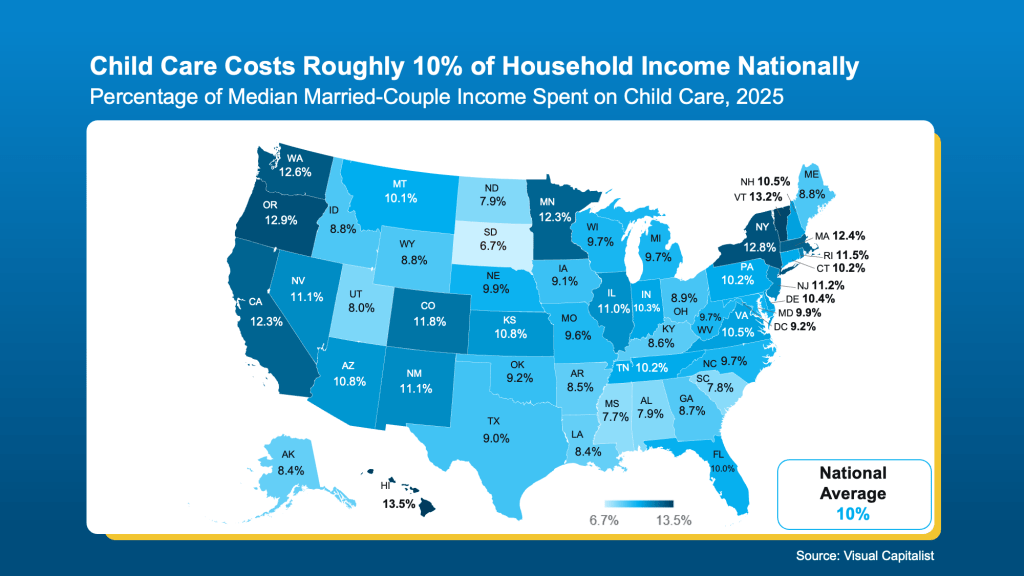
According to the Department of Health and Human Services, childcare should take up no more than 7% of your monthly income. But in reality, the average married couple spends closer to 10%. In Massachusetts, it’s almost 12.5%.  (see map below):

When you combine that with the cost of buying a home, it’s easy to see why things can feel stretched. That’s exactly why more families are starting to rethink how they approach both.

The Solution More People Are Turning To: Multi-Generational Living

One option gaining traction? Multi-generational living. That’s when parents, grandparents, or other relatives buy a house together and live under the same roof. And it’s not just about convenience anymore. It’s becoming a go-to strategy.

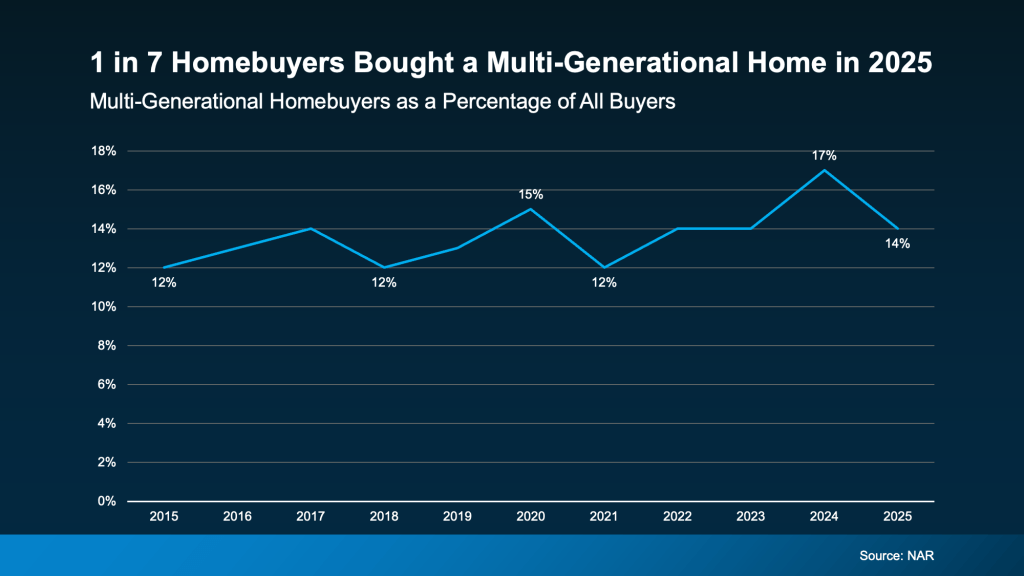
You can see it in the data. According to the National Association of Realtors (NAR), almost 1 in 7 homebuyers (14%) bought a multi-generational home in 2025 (see graph below):

And for the first time, childcare is showing up as a key reason why they chose this option. As NAR explains:

“This year’s report features two new primary reasons for purchasing a multi-generational home: grandchildren living in the home (12%) and to help reduce the cost of childcare (6%).”

Why It Works

Buying a multi-generational home solves two big challenges at the same time.

  • First, it shares the financial responsibility. If you pool multiple incomes together, you may be able to afford a home you couldn’t have on your own.
  • Second, it can also solve the childcare puzzle. When grandparents or other relatives live in the home, they may be able to help with daily care – which can significantly reduce or even eliminate daycare costs.

And for many people, that combination is what finally makes their move possible.

If the costs of childcare and housing together have made buying feel out of reach right now, it may be worth exploring creative options like buying a home with your loved ones.

Bottom Line

If you want more information on multi-generational homes, let’s have a quick conversation about some possible options. You can always find us at 508-388-1994 (Mari and Hank) and 781-423-8662 (Colleen).

Sometimes the path to homeownership isn’t doing it alone. It’s doing it together.

Mari, Hank, and Colleen

Nothing herein should be construed as investment advice. You should always conduct your own research and due diligence and obtain professional advice before making any investment decision.
Buy Now or Wait for Rates to Drop?

Buyers who are holding out for lower mortgage rates may be missing a key opening in the market.

Mortgage rates are always a hot topic – and for good reason. After the most recent jobs report came out weaker than expected, the bond market reacted almost instantly. As a result, in early August mortgage rates dropped to their lowest point so far this year (6.55%).

While that may not sound like a big deal, pretty much every buyer has been waiting for rates to fall. And even a seemingly small drop like this reignites the hope we’re finally going to see rates trending down. But what’s realistic to expect?

According to the latest projections, rates aren’t expected to fall dramatically anytime soon. Most experts project they’ll stay somewhere in the mid-to-low 6% range through 2026 (see graph below):

In other words, no big changes are expected. But small shifts, like the one we just saw, are still likely. 

What Rate Would Get Buyers Moving Again?

The magic number most buyers seem to be watching for is 6%. And it’s not just a psychological benchmark; it has real impact. A recent report from the National Association of Realtors (NAR) says if rates reach 6%:

  • And roughly 550,000 people would buy a home within 12 to 18 months
  • 5.5 million more households could afford the median-priced home

That’s a lot of pent-up demand just waiting for the green light. And if you look back at the graph above, you’ll see Fannie Mae thinks we’ll hit that threshold next year. That raises an important question: Does it really make sense to wait for lower rates?

Because here’s the tradeoff. If you’re waiting for 6%, you need to realize a lot of other people are too. And when rates do continue to inch down and more buyers jump into the market all at once, you could face more competition, fewer choices, and higher home prices. NAR explains it like this:

“Home buyers wishing for lower mortgage interest rates may eventually get their wish, but for now, they’ll have to decide whether it’s better to wait or jump into the market.”

Consider the unique window that exists right now:

  • Inventory is up = more choices
  • Price growth has slowed down = more realistic pricing
  • You may have more room to negotiate = you could get a better deal

These are all opportunities that will go away if rates fall and demand surges. That’s why NAR says:

“Buyers who are holding out for lower mortgage rates may be missing a key opening in the market.”

Bottom Line

Some people have told us that they are holding off on making their next move in order to see “what happens.” If that means if rates are going to drop, you have your answer. They aren’t expected to hit 6% this year.

But when rates drop, you’ll have to deal with more competition as other buyers jump back in. If you want less pressure and more negotiating power, that opportunity is already here – and it might not last for long. It all depends on what happens next in the economy.

If you’re thinking about entering the market but want to talk it through, we’re here to listen. You can find us at 508-388-1994 or msennott@todayrealestate.com. Let us know how we can help.

Mari and Hank

Nothing herein should be construed as investment advice. You should always conduct your own research and due diligence and obtain professional advice before making any investment decision.