The $280 Shift

This could be the difference between “not yet” and “let’s go!”

If you paused your plans to move because of high rates or prices, it may finally be time to take a second look at your numbers. Affordability is improving, according to First American. And that’s the fifth straight month where buying a home has started to get a little bit easier.

Let’s break this down into real dollars, so you can see the difference this could make for you (and your move).

Monthly Payments Are Coming Down

One of the clearest signs of this shift is in monthly payments. The latest data from Redfin shows mortgage payments on a median-priced home are now $283 lower than they were just a few months ago (see graph below):

This kind of monthly savings adds up fast, and totals nearly $3,400 over the course of a year.

Please remember that the median price is the price in the middle. There are just as many homes available below that price as above. So, don’t be put off by that figure. There are homes in your price range!

While this drop isn’t enough to totally change the affordability game overnight, think about it this way. When you’re putting together a home buying budget, a few hundred dollars may be the difference between being comfortable buying a home and feeling like money is still a bit tight.

And from a home-search perspective, it may even be enough to change the price point you can look at.

And that’s a big deal if you haven’t found a home you love in your price range yet. It gives you a little more flexibility to find the one that’s right for you.

Either way, that’s a big win.

What’s Behind the Shift?

Three key factors are working in your favor right now:

  • Mortgage rates have eased from their high earlier this year
  • Home price growth is slowing in many markets
  • Inventory is increasing

All these help your bottom line and give you some breathing room if you’re buying a home. As Andy Walden, Head of Mortgage and Housing Market Research at ICE Mortgage Technology, says:

“The recent pullback in rates has created a tailwind for both homebuyers and existing borrowers. We’re seeing affordability at a 2.5-year high . . .”

Whether you’re a first-time homebuyer or someone looking to move up into a bigger house, the shifts happening this year could make your move possible.

For you, the savings could be the difference between “not yet” and “let’s go.”

Bottom Line

If you’ve been sitting on the sidelines, this is your cue to start looking again. So, contact your lender to see how much you can afford today and then connect with us to see what’s currently available that might suit your needs. You can find us at 508-388-1994 or msennott@todayrealestate.com.

We’re here to help…

Mari and Hank

Nothing herein should be construed as investment advice. You should always conduct your own research and due diligence and obtain professional advice before making any investment decision.

The Best Time to Buy is Here!

Homebuyers are in the best position in more than five years to find the right home and negotiate for a better price. 

If you’ve been watching from the sidelines, now’s the time to lean in. It’s officially the best time to buy this year. According to Realtor.com, this October will have the most buyer-friendly conditions of any month in 2025:

“By mid-October, buyers may finally find the combination of inventory, pricing, and negotiating power they’ve been waiting for—a rare opportunity in a market that has been tight for most of the past decade.”

So, if you’re ready and able to buy this month this means you should see:

  • More homes to choose from
  • Less competition from other buyers
  • More time to browse
  • Better home prices
  • Sellers who are more willing to negotiate

While October 12-18 is the national “best week,” conditions are in place now for buyers who have been waiting to upsize, downsize or right size to find the properties they’ve been looking for at prices that they’re willing to pay.

Here on Cape Cod, inventory is increasing as are days on market for listed properties. This means sellers should be interested in negotiating prices and terms so they can move on with their lives. Mortgage interest rates are also the lowest that they have been in a year helping buyers afford what are still high prices.

And remember home prices are lower elsewhere in other parts of Massachusetts, as well as New England and the country as a whole. So, you don’t have to limit your search to just on Cape. Through the various connections we have with realtors off Cape and elsewhere, we can refer you to a very qualified Realtor who can help you with your search.

What the Experts Are Saying

Realtor.com isn’t the only one saying you’ve got an opportunity if you move now. Lawrence Yun, Chief Economist at the National Association of Realtors (NAR), explains:

Homebuyers are in the best position in more than five years to find the right home and negotiate for a better price. Current inventory is at its highest since May 2020, during the COVID lockdown.”

Daryl Fairweather, Chief Economist at Redfin, puts it like this:

Nationally, now is a good time to buy, if you can afford it . . . with falling mortgage rates and significantly more inventory, buyers have an upper hand in negotiations.”

And NerdWallet says:

“This fall just might be the best window for home buyers in the past five years.”

How To Get Ready

To make sure you’re ready to jump, talk to us now. We can give you the information you need to decide if this is the time for you to buy. We can discuss timing, strategy, and how you may be able to buy your new home before selling your current one.

You can find us at 508-388-1994 or msennott@todayrealestate.com. We’re here to help…


BTW…Hank’s new book of short stories will be available soon. Please watch for it. Copies “signed by the author” can be purchased via Venmo. Contact Mari for details. Thanks.

Nothing herein should be construed as investment advice. You should always conduct your own research and due diligence and obtain professional advice before making any investment decision.
The Accidental Landlord

The number of homeowners turning into accidental landlords is rising.

Sometimes sellers will say they’ve decided to rent their homes if the properties been on the market for what they’ve consider too long or if the offers they’re receiving aren’t what “they want.”

There’s a term for this in the industry, and it’s called an accidental landlord. Here’s how Yahoo Finance defines it:

“These ‘accidental landlords’ are homeowners who tried to sell but couldn’t fetch the price they wanted — and instead have decided to rent out their homes until conditions improve.”

Why This Is Happening

The number of homeowners turning into accidental landlords is rising. Business Insider explains why:

“While there have always been accidental landlords . . . an era of middling home sales brought on by a steep rise in borrowing rates — is minting a new wave of reluctant rental owners.”

Basically, sales have slowed down as buyers struggle with today’s affordability challenges. That’s leaving some homeowners with listings that sit and go stale. And if they don’t want to drop their price to try to appeal to buyers, some homeowners may believe that renting is a better option.

Let’s be honest, you can’t blame them for thinking about it. The rents that some properties can command are certainly enticing.

But here’s what you need to remember if renting your house has crossed your mind. If becoming a landlord wasn’t your original plan, there’s probably a reason for that. It comes with a lot more responsibility (and risk) than most people expect.

So, if you find yourself toying with that option, ask yourself these questions first:

1. Does Your House Have Potential as a Profitable Rental?

Just because you can rent it doesn’t mean you should. For example:

  • Are you moving out of state? Managing maintenance from far away isn’t easy.
  • Does the home need repairs before it’s rental-ready? Do you have the time or the funds for that? The house you were attempting to sell “as is,” may not be suitable as a rental property until the improvements you’re trying to avoid making are completed.
  • Is your neighborhood one that typically attracts renters, and would your house be profitable as one?

If any of those give you pause, it’s a sign selling might be the better move.

2. Are You Ready To Be a Landlord?

On paper, renting sounds like easy passive income. In reality, it often looks more like this:

  • Midnight calls about clogged toilets or broken air conditioners
  • Chasing down missed rent payments
  • Damage you’ll have to fix between tenants
  • Calls from former neighbors with complaints about your renters, whether the calls are justified or not.

As Redfin notes:

“Landlords have to fix things like broken pipes, defunct HVAC systems, and structural damage, among other essential repairs. If you don’t have a few thousand dollars on hand to take care of these repairs, you could end up in a bind.”

3. Have You Thought Through the True Costs?

According to Bankrate, here are just a few of the hidden costs that come with renting out your home:

  • A higher insurance premium (landlord insurance typically costs about 25% more)
  • Management fees (if you use a property manager, they typically charge around 10% of the rent)
  • Maintenance and advertising to find tenants
  • Gaps between tenants, where you cover the mortgage without rental income coming in

All of that adds up, fast.

While renting can be a smart move for the right person with the right house, if you’re only considering it because your listing didn’t get traction, there may be a better solution: revisiting the pricing strategy on your house.

Bottom Line

Before you decide to rent your house, make sure to carefully weigh the pros and cons of becoming a landlord. If you do not have an active listing agreement with a real estate professional, please consider contacting us. A fresh set of eyes may offer a different perspective. The issue may not be the price. It could be marketing or other factors.

You can find us at 508-388-1994 or msennott@todayrealestate.com.

For many homeowners, the hassle (and the expense) of renting may not be worth it. 

Mari and Hank

The information contained, and the opinions expressed, in this article are not intended to be construed as investment advice. You should always conduct your own research and due diligence and obtain professional advice before making any investment decision.
Selling Your Home? Don’t Do This

Are you thinking about selling your house? Here are some common mistakes that are being made right now that’s causing the process to be more stressful for some sellers. And even costing them money!

Fortunately, they’re easy to avoid, as long as you know what to watch for. Let’s break down the biggest seller slip-ups, and how we can help you steer clear of them.

1. Overpricing Your House

It’s completely natural to want top dollar for your house, especially if you’ve put a lot of work into it. But in today’s shifting market, pricing it too high can backfire. Investopedia explains:

“Setting a list price too high could mean your home struggles to attract buyers and stays on the market for longer.

And your house sitting on the market for a long time could lead to price cuts that raise red flags about “what’s wrong” with the property. That’s why pricing your house right from the start matters.

To advise you on price, we look at what other similar nearby homes have sold for, the condition of your house, and what’s happening in the market right now. That way we can suggest a price that’s more likely to bring in buyers, and maybe even more than one offer.

2. Spending Money on the Wrong Upgrades

The housing market has nearly a half million more sellers than buyers according to Redfin. That means you have more competition as a seller and may have to do a bit more to get your house ready to sell. But not all projects are going to be worth it. If you spend money on the wrong projects, it could really cut into your profit.

We work with buyers and know what they’re really looking for, so we can help you figure out which projects are worth it, and which ones to skip. Even better, we know how to highlight any upgrades you make in your home, so your house stands out online and gets more attention.

3. Refusing To Negotiate

Now that inventory has grown, it’s important to stay flexible. Buyers have more options – and with it comes more negotiating power. U.S. News explains:

“If you’ve received an offer for your house that isn’t quite what you’d hoped it would be, expect to negotiate . . . make sure the buyer also feels like he or she benefits . . . consider offering to cover some of the buyer’s closing costs or agree to a credit for a minor repair the inspector found.”

Again, that’s where we come in. We’ll advise you on what’s normal in today’s market, and how to find a win-win solution. Sometimes making a small compromise can keep the deal moving and help you move on to your next chapter faster.

4. Skipping Research When Hiring an Agent

So, you want to interview several agents? Be sure to do your research.

  • Ask about how many homes has the person sold? (We’ve sold 400.)
  • Ask about their marketing plan. (We have one.)
  • Ask about how committed they are to representing your home. (Are they going to attend every showing or just give the lock box code to any agent who calls. We attend every showing. If we’re not there to sell your home, then why did you hire us? If for some reason we can’t, another Today Real Estate agent who is fully briefed about your home will.)

Bottom Line

Selling a house doesn’t have to be stressful, especially if you have us by your side. If you’re ready to sell, let’s talk. You can find us at 508-388-1994 or msennott@todayrealestate.com.

Mari and Hank

Three Reasons to Buy a Home This Summer

Are you thinking about buying a home, but not sure if this is the right time? A lot of people are waiting and wondering what the market’s going to do next. But here’s something only the savviest buyers realize:

This summer might actually be the best time to buy in years. Here are three big reasons why.

1. You Have More Negotiating Power

After several years of sellers having all the leverage, things are starting to shift. Check out the graph below. It uses data from Redfin to show that right now, there are more sellers active in the market than buyers:

Take a look at what happened back in 2021 through roughly 2023. In that time period, there were far more buyers (the blue line) looking to buy than homes for sale (the green line). That’s what drove the intense competition, bidding wars, and the exponential price growth the market saw back then.

Now, the market has shifted, and buyers are regaining their negotiating power as a result. With more sellers than buyers, sellers may be more willing to pay for repairs, cover some of your closing costs, or lower their asking price. The return of this kind of normal balance is a sign of a much healthier, more sustainable market. As Lawrence Yun, Chief Economist of the National Association of Realtors (NAR), explains:

“ . . . with housing inventory levels reaching five-year highs, homebuyers in nearly every region of the country are in a better position to negotiate more favorable terms.”

And just in case you’re worried there are too many homes on the market, here’s what you should know. Overall inventory is still lower than normal, so you don’t have to worry about a nationwide oversupply or a crash.

As we noted in our post last week, inventory has increased on Cape Cod, as well. But it is still not close to pre-pandemic levels. So, if you’re waiting for that crash that your Uncle Bob who “knows a little something about real estate” is talking about, you’re going to have a long wait.

2. You Have More Choices

The number of homes for sale has improved a lot. Based on the latest data from Realtor.com, more homes were listed this May than in May 2024 or May 2023 (see graph below):

And more homes for sale means more choices. There’s a good chance your perfect match just hit the market – or it will soon. So, it’s a great time to explore what’s out there. As Jake Krimmel, Economist at Realtor.com, says:

“With more fresh inventory hitting the market, buyers have better opportunities to find a home that fits their needs.”

3. You May See More Flexibility on Price

With more homes for sale, they’re not selling at the same frenzied pace they were just a few years ago.

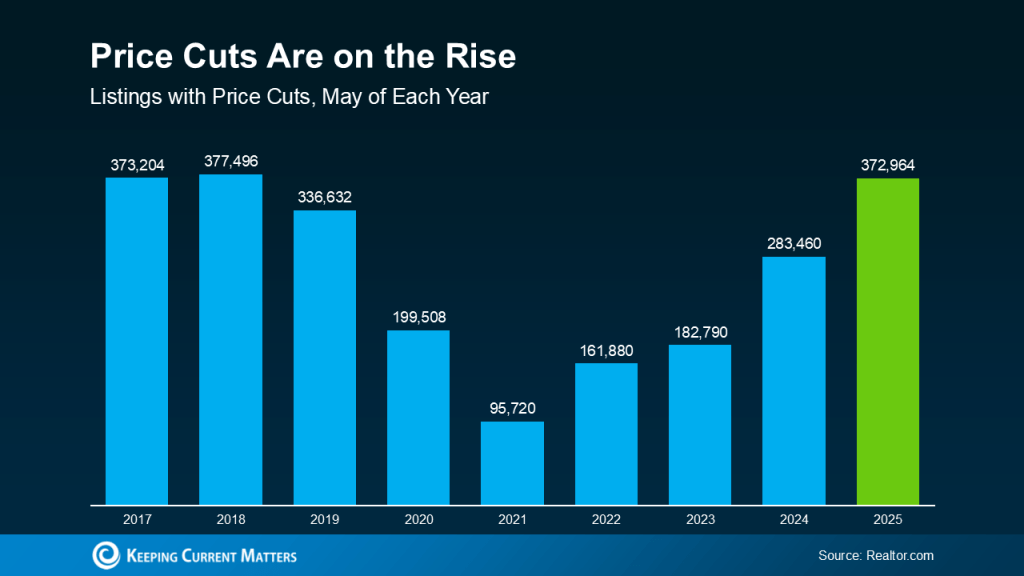
Since homes are taking more time to sell, some sellers are choosing to lower their asking prices to draw buyers back in or speed up the process. And that’s to-be-expected. According to Realtor.com, 19.1% of listings had a price cut this May (see graph below):

That’s the fifth straight month where more sellers have reduced their price. And, as of May, the volume of price cuts is back at normal levels. This is yet another sign of the return to a more balanced market.

While you shouldn’t expect a big discount, you may find sellers are a bit more flexible right now. As a recent article from The Street says:

Although sellers have had the upper hand in the housing market over the past few years, houses are now staying on the market for longer, shifting negotiating power back to homebuyers.”

Just remember, most sellers still aren’t adjusting their prices – just the ones who overpriced to start with. So, this isn’t a sign of a crash, it’s a sign of some sellers having outdated expectations in a shifting market.

Bottom Line

This summer brings a powerful combo for buyers: more homes to choose from, less competition, and sellers being more flexible on pricing.

What would finding the right home this summer mean for your next chapter? If you’re ready to find out, let’s connect at 508-360-5664 or msennott@todayrealestate.com.

Talk soon…

Mari and Hank

Real Estate Terms You Need to Know

If you’re a first-time homebuyer or maybe someone who hasn’t been in the market for a while, you maybe coming across some terms you’re not familiar with. And that can be overwhelming, especially while going through one of the biggest purchases of your life. 

The good news is you don’t need to be an expert on real estate jargon. That’s our job. But getting to know these basic terms will help you feel a lot more confident throughout the process.

Terms Every Homebuyer Should Know

Once you’re familiar with this terminology, you’ll have a better understanding of important details – from contracts to negotiations. So, when those big conversations happen, you’ll feel informed, in control, and able to make the best decision for your unique situation. As Redfin puts it:

“Having a basic understanding of important real estate concepts before you start the homebuying process will give you peace of mind now and could save you a fortune in the future.”

Here’s a breakdown of a few key real estate terms and definitions you should know, according to the Federal Trade Commission (FTC) and First American.

Appraisal: A report providing the estimated value of the home. Lenders rely on appraisals to determine a home’s value, so they’re not lending more than it’s worth.

Contingencies: Contract conditions that must be met, typically within a certain timeframe or by a specified date. For example, a home inspection is a common contingency. While you can waive these to try and make your offer more competitive, it’s generally not recommended.

Closing Costs: A collection of fees and payments made to the various parties involved in your home purchase. Ask your lender for a list of closing cost items, including attorney’s fees, taxes, title insurance, and more.

Down Payment: This varies by buyer, but is typically 3.5-20% of the purchase price of the home. There are even some 0% down programs available. Ask your lender for more information. Chances are, unless specified by your loan type of lender, you don’t need to put 20% down.

Escalation Clause: This is typically used in highly competitive markets. It’s an optional add on in a real estate contract that says a potential buyer is willing to raise an offer on a home if the seller receives a higher competing offer. The clause also includes how much a buyer is willing to pay over the highest offer.

Mortgage Rate: The interest rate you pay when you borrow money to buy a home. Consult a lender so you know how it can impact your monthly mortgage payment.

Pre-Approval Letter: A letter from a lender that shows what they’re willing to lend you for your home loan. This, plus an understanding of your savings, can help you decide on your target price range. Getting this from a lender should be one of your first steps in the homebuying process, before you even start browsing homes online.

Bottom Line

You don’t need to have all these terms memorized, but a little knowledge goes a long way. Brushing up on the basics now means fewer surprises later – and more clarity when you buy a home. 

What unfamiliar real estate term or phrase have you come across that wasn’t on this list?

Let’s connect at 508-388-1994 0r msennott@todayrealestate.com and talk it through so you will have a solid understanding of what it means and where it may show up in the homebuying process. 

Mari and Hank

The information contained, and the opinions expressed, in this article are not intended to be construed as investment advice. You should always conduct your own research and due diligence and obtain professional advice before making any investment decision.