The Price Has to be Right

There’s one big mistake sellers need to avoid when marketing their houses this year: setting the price too high. While it might seem that overpricing gives you room to negotiate or boost your profit, the reality is, it usually backfires.

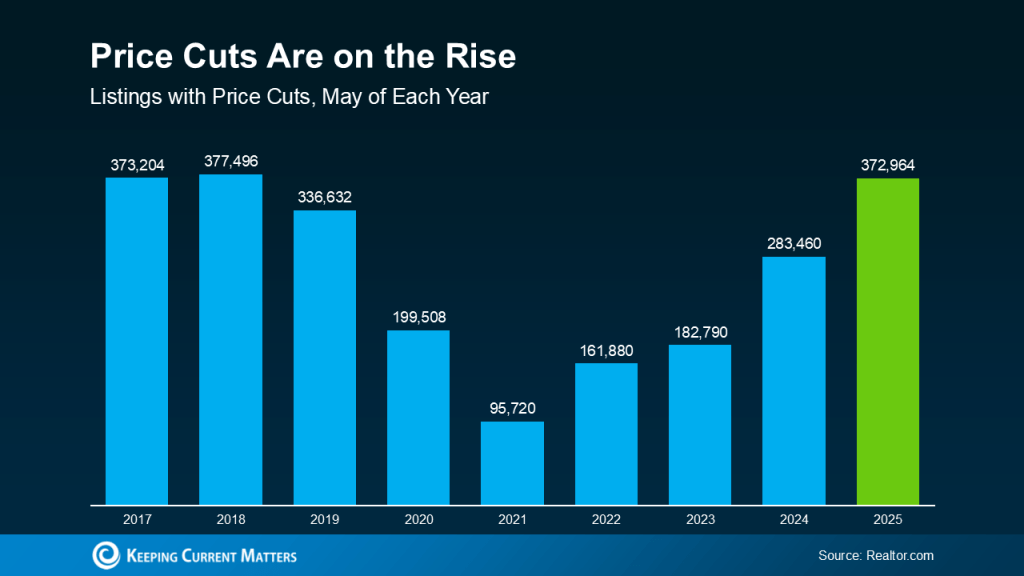
In fact, Realtor.com says almost 20% of sellers — that’s one in five — had to reduce their price to get their house sold. And you don’t want to be one of them. Here’s why starting too high can lead to trouble.

Overpricing Pushes Buyers Away

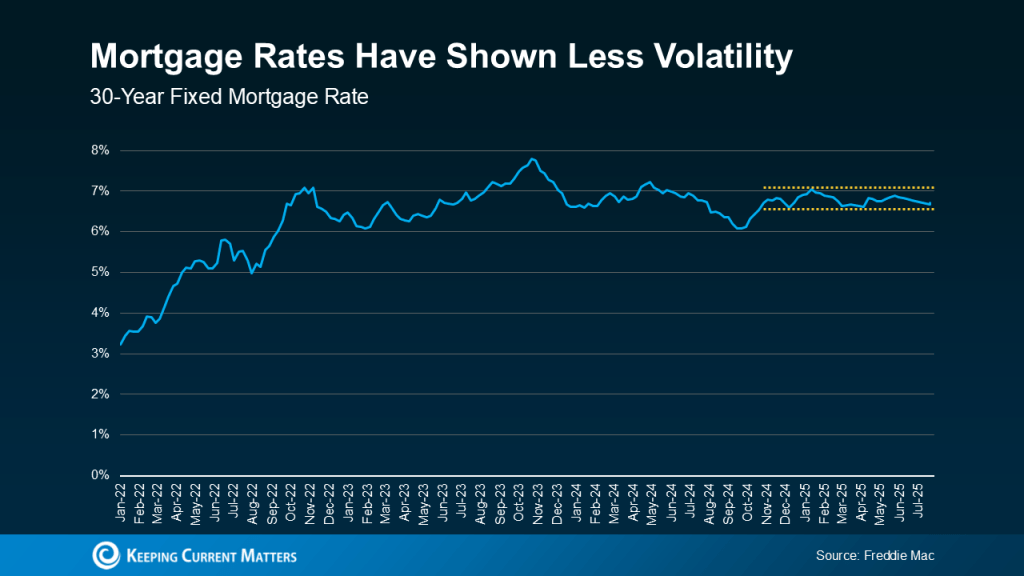
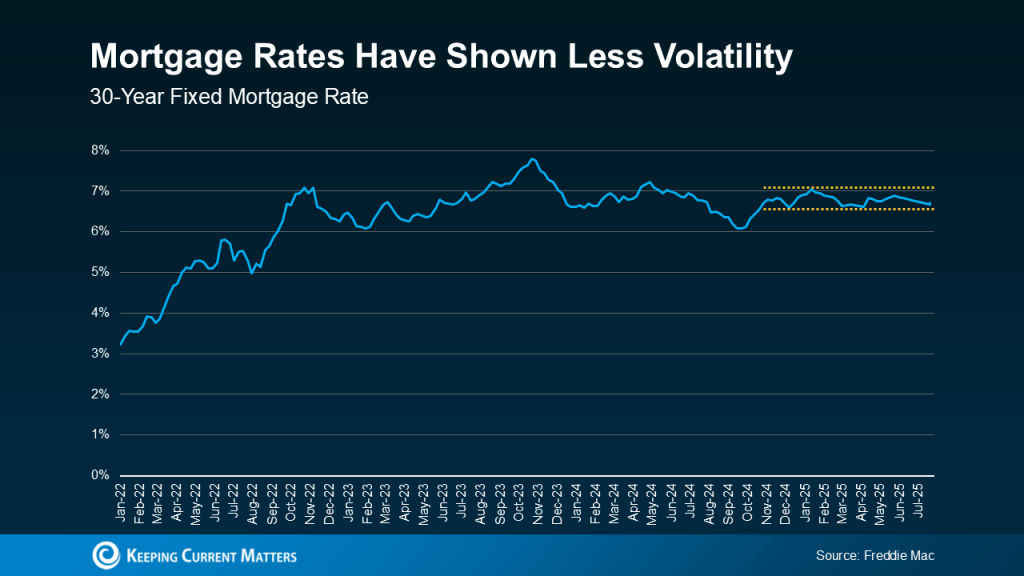
With mortgage rates and home prices where they are right now, some buyers are stretching their budgets to make a move. So, when they see a house that’s priced too high, they’re not thinking, “I can negotiate.” They’re more likely to think, “next” and skip over your house entirely. An article from the National Association of Realtors (NAR) explains: “Some sellers are pricing their homes higher than ever just because they can, but this may drive away serious buyers . . .”

And if they skip over your listing, you’ll miss out on the chance to get them through the door. That’s the last thing you want because fewer showings mean fewer chances to receive an offer.

The Longer Your House Sits, the More Skeptical Buyers Will Get

Here’s the other issue. An overpriced house tends to sit on the market longer. And the longer a house lingers, the more buyers start to wonder what’s wrong with it. Is there a problem with the house itself? Are you difficult to work with? Even if the only issue is the price, that extra time creates doubt.

As U.S. News says: “. . . setting an unrealistically high price with the idea that you can come down later doesn’t work in real estate . . . A home that’s overpriced in the beginning tends to stay on the market longer, even after the price is cut, because buyers think there must be something wrong with it.”

At that point, you’ll have no choice but to lower your price to drum up interest. But that price reduction comes with its own downside: buyers may see it as another red flag, that there really is an issue with the house.

The Key To Finding the Right Price for Your House

So, what’s the secret to avoiding all these headaches? It’s simple. Work with us to set a realistic price not your cousin Bob “who knows a little something about real estate” because he bought a house 20 years ago. We will be honest with you about how you should price your house.

You don’t want to partner with someone who just agrees to whatever number you throw out there. That’s not an expert who’s going to get you the best results.

We will use real-time data from the Cape market to help you land on a price that makes sense — one that grabs attention, attracts buyers, and still helps you walk away with a great return. And, sorry, what your neighbor up the street — who didn’t have as nice a house as you — got two years ago doesn’t count.

Bottom Line

Remember, if the price isn’t compelling, it’s not selling. Instead of shooting too high and scaring off buyers, work with a local agent who knows how to price it right.

Let’s team up and make sure your house hits the market with the right price, gets noticed, and gets sold.

Let’s talk soon…

Mari and Hank

The information contained, and the opinions expressed, in this article are not intended to be construed as investment advice. You should always conduct your own research and due diligence and obtain professional advice before making any investment decision.

11,000 Homes Sell Every Day. When’s Yours?

Are you hesitant to sell your house because you’ve heard that no one is buying with rates and prices where they are right now? Here’s some perspective that should help.

The market isn’t at a standstill. While there weren’t as many sales last year as there’d be in a normal market, roughly 4.15 million homes still sold (not including new construction), according to the National Association of Realtors (NAR). And the expectation is that number will rise in 2025. That means more people will likely move this year, and they need homes to buy homes like yours.

But even if we only match last year’s sales pace, here’s what that looks like.

Every Minute Homes Are Selling – Literally

  • 4.15 million homes ÷ 365 days in a year = 11,370 homes sell each day
  • 11,370 homes ÷ 24 hours in a day = 474 homes sell per hour
  • 474 homes ÷ 60 minutes = roughly 8 homes sell every minute

Think about that. Just in the time it took you to read this, 8 homes sold.

On Cape Cod, home sales are up 6.8% for 2024. through November. End of the year stats should be available soon.

If you’ve been holding off selling your house because you think buyers aren’t out there, let this reassure you – there are still buyers looking to buy.

While higher home prices and mortgage rates have slowed down the market and forced some buyers to the sidelines, that doesn’t mean the market isn’t active. Many buyers are still eager to make a move because life doesn’t wait for “perfect” market conditions. (And as we wrote about last week, time in the market is a more sensible strategy than trying to time the market.)

Every day, thousands of people need to buy homes. Life goes on no matter what interest rates or prices are. People get new jobs or are transferred. Some get married and can’t keep living in their parents’ basement. Others have children and need more space.

Let’s talk. We can get your house in front of buyers while other hesitant homeowners are still pausing their plans because they think buyer demand has disappeared. Let’s work together to get your house sold.

Mari and Hank

The information contained, and the opinions expressed, in this article are not intended to be construed as investment advice. You should always conduct your own research and due diligence and obtain professional advice before making any investment decision.

Time in the Market vs. Timing the Market

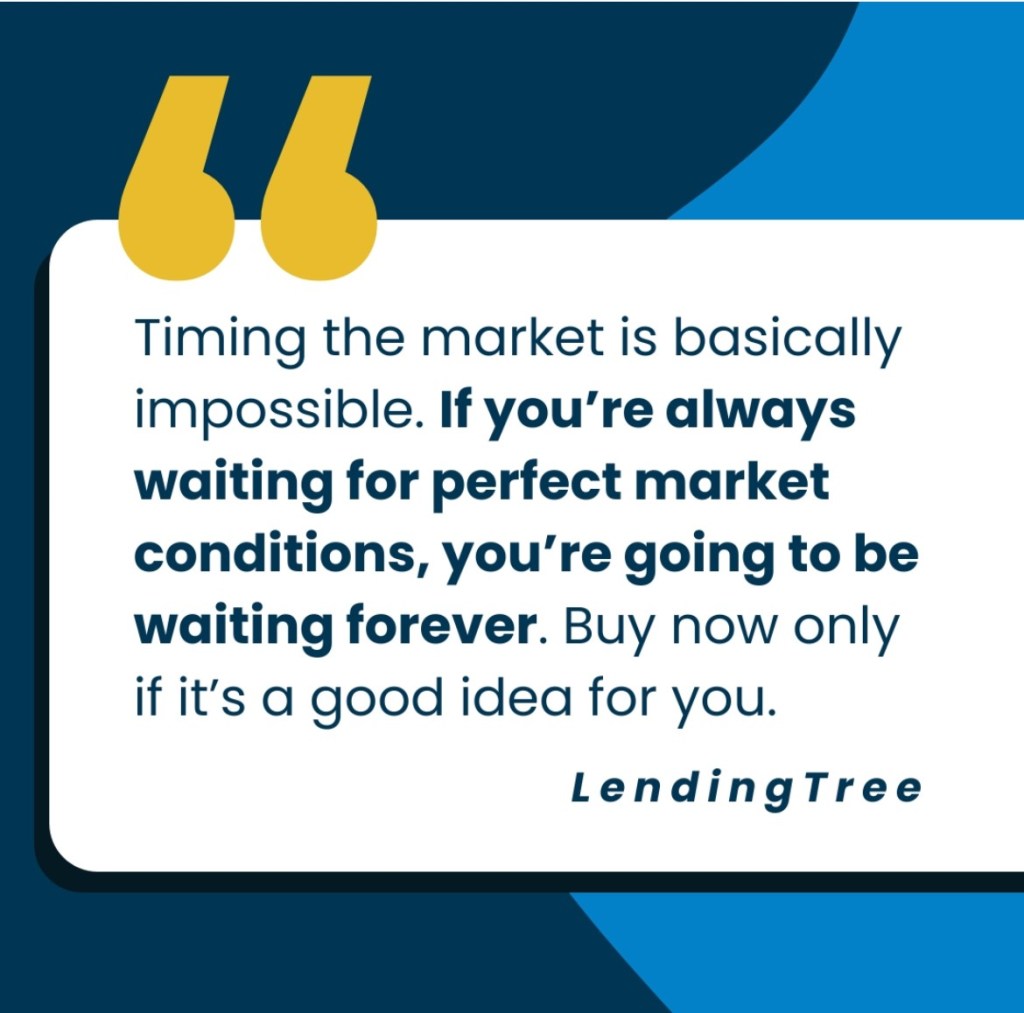
Are you trying to decide whether it makes more sense to buy a home now or wait? There’s a lot to consider, from what’s happening in the market to your changing needs. But generally speaking, aiming to time the market isn’t a good strategy – there are too many factors at play for that to even be possible.

That’s why the real experts — not your dear old Uncle Bob who “knows a little something about real estate” — say that time in the market is better than timing the market.

In other words, if you want to buy a home and you’re able to make the numbers work, doing it sooner rather than later is usually worth it. Bankrate explains why: “No matter which way the real estate market is leaning, buying now means you can start building equity immediately.”

Here’s some data to break this down so you can really see the benefit of buying now versus later.

Each quarter, Fannie Mae releases the Home Price Expectations Survey. It asks over one hundred economists, real estate experts, and investment and market strategists what they forecast for home prices over the next five years. In the latest release, experts are projecting home prices will continue to rise through at least 2029 – just at a slower and more normal pace than they did over the past few years (see the graph below):

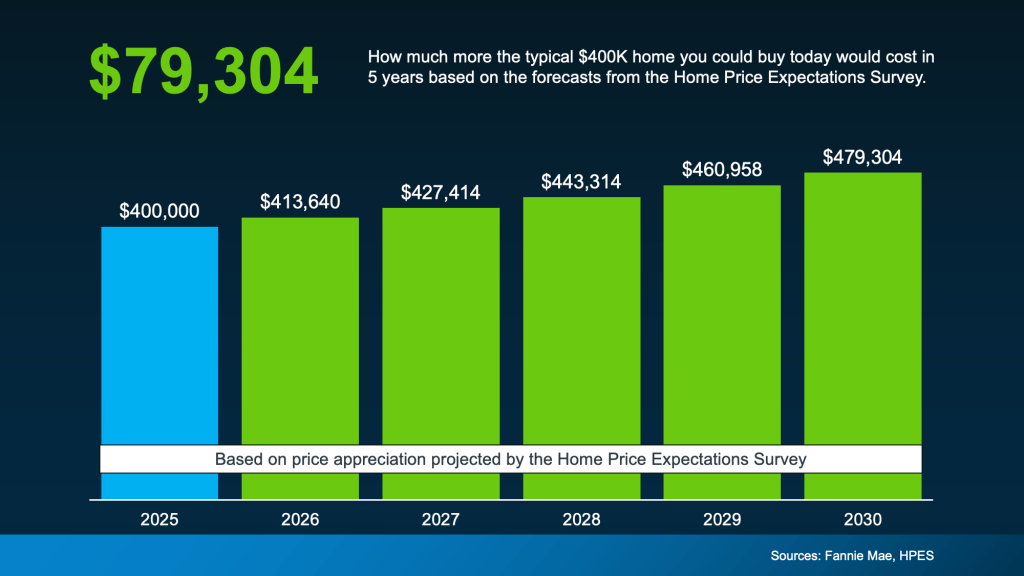
But what does that really mean for you? To give these numbers context, the graph below uses a typical home value to show how it could appreciate over the next few years using those HPES projections (see graph below). This is what you could start to earn in equity if you buy a home in early 2025. 

In this example, let’s say you go ahead and buy a $400,000 home this month. Based on the expert forecasts from the HPES, you could gain more than $83,000 in household wealth over the next five years. That’s not a small number. If you keep on renting, you’re losing out on this equity gain.

And while today’s market has its fair share of challenges, this is why buying is going to be worth it in the long run. If you want to buy a home, don’t give up. There are creative ways you can make your purchase possible. From looking at more affordable areas, to considering condos or townhomes, or even checking out down payment assistance programs, there are options we can suggest to help you make it happen.

So sure, you could wait. But if you’re waiting it out to perfectly time the market, you’re missing out.

If you’re torn between buying now or waiting, don’t forget that it’s time in the market, not timing the market that truly matters. Let’s connect if you want to talk about what you need to do to get the process started today.

Mari and Hank

The information contained, and the opinions expressed, in this article are not intended to be construed as investment advice. You should always conduct your own research and due diligence and obtain professional advice before making any investment decision.