
If you followed the commentary in the wake of last week’s election, you no doubt heard the term “blue tsunami” many times.
In the real estate profession, there’s another tsunami that is often talked about – the “silver tsunami.”
It’s the idea that millions of houses owned by older Americans could come onto the market as more homeowners reach retirement age or older and make their next move.
The Silver Tsunami Will Be a Gradual Shift
According to Realtor.com, about 13.9 million homes owned by older Americans are expected to change hands by 2036. Sure, that’s a big number. But these homes aren’t all expected to come onto the market at once.
The projections show this happening gradually over the next decade, with roughly 1.3 to 1.5 million homes changing hands each year (see graph below):
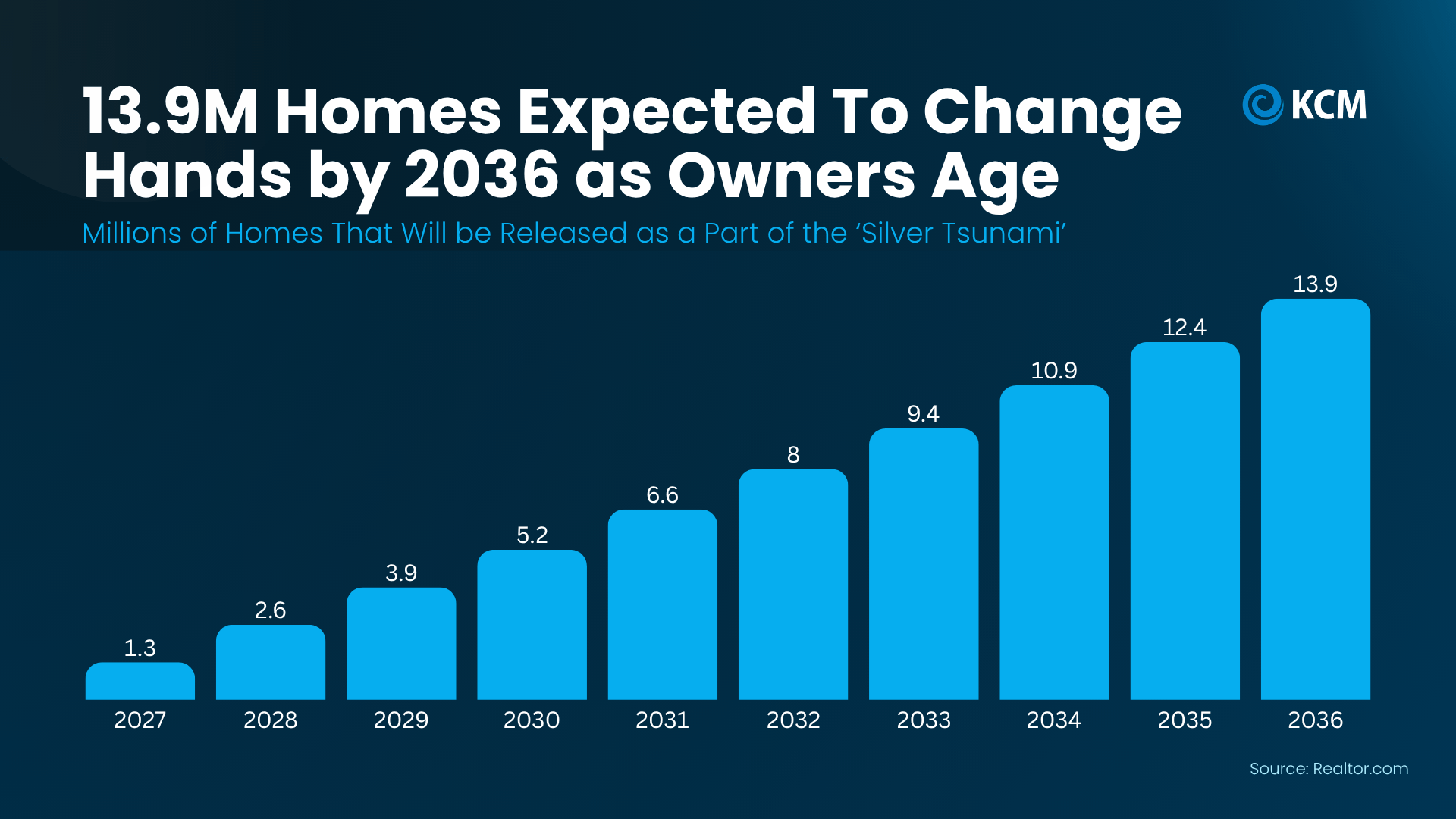
Rather than a sudden wave of houses flooding the market, this is a gradual shift as longtime homeowners make decisions about where and how they want to live.
The term silver tsunami makes for a dramatic headline, but the actual data tells a much less dramatic story. And there’s another reason these homes won’t overwhelm the market.
The Market Has Room for More Homes
After the 2008 housing crash, builders significantly slowed construction. And for years afterward, they didn’t build enough homes to keep up with demand. That led to a housing shortage we’re still dealing with today.
And just how big a gap are we talking about? Estimates vary, but many experts say the U.S. is still millions of homes short. For example, a recent report from the White House Council of Economic Advisers explains:
“If homebuilding and the growth of the single-family housing stock had continued at their historical pace instead of falling dramatically after 2008, there would be 10 million or more additional single-family homes today.”
As more longtime homeowners sell, those homes will help a gap that’s already there. But they won’t push us over the edge. That’s because, at the same time, more households are expected to form in the decade ahead, and they’ll need homes, too.
What does that mean for Cape Cod?
About 48% of homeowner households on Cape are headed by someone age 65 or older. Nearly 74% of owner-occupied homes have a householder age 55 or older.
In addition, approximately 23,000 to 24,000 Cape Cod homes are owned and occupied by a woman age 65 or older who is living alone.
This pretty much guarantees a constant churn of properties. Many homes are marketed without regard to interest rates, prices, etc. as they are being sold because of finances, health, or a change in family situations.
What Actually Matters When You Sell
Here’s the takeaway if you’re thinking about selling your house. The silver tsunami isn’t something you need to plan your move around. But you do need to be aware of what’s happening in your own market.
That’s because real estate is local. Some markets have more homes for sale than others. Some are seeing houses sell relatively quickly, while others are taking longer.
And those are the conditions that matter when you’re deciding how to price, prepare, and market your house.
We can help you understand:
- How many homes are for sale nearby. This tells you how much choice buyers have and how your house will compare.
- What similar houses are actually selling for. That’s one of the most important factors in setting a competitive asking price.
- What buyers are looking for right now. Knowing which features and improvements matter most can help your house make a strong first impression.
And that’s something you can act on today, regardless of what happens with the silver tsunami over the next decade.
The right strategy starts with understanding the market and making decisions based on what’s happening there, not what a dramatic national headline suggests might happen years from now.
Bottom Line
The silver tsunami may sound like a major wave of homes coming onto the market, but the research points to a gradual shift over the next decade, not a sudden flood of listings.
But if you’re interested in the Cape Cod market, the demographics suggest a more constant turnover in property ownership.
If you’re thinking about selling, don’t let the headlines make you second-guess your plans. Let’s talk about what’s happening on Cape or the South Shore.
You can always find us at 508-388-1994 (Mari and Hank) or 781-264-5517 (Colleen).
Mari, Hank, and Colleen
Nothing herein should be construed as investment advice. You should always conduct your own research and due diligence.

